
Homemade Churros with Chocolate Sauce
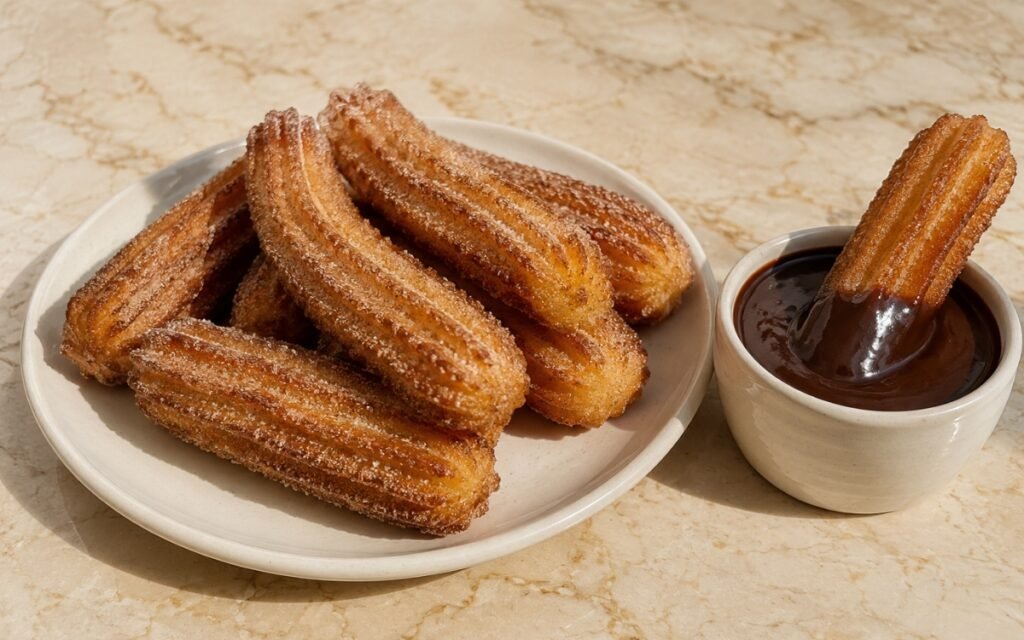
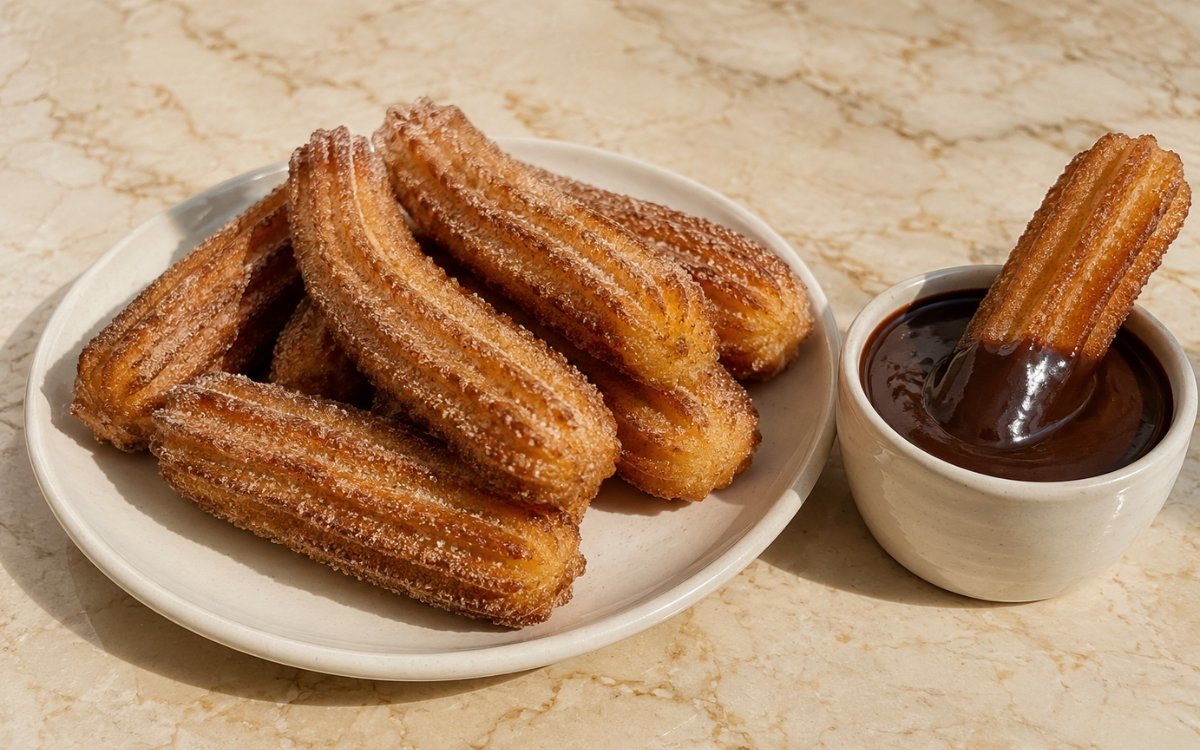
Freshly fried churros with deep golden-brown ridged exteriors, crisp edges, and tender centres, tossed generously in cinnamon sugar while hot, served with a thick glossy chocolate sauce made from dark and milk chocolate, rich enough to cling heavily to each churro when dipped. Cooking the flour into the dough base on the stovetop before it ever meets an egg is the technique hinge of this whole recipe — raw, uncooked flour produces churros that taste pasty and collapse in the oil, the same cooked-dough principle used elsewhere in this collection whenever a piped or shaped dough needs real structure to survive frying. Cooling the dough before beating in the eggs matters just as much, since dough that’s still too hot will scramble the eggs on contact rather than incorporating them smoothly. Using a large closed star tip rather than a round one isn’t decorative — those ridges genuinely help the churros fry more evenly and develop the correct crisp texture. The payoff is a churro with a shatter-crisp, deeply golden ridged exterior giving way to a tender centre, coated in still-dry, sparkling cinnamon sugar and served alongside a chocolate sauce thick enough to properly cling.
Prep Time : 25 min
Cook Time : 30 min
Servings : 4
25 min
30 min
4
Ingredients
For the Churro Dough
• 360ml water
• 80g unsalted butter — this one on Amazon
• 20g granulated sugar
• 4g fine sea salt
• 240g all-purpose flour — this one on Amazon
• 3 large eggs
• 5ml vanilla extract, optional — this one on Amazon
For Frying
• 1.5–2 litres neutral oil, for deep frying
For the Cinnamon Sugar
• 160g granulated sugar
• 8g ground cinnamon — this one on Amazon
• 1g fine sea salt
For the Chocolate Sauce
• 160g dark chocolate, 60–70%, chopped — this one on Amazon
• 100g milk chocolate, chopped
• 240ml heavy cream
• 80ml whole milk
• 20g unsalted butter
• 10g brown sugar or honey
• 1g fine sea salt
This post may contain affiliate links. As an Amazon Associate I earn from qualifying purchases, at no additional cost to you.
Directions
- Prepare the Cinnamon Sugar
Mix the granulated sugar, cinnamon, and salt in a wide shallow dish. Keep it ready before frying. Churros need to be coated while hot, or the sugar will not stick properly. Having this ready and within reach before the first churro even hits the oil matters because the coating window is short — a churro cooling on the rack for even a minute too long loses much of its ability to hold the sugar. - Make the Churro Dough Base
Add the water, butter, sugar, and salt to a medium saucepan. Bring to a full simmer over medium heat, making sure the butter is completely melted. Add the flour all at once and stir aggressively with a wooden spoon or stiff spatula. Cook the dough over medium-low heat for 2–3 minutes, stirring constantly, until it forms a smooth ball and pulls away from the sides of the pan. A thin film should form on the bottom of the pan. This cooking stage matters. If the flour is not cooked enough, the churros taste pasty and collapse. This is essentially the same technique used for pâte à choux — cooking the flour into the hot liquid gelatinises its starches and drives off excess moisture, which is what gives the dough enough structure to hold its piped shape and survive the shock of hot oil rather than collapsing or tasting raw. - Cool the Dough Slightly
Transfer the hot dough to a mixing bowl and let it cool for 8–10 minutes, stirring once or twice to release steam. The dough should still be warm but not so hot that it cooks the eggs on contact. This brief cooling window is a genuine balance point — cool the dough too little and the eggs scramble into visible curds the moment they’re added; let it cool completely and the dough stiffens past the point where the eggs can properly incorporate. - Add the Eggs
Add the eggs one at a time, beating fully after each addition. The dough will look broken at first, then come back together. Add the vanilla if using. The final dough should be thick, glossy, and pipeable. It should hold ridges clearly from a star tip. If it looks loose and soft, do not add extra liquid. Loose dough gives weak churros that split or flatten in the oil. Adding the eggs one at a time rather than all at once gives each addition a chance to fully emulsify into the dough before the next goes in — dumping all three eggs together risks a dough that never fully comes back together into the smooth, glossy consistency this recipe needs. - Prepare the Piping Bag
Transfer the dough to a sturdy piping bag fitted with a large closed star tip. Do not use a round tip. Churros need ridges so they fry evenly and get the correct crisp texture. Pipe 10–12cm lengths onto parchment, or pipe carefully straight into the oil if confident. Snip the dough with scissors. The ridged surface created by a star tip has considerably more surface area exposed to the hot oil than a smooth round shape would — that extra surface area is what allows the churro to crisp quickly and evenly all the way around rather than staying soft in the recessed areas a round tip would leave. - Make the Chocolate Sauce
Heat the cream, milk, butter, brown sugar or honey, and salt in a small saucepan until steaming but not boiling. Remove from the heat and add the dark chocolate and milk chocolate. Let sit for 1 minute, then whisk until smooth, thick, and glossy. Keep warm over very low heat or rewarm gently before serving. The sauce should be thick enough to cling to a dipped churro, not thin like chocolate milk. The brief 1-minute rest before whisking lets the hot cream mixture begin gently melting the chopped chocolate from the outside in, which is what allows the final whisk to bring everything together smoothly rather than seizing or turning grainy from being agitated while the chocolate is still mostly solid. - Heat the Oil
Heat the neutral oil in a deep pot to 175–180°C. Keep the temperature steady. This is the main frying turning point. Oil that is too cool makes greasy churros; oil that is too hot browns the outside before the centre cooks. This temperature window is a genuine balance point specific to a piped dough this size — hot enough to crisp the ridged exterior quickly, but not so hot that the outside sets and darkens before the thicker interior has had time to cook all the way through. - Fry the Churros
Fry the churros in batches, 4–6 at a time depending on pot size. Cook for 4–5 minutes total, turning occasionally, until deeply golden-brown, crisp, and evenly ridged. Transfer to a rack or paper towel-lined tray for 30–60 seconds only, then move directly into the cinnamon sugar while still hot. Toss until fully coated. Do not overcrowd the pot. Crowding drops the oil temperature and gives pale, oily churros. The brief 30–60 second pause on the rack lets excess surface oil drip away without letting the churro cool down significantly — moving straight from the oil into the sugar without this pause would coat the sugar in oil rather than letting it cling dry and sparkling to the crisp exterior. - Serve
Pile 5–6 churros per serving on plates. Spoon the warm chocolate sauce into small cups and serve beside the churros. Dip one churro into the sauce if presenting immediately. Serve while the churros are hot and crisp, with the cinnamon sugar still dry and sparkling and the chocolate sauce glossy. Churros lose their shatter-crisp exterior within a short window of frying, so serving without delay is what preserves the contrast between the crisp, sugared shell and the tender centre.
*Notes :
- Cooking the flour into the dough base on the stovetop before it ever meets an egg is worth understanding as the foundation of this entire recipe rather than a routine step. This pre-cooking gelatinises the flour’s starches and drives off excess moisture from the base, which is what gives the finished dough enough structure to hold a piped, ridged shape and survive the immediate shock of hot oil. Skipping or rushing this stage — pulling the dough off the heat before it visibly pulls away from the pan’s sides — leaves too much raw flour behind, producing churros that taste pasty on the inside and are prone to collapsing or splitting once fried.
- The brief cooling period before adding the eggs is a narrow but genuinely important window. Dough that’s still too hot when the first egg is added will partially cook that egg on contact, leaving visible curds that never fully smooth back into the batter. Dough that’s been allowed to cool too long, on the other hand, stiffens to a point where the eggs struggle to incorporate evenly. The specified 8–10 minutes, with a stir or two to release trapped steam, is calibrated to land in the middle of that window.
- Using a large closed star tip rather than a round one is a detail that’s easy to treat as purely cosmetic, but it has a real functional purpose. The ridges created by a star tip dramatically increase the churro’s surface area relative to a smooth round shape, and that additional surface area is directly responsible for how quickly and evenly the exterior crisps in the hot oil — a round-piped churro would stay softer in its less-exposed curves, never developing the same uniform crunch.
- The chocolate sauce’s blend of dark and milk chocolate is a deliberate balance rather than an arbitrary combination. Dark chocolate alone, particularly at 60–70% cocoa, can push the sauce toward bitter, especially once combined with the churro’s own sweetness from the cinnamon sugar. Milk chocolate folded in alongside it rounds out that intensity, producing a sauce that’s rich and genuinely chocolatey without tipping into bitterness.
Why This Recipe Works
This recipe works because the dough is built with real technique at every stage: the flour is fully cooked into the base before any egg touches it, giving the dough structure rather than raw pastiness; the dough is cooled to a precise window before the eggs go in, so they emulsify smoothly rather than scrambling; and a star tip creates the ridged surface that crisps evenly in the fryer.
Frying at a carefully held temperature, briefly draining before coating, and tossing in cinnamon sugar while still hot all protect the specific contrast between a crisp, sugared exterior and a tender interior — and the chocolate sauce’s dark-and-milk blend is calibrated specifically to be rich without turning bitter.
Ingredient Breakdown
Stovetop-Cooked Flour Base
The structural foundation — flour cooked into hot liquid before eggs are added, gelatinising starches for a dough sturdy enough to pipe and fry.
Sequentially Beaten Eggs
The emulsification technique — added one at a time into properly cooled dough, ensuring each fully incorporates before the next goes in.
Large Closed Star Tip
The shaping detail — creates ridges that meaningfully increase surface area, producing even, all-around crisping in the fryer.
Held 175–180°C Frying Oil
The temperature specification — hot enough to crisp the exterior quickly without burning it before the thicker interior fully cooks.
Dark-and-Milk Chocolate Blend
The sauce’s balance — dark chocolate for real intensity, milk chocolate to round out bitterness into something genuinely rich.
Flavor Structure Explained
This churros dish follows a layered balance model:
- Crisp sweet-spiced foundation (fried, sugared churro exterior)
- Tender neutral centre (cooked churro dough)
- Rich deep chocolate finish (dark-and-milk chocolate sauce)
- Warm aromatic accent (cinnamon)
The churro’s crisp, cinnamon-sugar-coated exterior defines the first bite with audible crunch and warm, sweet spice. Beneath it, the tender, eggy interior offers a soft, mild contrast that balances the crisp shell. The chocolate sauce, dipped generously, adds deep, rich intensity that’s neither too bitter nor too sweet thanks to its dark-and-milk blend. Together, the warm cinnamon and the rich chocolate create a classic, comforting pairing where each element plays a distinct, clearly defined role.
Common Mistakes to Avoid
- Not Cooking the Flour Long Enough – Undercooked flour leaves churros tasting pasty and prone to collapsing in the oil. Always cook until the dough forms a smooth ball and pulls away from the pan’s sides.
- Adding Eggs Before the Dough Has Cooled – Dough that’s still too hot scrambles the eggs on contact. Always let it cool for 8–10 minutes first.
- Using a Round Piping Tip Instead of a Star Tip – This produces a smooth surface that fries unevenly and lacks the correct crisp texture. Always use a large closed star tip for proper ridges.
- Overcrowding the Frying Oil – Too many churros at once drops the oil temperature, producing pale, greasy results. Always fry in small batches.
- Coating in Cinnamon Sugar After the Churros Have Cooled – The sugar won’t adhere properly once the surface has cooled and hardened. Always toss them in sugar immediately after frying, while still hot.
Variations
Filled Churros
Once cooled slightly, use a piping bag to inject a small amount of dulce de leche or chocolate ganache into the centre of each churro through one end.
Chili-Chocolate Sauce
Add a small pinch of cayenne or chili powder to the chocolate sauce for a subtle, warming heat behind the richness.
Orange-Spiced Cinnamon Sugar
Add the finely grated zest of one orange to the cinnamon sugar mixture for a brighter, more aromatic coating.
Mini Churro Bites
Pipe shorter 5–6cm lengths for smaller, snackable bites, reducing the fry time to about 3 minutes given the smaller size.
Storage & Make-Ahead
Churro dough can be made and piped onto parchment, then refrigerated uncooked for a few hours before frying; bring closer to room temperature before frying for the best texture.
Fried churros are best eaten the same day, ideally within an hour of frying; they lose their crisp texture as they sit and do not reheat to the same result.
The chocolate sauce can be made ahead and refrigerated in a sealed container for up to 5 days. Gently rewarm over low heat or in short microwave bursts, stirring often, before serving.
Frequently Asked Questions
Why does the flour need to be cooked in the saucepan before adding the eggs?
Cooking the flour into the hot butter-and-water mixture gelatinises its starches and drives off excess moisture, giving the dough real structure. Raw, uncooked flour dough produces churros that taste pasty on the inside and are prone to collapsing or splitting apart once they hit the hot oil.
Why does the dough need to cool before the eggs are added?
Dough that’s still too hot will partially cook the eggs on contact, leaving visible curds that never fully smooth back into the batter. Cooling for the specified 8–10 minutes brings the dough to a temperature warm enough to still incorporate the eggs smoothly without scrambling them.
Why use a star tip instead of a round one for piping?
The ridges created by a star tip significantly increase the churro’s surface area compared to a smooth round shape. That extra surface area is what allows the exterior to crisp quickly and evenly all the way around in the hot oil, rather than staying softer in less-exposed curves.
Why does the chocolate sauce combine dark and milk chocolate instead of using just one?
Dark chocolate alone, especially at 60–70% cocoa, can taste bitter once combined with the churro’s own sweetness. Milk chocolate folded in alongside it rounds out that intensity, producing a sauce that’s rich and deeply chocolatey without becoming overly bitter.
Why toss the churros in cinnamon sugar immediately after frying rather than waiting until they’ve cooled?
The sugar needs a slightly warm, still-oily surface to properly adhere to. Once a churro has cooled and its surface has firmed up, the cinnamon sugar barely sticks, leaving a patchy, uneven coating instead of a full, sparkling one.
Nutrition Facts
( per serving )
Calories
~620 kcal
Protein
9 g
Fat
32 g
Carbs
74 g
Calories
~620 kcal
Protein
9 g
Fat
32 g
Carbs
74 g
Related Recipes
Related Recipes

Sausages in Blankets
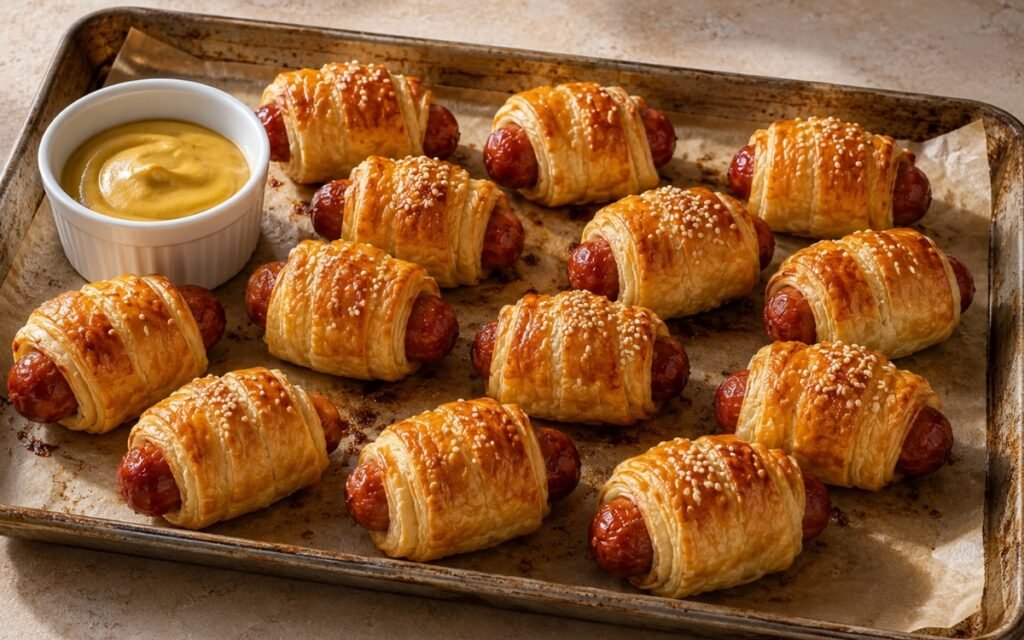
Cocktail sausages and a small log of cheddar wrapped in flaky puff pastry, brushed with egg wash until deep golden and glossy.
Crêpes Suzette
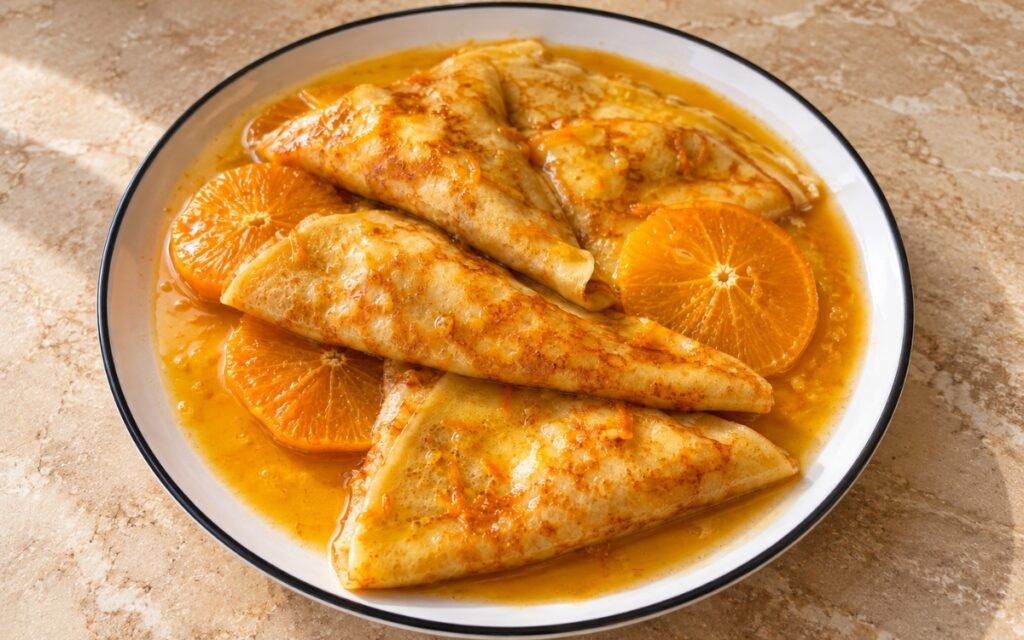
Delicate French crêpes folded into triangles and coated in a glossy orange-butter Suzette sauce with fresh orange juice and zest.
Fish Tacos with Mango Salsa
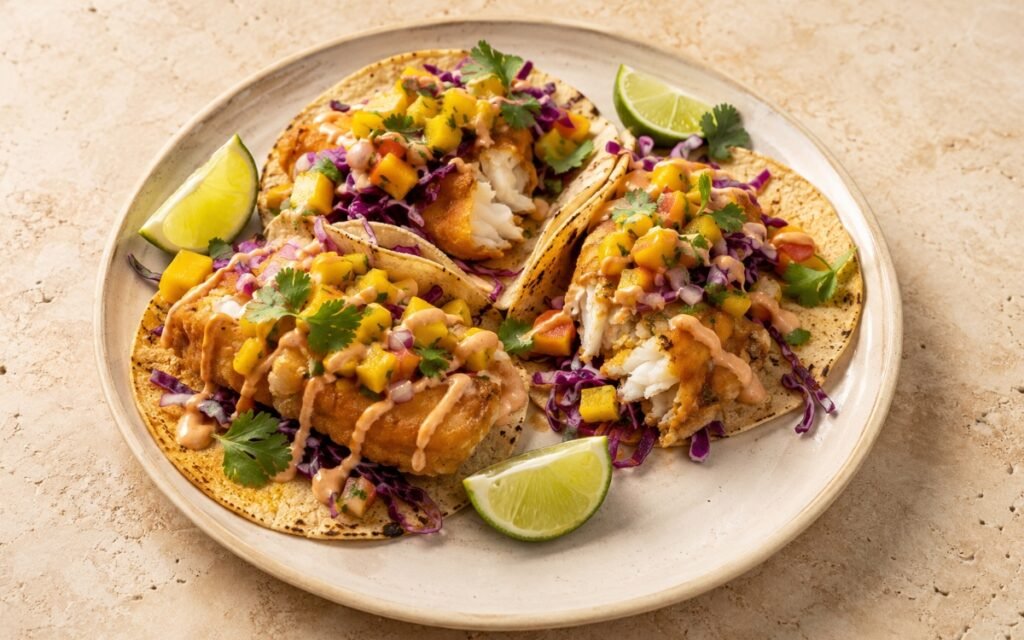
Cod dredged and battered cold, fried until golden and crisp, piled onto small corn tortillas with purple cabbage, mango salsa, and chipotle crema.
You might also like
You might also like
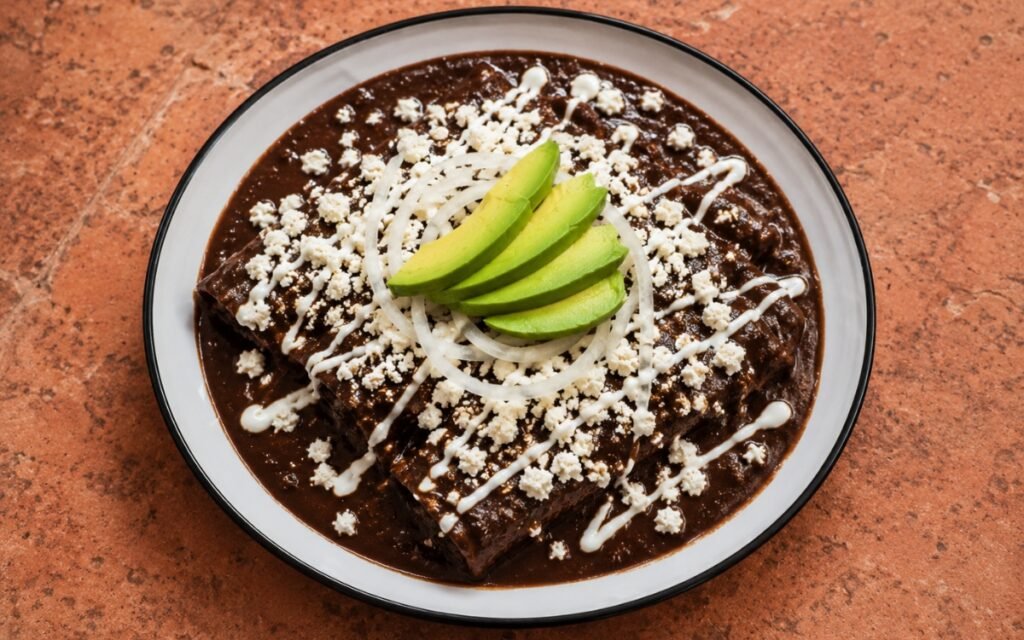
Enfrijoladas
Soft corn tortillas lightly fried, dipped in glossy black bean sauce, folded around queso fresco, and finished with more cheese, crema, onion, and avocado.
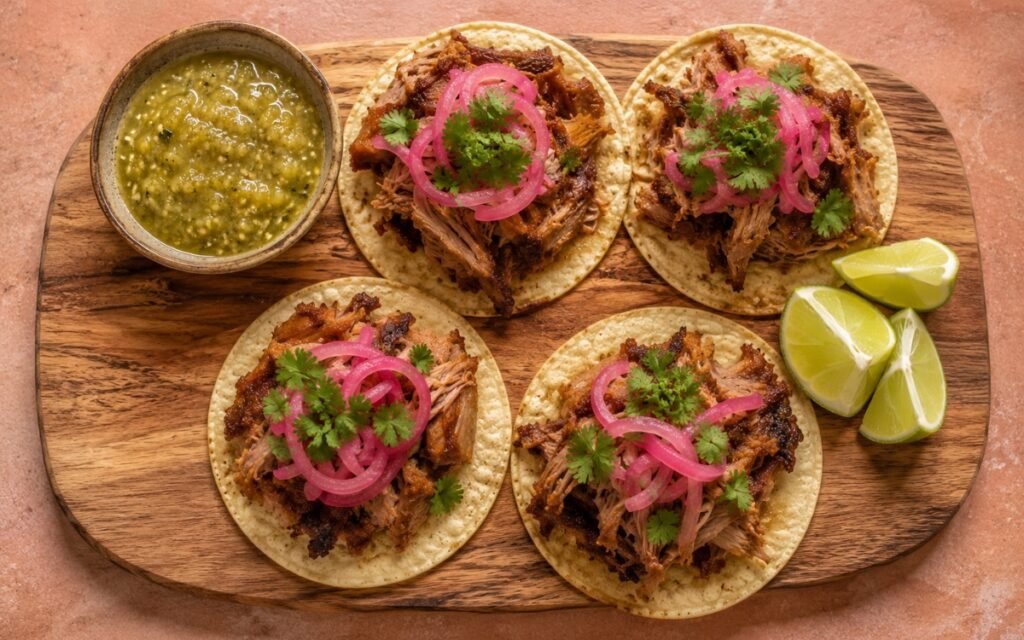
Carnitas Tacos with Pickled Red Onion
Pork shoulder braised in citrus and lard until tender, then crisped hot and fast for caramelised edges. Topped with pickled red onion and cilantro.
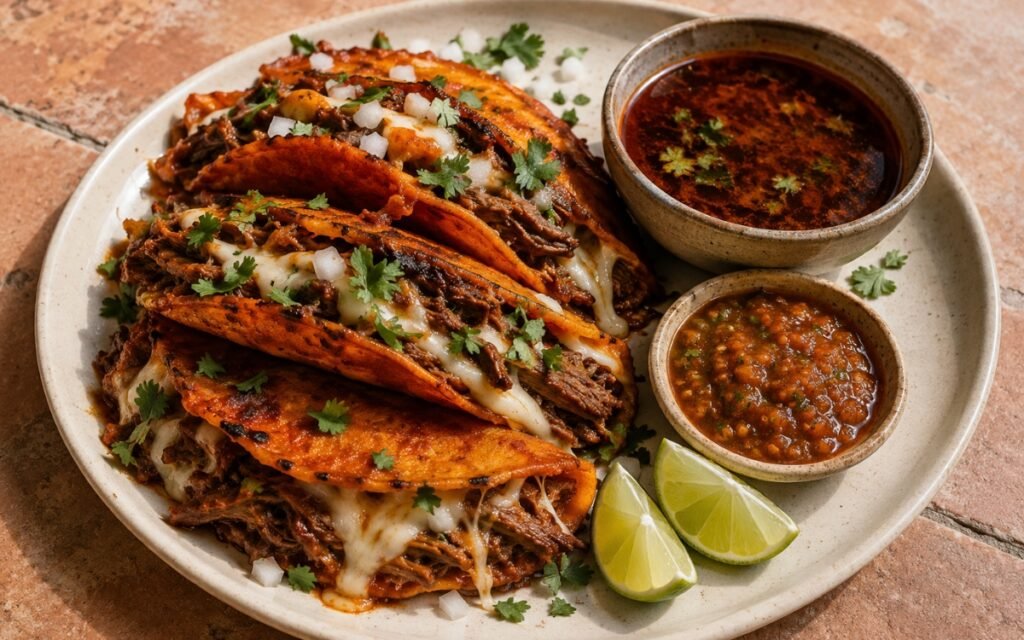
Birria Tacos with Consommé (Quesabirria)
Three-cut beef braised into a deep chile consommé, shredded, stuffed into small tortillas with Oaxaca cheese, and fried in birria fat until crisp and red-orange.
Homemade Churros with Chocolate Sauce
Ingredients
Method
- Mix the granulated sugar, cinnamon, and salt in a wide shallow dish. Keep it ready before frying. Churros need to be coated while hot, or the sugar will not stick properly. Having this ready and within reach before the first churro even hits the oil matters because the coating window is short — a churro cooling on the rack for even a minute too long loses much of its ability to hold the sugar.
- Add the water, butter, sugar, and salt to a medium saucepan. Bring to a full simmer over medium heat, making sure the butter is completely melted. Add the flour all at once and stir aggressively with a wooden spoon or stiff spatula. Cook the dough over medium-low heat for 2–3 minutes, stirring constantly, until it forms a smooth ball and pulls away from the sides of the pan. A thin film should form on the bottom of the pan. This cooking stage matters. If the flour is not cooked enough, the churros taste pasty and collapse. This is essentially the same technique used for pâte à choux — cooking the flour into the hot liquid gelatinises its starches and drives off excess moisture, which is what gives the dough enough structure to hold its piped shape and survive the shock of hot oil rather than collapsing or tasting raw.
- Transfer the hot dough to a mixing bowl and let it cool for 8–10 minutes, stirring once or twice to release steam. The dough should still be warm but not so hot that it cooks the eggs on contact. This brief cooling window is a genuine balance point — cool the dough too little and the eggs scramble into visible curds the moment they’re added; let it cool completely and the dough stiffens past the point where the eggs can properly incorporate.
- Add the eggs one at a time, beating fully after each addition. The dough will look broken at first, then come back together. Add the vanilla if using. The final dough should be thick, glossy, and pipeable. It should hold ridges clearly from a star tip. If it looks loose and soft, do not add extra liquid. Loose dough gives weak churros that split or flatten in the oil. Adding the eggs one at a time rather than all at once gives each addition a chance to fully emulsify into the dough before the next goes in — dumping all three eggs together risks a dough that never fully comes back together into the smooth, glossy consistency this recipe needs.
- Transfer the dough to a sturdy piping bag fitted with a large closed star tip. Do not use a round tip. Churros need ridges so they fry evenly and get the correct crisp texture. Pipe 10–12cm lengths onto parchment, or pipe carefully straight into the oil if confident. Snip the dough with scissors. The ridged surface created by a star tip has considerably more surface area exposed to the hot oil than a smooth round shape would — that extra surface area is what allows the churro to crisp quickly and evenly all the way around rather than staying soft in the recessed areas a round tip would leave.
- Heat the cream, milk, butter, brown sugar or honey, and salt in a small saucepan until steaming but not boiling. Remove from the heat and add the dark chocolate and milk chocolate. Let sit for 1 minute, then whisk until smooth, thick, and glossy. Keep warm over very low heat or rewarm gently before serving. The sauce should be thick enough to cling to a dipped churro, not thin like chocolate milk. The brief 1-minute rest before whisking lets the hot cream mixture begin gently melting the chopped chocolate from the outside in, which is what allows the final whisk to bring everything together smoothly rather than seizing or turning grainy from being agitated while the chocolate is still mostly solid.
- Heat the neutral oil in a deep pot to 175–180°C. Keep the temperature steady. This is the main frying turning point. Oil that is too cool makes greasy churros; oil that is too hot browns the outside before the centre cooks. This temperature window is a genuine balance point specific to a piped dough this size — hot enough to crisp the ridged exterior quickly, but not so hot that the outside sets and darkens before the thicker interior has had time to cook all the way through.
- Fry the churros in batches, 4–6 at a time depending on pot size. Cook for 4–5 minutes total, turning occasionally, until deeply golden-brown, crisp, and evenly ridged. Transfer to a rack or paper towel-lined tray for 30–60 seconds only, then move directly into the cinnamon sugar while still hot. Toss until fully coated. Do not overcrowd the pot. Crowding drops the oil temperature and gives pale, oily churros. The brief 30–60 second pause on the rack lets excess surface oil drip away without letting the churro cool down significantly — moving straight from the oil into the sugar without this pause would coat the sugar in oil rather than letting it cling dry and sparkling to the crisp exterior.
- Pile 5–6 churros per serving on plates. Spoon the warm chocolate sauce into small cups and serve beside the churros. Dip one churro into the sauce if presenting immediately. Serve while the churros are hot and crisp, with the cinnamon sugar still dry and sparkling and the chocolate sauce glossy. Churros lose their shatter-crisp exterior within a short window of frying, so serving without delay is what preserves the contrast between the crisp, sugared shell and the tender centre.