Ingredients
Method
Prepare the Cinnamon Sugar
- Mix the granulated sugar, cinnamon, and salt in a wide shallow dish. Keep it ready before frying. Churros need to be coated while hot, or the sugar will not stick properly. Having this ready and within reach before the first churro even hits the oil matters because the coating window is short — a churro cooling on the rack for even a minute too long loses much of its ability to hold the sugar.
Make the Churro Dough Base
- Add the water, butter, sugar, and salt to a medium saucepan. Bring to a full simmer over medium heat, making sure the butter is completely melted. Add the flour all at once and stir aggressively with a wooden spoon or stiff spatula. Cook the dough over medium-low heat for 2–3 minutes, stirring constantly, until it forms a smooth ball and pulls away from the sides of the pan. A thin film should form on the bottom of the pan. This cooking stage matters. If the flour is not cooked enough, the churros taste pasty and collapse. This is essentially the same technique used for pâte à choux — cooking the flour into the hot liquid gelatinises its starches and drives off excess moisture, which is what gives the dough enough structure to hold its piped shape and survive the shock of hot oil rather than collapsing or tasting raw.
Cool the Dough Slightly
- Transfer the hot dough to a mixing bowl and let it cool for 8–10 minutes, stirring once or twice to release steam. The dough should still be warm but not so hot that it cooks the eggs on contact. This brief cooling window is a genuine balance point — cool the dough too little and the eggs scramble into visible curds the moment they're added; let it cool completely and the dough stiffens past the point where the eggs can properly incorporate.
Add the Eggs
- Add the eggs one at a time, beating fully after each addition. The dough will look broken at first, then come back together. Add the vanilla if using. The final dough should be thick, glossy, and pipeable. It should hold ridges clearly from a star tip. If it looks loose and soft, do not add extra liquid. Loose dough gives weak churros that split or flatten in the oil. Adding the eggs one at a time rather than all at once gives each addition a chance to fully emulsify into the dough before the next goes in — dumping all three eggs together risks a dough that never fully comes back together into the smooth, glossy consistency this recipe needs.
Prepare the Piping Bag
- Transfer the dough to a sturdy piping bag fitted with a large closed star tip. Do not use a round tip. Churros need ridges so they fry evenly and get the correct crisp texture. Pipe 10–12cm lengths onto parchment, or pipe carefully straight into the oil if confident. Snip the dough with scissors. The ridged surface created by a star tip has considerably more surface area exposed to the hot oil than a smooth round shape would — that extra surface area is what allows the churro to crisp quickly and evenly all the way around rather than staying soft in the recessed areas a round tip would leave.
Make the Chocolate Sauce
- Heat the cream, milk, butter, brown sugar or honey, and salt in a small saucepan until steaming but not boiling. Remove from the heat and add the dark chocolate and milk chocolate. Let sit for 1 minute, then whisk until smooth, thick, and glossy. Keep warm over very low heat or rewarm gently before serving. The sauce should be thick enough to cling to a dipped churro, not thin like chocolate milk. The brief 1-minute rest before whisking lets the hot cream mixture begin gently melting the chopped chocolate from the outside in, which is what allows the final whisk to bring everything together smoothly rather than seizing or turning grainy from being agitated while the chocolate is still mostly solid.
Heat the Oil
- Heat the neutral oil in a deep pot to 175–180°C. Keep the temperature steady. This is the main frying turning point. Oil that is too cool makes greasy churros; oil that is too hot browns the outside before the centre cooks. This temperature window is a genuine balance point specific to a piped dough this size — hot enough to crisp the ridged exterior quickly, but not so hot that the outside sets and darkens before the thicker interior has had time to cook all the way through.
Fry the Churros
- Fry the churros in batches, 4–6 at a time depending on pot size. Cook for 4–5 minutes total, turning occasionally, until deeply golden-brown, crisp, and evenly ridged. Transfer to a rack or paper towel-lined tray for 30–60 seconds only, then move directly into the cinnamon sugar while still hot. Toss until fully coated. Do not overcrowd the pot. Crowding drops the oil temperature and gives pale, oily churros. The brief 30–60 second pause on the rack lets excess surface oil drip away without letting the churro cool down significantly — moving straight from the oil into the sugar without this pause would coat the sugar in oil rather than letting it cling dry and sparkling to the crisp exterior.
Serve
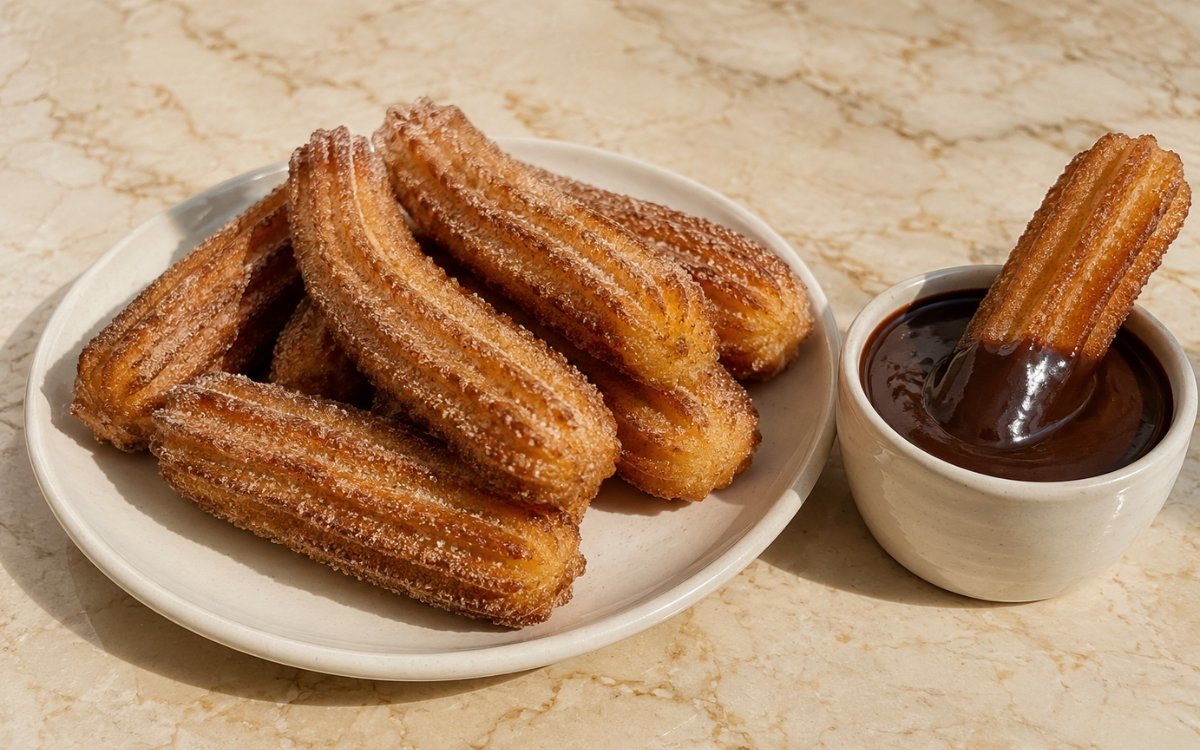
- Pile 5–6 churros per serving on plates. Spoon the warm chocolate sauce into small cups and serve beside the churros. Dip one churro into the sauce if presenting immediately. Serve while the churros are hot and crisp, with the cinnamon sugar still dry and sparkling and the chocolate sauce glossy. Churros lose their shatter-crisp exterior within a short window of frying, so serving without delay is what preserves the contrast between the crisp, sugared shell and the tender centre.
Notes
Cooking the flour into the dough base on the stovetop before it ever meets an egg is worth understanding as the foundation of this entire recipe rather than a routine step. This pre-cooking gelatinises the flour's starches and drives off excess moisture from the base, which is what gives the finished dough enough structure to hold a piped, ridged shape and survive the immediate shock of hot oil. Skipping or rushing this stage — pulling the dough off the heat before it visibly pulls away from the pan's sides — leaves too much raw flour behind, producing churros that taste pasty on the inside and are prone to collapsing or splitting once fried.
The brief cooling period before adding the eggs is a narrow but genuinely important window. Dough that's still too hot when the first egg is added will partially cook that egg on contact, leaving visible curds that never fully smooth back into the batter. Dough that's been allowed to cool too long, on the other hand, stiffens to a point where the eggs struggle to incorporate evenly. The specified 8–10 minutes, with a stir or two to release trapped steam, is calibrated to land in the middle of that window.
Using a large closed star tip rather than a round one is a detail that's easy to treat as purely cosmetic, but it has a real functional purpose. The ridges created by a star tip dramatically increase the churro's surface area relative to a smooth round shape, and that additional surface area is directly responsible for how quickly and evenly the exterior crisps in the hot oil — a round-piped churro would stay softer in its less-exposed curves, never developing the same uniform crunch.
The chocolate sauce's blend of dark and milk chocolate is a deliberate balance rather than an arbitrary combination. Dark chocolate alone, particularly at 60–70% cocoa, can push the sauce toward bitter, especially once combined with the churro's own sweetness from the cinnamon sugar. Milk chocolate folded in alongside it rounds out that intensity, producing a sauce that's rich and genuinely chocolatey without tipping into bitterness.