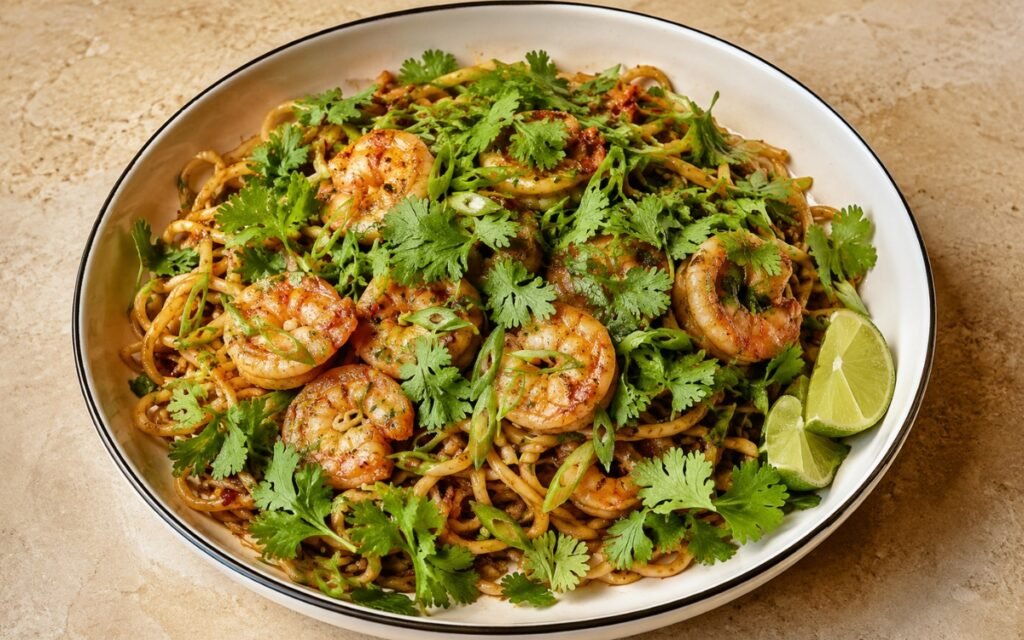
Fresh Spring Roll Bowls with Peanut Sauce
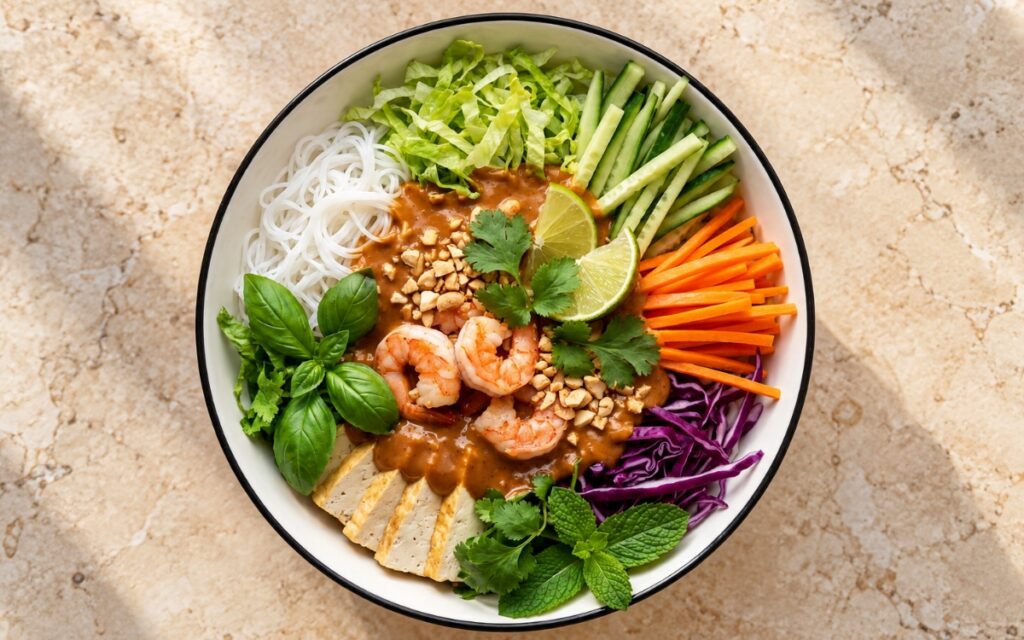
A fresh, Vietnamese-inspired noodle bowl that turns the inside of a summer roll into a composed bowl of cool rice vermicelli, crisp raw vegetables, golden tofu, tender shrimp, basil, cilantro and mint under a creamy peanut sauce, the key being crunchy vegetables kept in clean, separate sections. Pressing and drying the tofu thoroughly before it meets the pan, rather than slicing it straight from the pack, is the technique this whole bowl depends on for its pale golden, gently set slabs — wet tofu releases water into the hot oil so it steams, sticks and tastes bland instead of browning lightly, the same dry-before-searing principle used elsewhere in this collection whenever a moist protein needs colour without a heavy crust. Pulling the shrimp from the pan the moment they turn opaque is what keeps them sweet, tender and curled into a loose C rather than a tight, rubbery ring. Rinsing the vermicelli under cold running water straight after draining is what leaves springy, separate noodles instead of a sticky clump. The payoff is a bowl with real, layered freshness — springy noodles, crunchy vegetables, soft tofu, sweet shrimp and bright herbs, brought together by a glossy, savoury-sweet peanut sauce.
- Prep Time : 30 min
- Total Time : 1 hr
- Servings : 4
Ingredients
For the Bowl Base
- 220g dried thin rice vermicelli
- A few drops of neutral oil, for the noodles, only if needed
- 1 small romaine heart or ½ small iceberg lettuce (about 120g), finely shredded
- 2 medium cucumbers, cut into thin batons
- 3 medium carrots, peeled and julienned
- 180g red cabbage, thinly shredded
- 2 limes, cut into wedges
- 40g roasted peanuts, roughly chopped
For the Shrimp
- 320g raw shrimp, peeled and deveined (about 16–20 medium shrimp)
- 1 tsp neutral oil
- ¼ tsp salt
- ¼ tsp black pepper
For the Tofu
- 300g firm tofu
- 1 tbsp neutral oil
- ¼ tsp salt
- ¼ tsp black pepper
For the Fresh Herbs
- 20g cilantro leaves and tender stems
- 15g mint leaves
- 15g Thai basil or sweet basil leaves
For the Peanut Sauce
- 120g smooth peanut butter, plus a little extra to adjust, only if needed
- 2 tbsp hoisin sauce
- 1½ tbsp soy sauce, plus a little extra to adjust, only if needed
- 1 tbsp fish sauce, plus a little extra to adjust, only if needed
- 1½ tbsp lime juice, plus a little extra to adjust, only if needed
- 1 tbsp rice vinegar
- 1 tbsp honey or brown sugar
- 1 small garlic clove, finely grated
- 1 tsp finely grated fresh ginger
- 120–180ml warm water, plus a little extra to loosen before serving
Directions
- Press and Cook the Tofu
Drain the 300g firm tofu well and pat it thoroughly dry. Wrap it in paper towels or a clean kitchen towel, set a light weight such as a plate on top and leave it to press for 15 minutes so the excess moisture is drawn out. Slice the block into neat slabs about 1cm thick and season both sides lightly with the ¼ tsp salt and ¼ tsp black pepper. Heat the 1 tbsp neutral oil in a nonstick skillet over medium heat, add the slabs in a single layer and cook for 2–3 minutes per side, until the surfaces are pale golden with clean edges and the inside is still genuinely soft. Avoid deep crusting; if the slabs spit hard and stick, they were not dried enough. Transfer to a plate and let them cool slightly. That thorough drying is what lets the tofu brown lightly instead of steaming in its own water. - Cook the Shrimp
Pat the 320g shrimp dry with paper towels and season them with the ¼ tsp salt and ¼ tsp black pepper. Wipe out the skillet if needed, add the 1 tsp neutral oil and heat it over medium-high heat until it shimmers. Lay the shrimp in a single layer and cook for about 1–2 minutes per side, just until they turn pink, opaque all the way through and curled into a loose “C” shape. Transfer them to a clean plate immediately so the heat of the pan does not keep cooking them. If any shrimp have closed into a tight ring, they have gone too far, so lift the rest out sooner. That instant removal is what keeps the shrimp sweet, slightly firm and genuinely tender rather than rubbery. - Cook the Rice Vermicelli
Bring a large pot of water to a rolling boil. Add the 220g rice vermicelli and cook according to the packet directions, usually 3–5 minutes for thin noodles, stirring gently once or twice so the strands do not clump. Taste a strand: it should be tender but still springy, never soft or mushy. Drain immediately and rinse under cold running water, lifting and loosening the noodles with your fingers, until they are completely cool. Shake off as much water as possible in the colander. If the noodles still feel sticky, toss them very lightly with a few drops of neutral oil. They should separate easily and hold their shape in loose coils. That cold rinse is what halts the cooking and washes off the surface starch that would otherwise glue the strands together. - Prepare the Vegetables and Herbs
While the noodles drain and cool, finely shred the lettuce, cut the 2 cucumbers into thin batons and julienne the 3 peeled carrots into fine matchsticks. Thinly shred the 180g red cabbage. Pick the 20g cilantro leaves and tender stems, the 15g mint leaves and the 15g basil leaves, discarding any tough stalks, and set a small handful of cilantro and mint aside for finishing. Cut the 2 limes into wedges and roughly chop the 40g roasted peanuts. Keep every element in its own pile or small bowl so the bowls can be built in clean sections. Each vegetable should be thin, crisp and easy to pick up with the noodles, and everything should be ready before the sauce is made. That spring-roll-style cutting is what makes the raw vegetables eat as lightly as the inside of a fresh summer roll. - Make the Peanut Sauce
In a medium bowl, whisk together the 120g smooth peanut butter, 2 tbsp hoisin sauce, 1½ tbsp soy sauce, 1 tbsp fish sauce, 1½ tbsp lime juice, 1 tbsp rice vinegar, 1 tbsp honey or brown sugar, the finely grated garlic and the 1 tsp grated ginger. The mixture will look thick and tight at first. Add the 120–180ml warm water gradually, whisking constantly, until the sauce turns smooth, glossy and spoonable, medium-thick enough to sit on the bowl without running everywhere. Taste and adjust only if needed: a little more lime juice for brightness, more water for a looser sauce, a little more peanut butter if it is too thin, or a little more soy sauce or fish sauce if it needs depth. It should coat a spoon in a glossy layer and fall in a thick ribbon. Keep a little extra warm water ready, because the sauce thickens as it sits. That gradual whisking is what keeps the sauce silky rather than lumpy or split. - Assemble the Bowls
Check the peanut sauce first and whisk in a little extra warm water if it has thickened while standing. Divide the rice vermicelli between 4 bowls. Arrange the shredded lettuce, cucumber batons, julienned carrots, shredded red cabbage, tofu slabs, shrimp, basil, cilantro and mint in separate, visible sections around or over the noodles, giving each bowl a quarter of the tofu and about 4–5 shrimp. Spoon the peanut sauce over part of each bowl, mainly over the shrimp and the central noodles, leaving the vegetables clearly on show. Finish each bowl with the chopped peanuts, at least 1 lime wedge and the reserved cilantro and mint leaves. Do not toss the bowls before serving; each person can squeeze over the lime and toss lightly at the table. That composed, sauce-as-accent finish is what keeps every component crisp, fresh and distinct until the first bite.
*Notes :
- Pressing and drying the tofu deserves genuine recognition as the technique most directly responsible for whether the slabs turn pale golden or soft and grey. The recipe’s own warning that “Tofu must be dried well before cooking or it will steam instead of lightly browning” explains why — surface water flashes into steam in the hot oil, keeping the pan too cool to colour the tofu and leaving it to stick and tear when turned.
- Lifting the shrimp out the instant they turn opaque deserves the same attention this technique receives throughout this collection’s other quick-cooked seafood, because a few extra seconds decide the texture. The recipe’s own instruction that “Shrimp should be removed as soon as they turn opaque” reflects how fast the flesh tightens — a loose “C” shape means it is just set and juicy, while a tight ring means it has squeezed out its moisture and turned rubbery.
- Keeping every vegetable raw and cut into thin, crisp shapes deserves genuine respect as the detail most directly responsible for the bowl’s spring-roll character. The recipe’s own note that “Mint and basil especially help the bowl read as fresh spring-roll-inspired rather than just a noodle salad” makes the same point about the herbs — thin batons, fine julienne and generous whole leaves give the clean, crunchy freshness of a rice paper roll in every forkful.
- The texture of the peanut sauce deserves attention as a genuine, checkable readiness cue rather than a loose approximation. The recipe’s own reminder that “Peanut sauce thickens as it sits” sets the test — the sauce should coat a spoon in a glossy layer and fall in a thick ribbon, so a little warm water needs whisking in just before serving if it has tightened into a paste.
Why This Recipe Works
This recipe works because each component is cooked or cut to protect its own texture, then brought together only at the last moment. Pressed, well-dried tofu sears to a pale golden surface without steaming, while the shrimp leave the pan the moment they turn opaque and stay genuinely tender. A cold rinse stops the vermicelli at a springy bite and washes off the starch that would make it clump. The raw vegetables and herbs stay crisp and bright because they are cut thin and kept separate, and a glossy peanut sauce spooned on as an accent seasons every bite without drowning the bowl.
Ingredient Breakdown
Pressed, Well-Dried Tofu
The critical technique — 15 minutes of light pressing removes the water that would otherwise make the slabs steam and stick.
Shrimp Cooked Just to Opaque
The critical timing technique — 1–2 minutes per side keeps them sweet, juicy and curled into a loose C.
Cold-Rinsed Rice Vermicelli
The structural foundation — rinsing until fully cool stops the cooking and keeps the thin noodles springy and separate.
Spring-Roll-Style Raw Vegetables
The critical ingredient choice — thin cucumber batons, julienned carrot, shredded lettuce and red cabbage bring genuine crunch and colour.
Basil, Cilantro and Mint Together
The defining flavour ingredient — the three herbs together give the bowl its unmistakably fresh, spring-roll-inspired aroma.
Glossy Peanut Sauce
The finishing technique — peanut butter, hoisin, soy sauce, fish sauce, lime and warm water make a rich, savoury-sweet, spoonable dressing.
Chopped Peanuts and Lime Wedges
The finishing touch — a final crunch and a squeeze of fresh acidity sharpen the rich sauce at the table.
Flavor Structure Explained
This fresh spring roll bowl follows a layered balance model:
- Soft, neutral foundation (springy rice vermicelli)
- Gentle protein centre (lightly seared tofu, tender shrimp)
- Crisp, cooling crunch (lettuce, cucumber, carrot, red cabbage)
- Fresh herbal lift (Thai basil, cilantro, mint)
- Rich, savoury-sweet sauce (peanut butter, hoisin, soy sauce, fish sauce, honey, garlic, ginger)
- Bright, crunchy finish (lime wedges, lime juice, rice vinegar, chopped peanuts)
Cold-rinsed rice vermicelli forms the soft, neutral foundation that carries every other element. Lightly seared tofu and tender shrimp add a gentle protein centre, while lettuce, cucumber, carrot and red cabbage bring crisp, cooling crunch. Thai basil, cilantro and mint supply the fresh herbal lift that gives the bowl its genuine spring-roll identity, and the peanut sauce adds rich, savoury-sweet depth from hoisin, soy and fish sauce. Lime and chopped peanuts then deliver the bright, crunchy finish that ties this spring roll bowl together.
Common Mistakes to Avoid
- Skipping the Tofu Press – This leaves water in the tofu, so it steams, sticks and tears instead of turning lightly golden. Always press it for 15 minutes and pat it dry.
- Overcooking the Shrimp – This tightens the flesh into rubbery rings that squeeze out their juices. Always lift them from the pan as soon as they turn pink and opaque.
- Leaving the Noodles Warm and Wet – This lets the vermicelli keep cooking and turn sticky, soft and clumped in the bowl. Always rinse them under cold water and shake them well.
- Cutting the Vegetables Too Thick – This makes them awkward to eat with the noodles and heavy rather than light and crisp. Always cut thin batons, fine julienne and finely shredded leaves.
- Drowning the Bowl in Sauce – This buries the vegetables and herbs and turns the noodles heavy and pasty. Always spoon it over the shrimp and central noodles as an accent.
Variations
All-Tofu Version
Leave out the shrimp and double the pressed, lightly seared tofu to 600g, cooking it in two batches, for a plant-forward bowl with the same fresh structure and creamy peanut sauce.
Tossed Bowl Version
Squeeze the lime over and lightly toss everything together before eating, per the recipe’s own suggestion, so the peanut sauce coats every noodle and vegetable for a more salad-like bowl.
Sweet Basil Version
Use sweet basil instead of Thai basil, as the recipe allows, for a softer, rounder herb note with less of the anise edge, keeping the cilantro and mint unchanged.
Iceberg Crunch Version
Shred half a small iceberg lettuce instead of the romaine heart, as the recipe allows, for a paler, more watery crunch that makes the bowl even more cooling against the rich peanut sauce.
Storage & Make-Ahead
The peanut sauce can be made up to 3 days ahead and kept in a sealed jar in the fridge, then brought back to room temperature and whisked with a little warm water, because it thickens noticeably as it chills and sits.
The cabbage, carrots and cucumber can be cut up to 1 day ahead and stored separately in airtight containers lined with paper towel in the fridge, with the cucumber kept apart so its moisture does not soften the rest.
The tofu and shrimp can be cooked up to 1 day ahead, cooled, covered and refrigerated, then served cool or at room temperature, since both are meant to sit gently on the bowl rather than arrive hot.
Cook the vermicelli as close to serving as possible, because rinsed noodles firm up and stick together in the fridge, though a quick rinse under warm water and a thorough drain will loosen any leftovers.
Pick the herbs and assemble the bowls only just before serving, and keep leftovers in the fridge for up to 1 day with the sauce stored separately, since dressed vegetables and herbs genuinely wilt within an hour.
Frequently Asked Questions
Why does the tofu need to be pressed for 15 minutes before cooking?
Firm tofu holds a lot of water, and any left inside seeps into the hot oil and turns to steam. Pressing draws it out so the slabs brown lightly and evenly instead of sticking, tearing or tasting genuinely bland.
Why are the shrimp taken off the heat as soon as they turn opaque?
Shrimp cook in only 1–2 minutes per side, and the hot pan keeps working on them after that. Lifting them out at the first pink, opaque stage keeps them tender and curled into a loose “C” instead of tight and rubbery.
Why is the rice vermicelli rinsed under cold water after draining?
Cold water stops the cooking immediately and washes away loose surface starch. Without it, the thin noodles keep softening and stick together into a heavy clump instead of staying springy and separating easily in loose coils.
Why is the warm water added to the peanut sauce gradually?
Peanut butter tightens when liquid first hits it, then loosens as more is whisked in. Adding the water slowly makes it easy to stop at a glossy, medium-thick ribbon rather than overshooting into a thin sauce that runs off the bowl.
Are there other classic Vietnamese vermicelli, peanut noodle, or cold noodle dishes worth trying?
Lemongrass Pork Vermicelli Bowls offers another classic Vietnamese vermicelli direction worth exploring. Thai Peanut Chicken Noodle Bowl and Bún Chả — Vietnamese Grilled Pork Noodle Bowl are also worth trying for other hearty noodle bowl directions, and Spicy Peanut Butter Noodles and Cold Soba Noodle Salad offer other peanut-forward and chilled noodle dishes worth exploring.
Nutrition Facts
( Per Serving — 1 bowl )
- Calories
- ~750 kcal
- Protein
- 44 g
- Fat
- 32 g
- Carbs
- 73 g
-

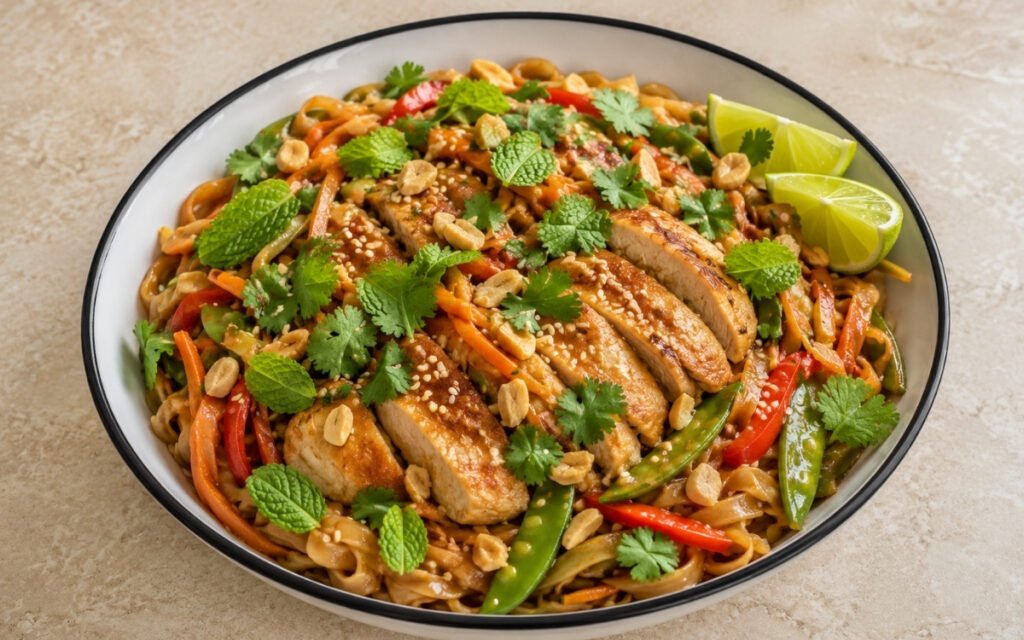
Thai Peanut Chicken Noodle Bowl
Seared chicken and flat rice noodles tossed in sriracha-ginger peanut sauce with stir-fried vegetables — cilantro, mint, crushed peanuts, and lime over the top. 45 minutes.
-
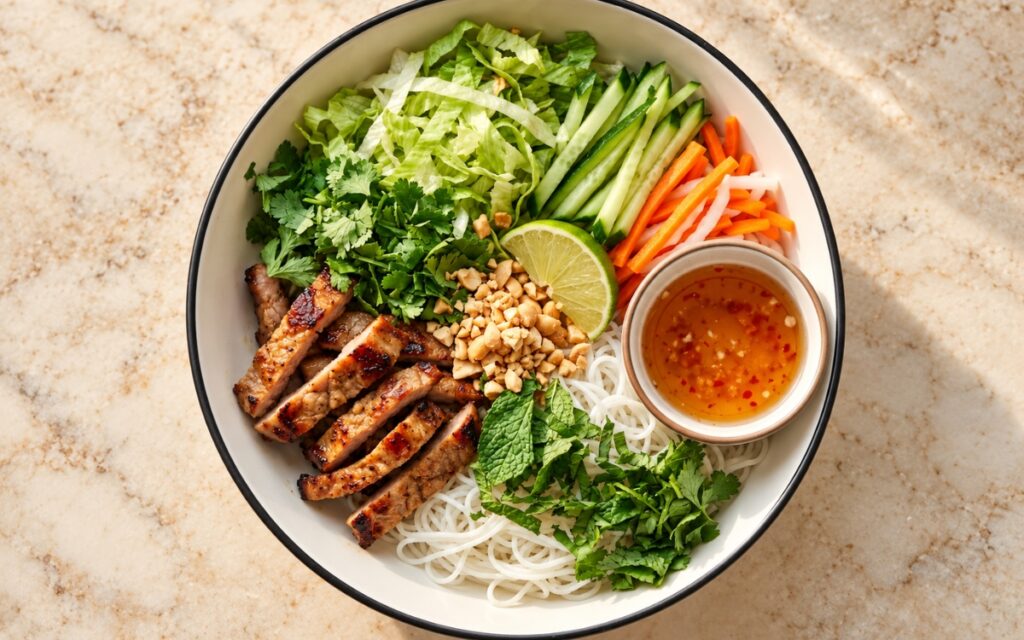
Lemongrass Pork Vermicelli Bowl
A Vietnamese-style bowl of grilled lemongrass pork over rice vermicelli with lettuce, cucumber, pickled carrot and daikon, herbs, peanuts and nuoc cham.
-
Shrimp Pad Thai
Stir-fried flat rice noodles with seared shrimp, egg, bean sprouts and garlic chives in a tamarind sauce, topped with peanuts and lime.

-
Singapore Curry Noodles
Thin rice noodles stir-fried in a yellow curry seasoning with shrimp, egg, bell peppers, red onion and bean sprouts, topped with peanuts and lime.
-
Chicken Pad Thai
Stir-fried flat rice noodles with browned chicken, egg, bean sprouts and garlic chives in a tamarind sauce, topped with peanuts and lime.
-
Chili Lime Noodles with Fresh Coriander & Shrimp
Tender noodles coated in glossy chili-lime sauce, with bright citrus acidity, warming chili heat, and a savory finish.