Dragon Fruit Tropical Smoothie Bowl
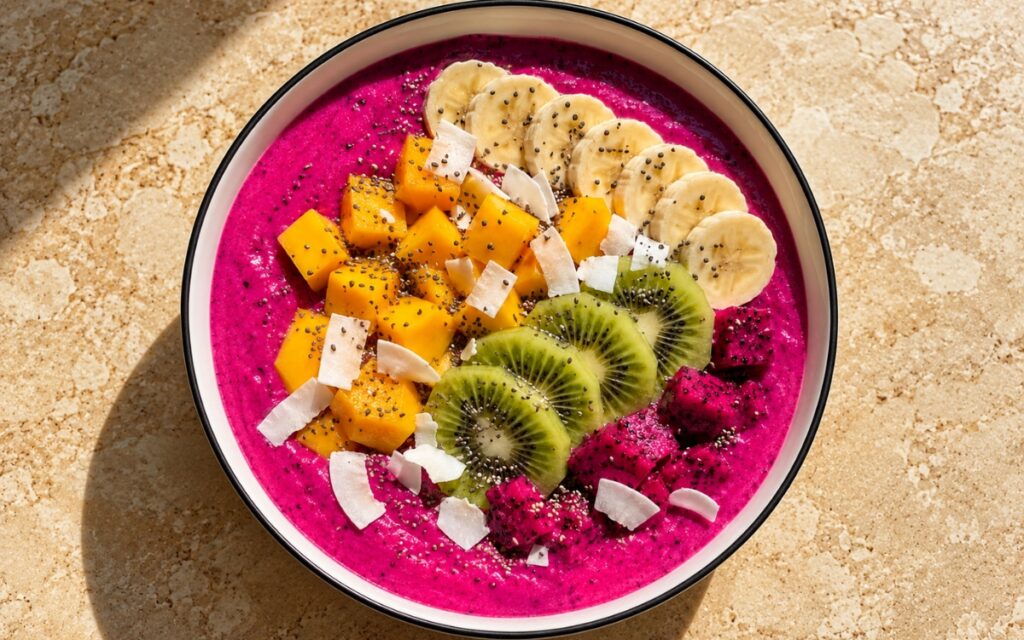
A thick, vividly magenta smoothie bowl built from pink dragon fruit, banana, and mango, blended with Greek yogurt until smooth, glossy, and spoonable, then topped in clean sections with mango cubes, kiwi slices, banana coins, dragon fruit pieces, coconut flakes, and chia seeds. Using pink dragon fruit specifically, rather than the white-fleshed variety, is the detail the whole bowl’s color depends on — white dragon fruit simply won’t produce the same vivid magenta, the same right-ingredient-for-the-color principle used elsewhere in this collection whenever a dish’s visual identity rests on one specific choice rather than a general substitution. Keeping the liquid minimal at the start protects that thick, dense texture, and stopping the blend the moment it turns smooth keeps the color from dulling and the base from warming past its best consistency.
- Prep Time : 20 min
- Total Time : 20 min
- Servings : 4
Ingredients
Smoothie Base
- 800 g frozen pink dragon fruit (pitaya) cubes or frozen pitaya puree pieces
- 300 g frozen banana slices, from about 3 medium bananas
- 300 g frozen mango chunks
- 320 g thick Greek yogurt
- 120–220 ml cold coconut milk beverage or coconut water, as needed
- 2 to 4 tbsp honey or maple syrup, optional, to taste
- 1 tsp lime juice, optional, for brightness
- Small pinch fine sea salt
Toppings
- 250–300 g ripe mango, cut into small cubes
- 3 kiwis, peeled and sliced
- 2 medium bananas, sliced into coins
- 120–160 g dragon fruit, cut into small cubes
- 35–45 g unsweetened coconut flakes or shaved coconut
- 2 to 3 tbsp chia seeds
Directions
- Prep the Toppings First
Cut the mango into small cubes, peel and slice the kiwi, slice the bananas into coins, and cut the dragon fruit topping pieces into small cubes, then measure out the coconut flakes and chia seeds. If you want the bowls to stay thicker for longer, chill four serving bowls in the fridge or freezer for 5 to 10 minutes. Every topping needs to be fully ready before blending, since the base should be assembled immediately while it’s still cold, dense, and spoonable. - Build the Blender Base
Add the Greek yogurt, coconut milk beverage or coconut water, honey or maple syrup if using, lime juice if using, and salt to the blender, then add the frozen banana, frozen mango, and frozen dragon fruit. Putting the liquid and yogurt in first lets the blades catch the mixture more easily, and keeping the liquid minimal at this stage is what protects the bowl’s thick texture before the frozen fruit even goes in. - Blend to a Thick Spoonable Texture
Blend on low at first, then increase speed as the mixture starts moving, stopping several times to scrape down the sides and push the frozen fruit toward the blades. Add more liquid only a tablespoon at a time if the blender needs help processing the mixture. The base should turn thick enough to hold soft ridges from a spoon and support toppings without them sinking — not pourable like a drink. - Adjust the Texture and Flavor
Taste and adjust only if needed: more sweetener if the dragon fruit is mild and the bowl tastes flat, a little more lime juice for brightness, a few extra frozen banana or dragon fruit pieces if the mixture turned too loose, or a splash more liquid if the blender is too stiff to finish. Stop blending as soon as the texture turns smooth — overblending warms the fruit, lightens the texture, and can dull the color along with it. - Portion the Base
Divide the base evenly among four bowls, about 350–400 ml per bowl, then use the back of a spoon to spread the surface smooth. The finished color should be an intense tropical magenta with a glossy, dense look. - Arrange the Toppings
Top each bowl with neat sections of mango cubes, kiwi slices, banana coins, and small dragon fruit pieces, then finish with a light scatter of coconut flakes and a sprinkle of chia seeds, keeping the arrangement clean so the bright pink base still frames the toppings. Serve immediately.
*Notes :
- Pink dragon fruit is the ingredient this bowl’s entire visual identity depends on. White-fleshed dragon fruit has almost none of the same pigment, so reaching for it instead would leave the bowl pale and flat rather than the vivid magenta the recipe is built around.
- Starting the blend with the yogurt and liquid before the frozen fruit matters more here than it might in a simpler bowl, since three frozen fruits going in together can stall a blender quickly without something fluid underneath to help the blades catch.
- Stopping the blend the moment the texture turns smooth is worth taking seriously rather than treating as a suggestion. Overblending doesn’t just soften the texture — it warms the fruit enough to noticeably dull the color, which works directly against the bright, glossy finish this bowl is meant to have.
- Keeping the liquid minimal at the start follows the same logic used throughout this collection’s other smoothie bowls: a thick base can always be loosened with another splash, but there’s no clean way to recover one that’s gone too thin short of blending in more frozen fruit.
Why This Recipe Works
This recipe works because pink dragon fruit supplies the vivid magenta color no other tropical fruit in the bowl could replicate, and frozen banana and mango round out the base with the structure and sweetness needed to keep it thick. Starting the blend with the yogurt and liquid gives the blades a head start against a dense frozen-fruit load, and stopping as soon as the texture turns smooth keeps both the color and consistency from degrading. Tasting before portioning accounts for how mild or sweet the dragon fruit turned out, and arranging the toppings in clean sections lets the bright base frame them rather than disappearing underneath a heavy pile.
Ingredient Breakdown
Pink Dragon Fruit (Pitaya)
The critical color ingredient — white-fleshed dragon fruit won’t produce the same vivid magenta base.
Frozen Banana
The structural ingredient — adds thickness and sweetness while softening the sharper frozen-fruit texture.
Frozen Mango
The body-and-flavor layer — adds tropical sweetness without significantly muting the magenta color.
Greek Yogurt
The creamy stabilizer — thick yogurt keeps the base dense; thin yogurt loosens it too quickly.
Lime Juice
The brightness adjustment — a small amount lifts flavor without overpowering the tropical profile.
Chia Seeds and Coconut Flakes
The finishing texture — added last so they keep their texture against the cold, glossy base.
Flavor Structure Explained
This dragon fruit tropical smoothie bowl follows a layered balance model:
- Cold, dense foundation (frozen dragon fruit, banana, and mango)
- Creamy dairy body (Greek yogurt)
- Bright acidic lift (lime juice)
- Fresh tropical topping layer (mango, kiwi, banana, dragon fruit)
- Crunchy finishing texture (coconut flakes, chia seeds)
Frozen dragon fruit, banana, and mango together build the bowl’s cold, dense foundation and vivid color, while Greek yogurt rounds that fruit into something creamy rather than icy. A small amount of lime juice keeps the sweetness from tipping flat, the fresh fruit toppings echo and brighten the same tropical flavors found in the base, and the coconut flakes and chia seeds finish the bowl with a crunch the soft fruit base can’t provide alone.
Common Mistakes to Avoid
- Using White Dragon Fruit Instead of Pink – This produces a pale, dull base instead of the intended vivid magenta. Always use pink dragon fruit (pitaya) for the color this bowl depends on.
- Adding Too Much Liquid Upfront – This thins the base past easy recovery and lets toppings sink. Always start with the lowest amount of liquid listed.
- Over-Blending Past Smooth – This warms the fruit, dulls the color, and softens the texture too much. Always stop blending as soon as the mixture turns smooth.
- Slicing the Banana Topping Too Early – This lets it brown before serving. Always slice the banana for topping just before assembling.
- Letting the Finished Bowl Sit – This softens the base and lets the toppings lose their texture contrast. Always serve immediately after assembling.
Variations
Extra-Tropical Version
Add 100 g of frozen pineapple to the base along with the mango for a sharper tropical note, reducing the added sweetener slightly since pineapple brings its own natural sugar and acidity to the mix.
Toasted Coconut Version
Lightly toast the coconut flakes in a dry skillet for 2 to 3 minutes before using them as a topping, per the recipe’s own suggested option, for a deeper, more aromatic flavor than plain flakes provide. Cool completely before adding so it stays crisp on the bowl.
Protein-Boosted Version
Blend in one scoop of unflavored or vanilla protein powder along with the Greek yogurt, adding a small splash more liquid if the base turns too thick to move. This makes the bowl a more substantial option without changing its signature color.
Extra-Pink Version
Increase the pink dragon fruit slightly and reduce the mango proportionally for an even more saturated magenta base, keeping the same topping arrangement for contrast. This version leans slightly less sweet, so taste before adding sweetener.
Storage & Make-Ahead
This bowl is built to be eaten right after it’s assembled, and that timeline matters more here than in most other bowls in this collection, since the color itself starts to dull as the base warms. Within fifteen to twenty minutes at room temperature, the frozen fruit softens and the magenta brightness fades slightly along with the texture.
The parts worth prepping ahead are the ones that don’t touch the blender. Cut the mango and dragon fruit topping pieces and store them in separate airtight containers in the refrigerator, and measure the coconut flakes and chia seeds into small containers so the only remaining work is blending and assembling.
Save the banana slicing for just before serving, since banana coins brown faster than the other toppings in this bowl and lose their fresh, pale look within an hour or two of being cut. Freezing your own dragon fruit, banana, and mango in bulk is worth doing if this bowl becomes a regular rotation, turning future prep into mostly measuring and blending.
Coconut flakes and chia seeds both store well at room temperature in sealed containers for weeks, so there’s little reason to measure out more than one serving’s worth at a time. The fresh toppings are the only components worth timing carefully, since kiwi and dragon fruit both lose their clean texture after a day or two cut and refrigerated.
Frequently Asked Questions
Can I use white dragon fruit instead of pink?
You can, but the bowl will turn out pale rather than the vivid magenta this recipe is built around. Pink dragon fruit (pitaya) carries nearly all of the color pigment, so white-fleshed dragon fruit won’t produce the same visual result no matter how much is used.
Why does my bowl look duller than expected?
This usually comes down to overblending, since running the blender longer than necessary warms the fruit and dulls the magenta color along with softening the texture. Stop blending the moment the mixture turns smooth, and portion it promptly rather than letting it sit in the blender.
What can I use instead of Greek yogurt?
Coconut yogurt or a thick plant-based yogurt both work for a dairy-free version, though you may need slightly less added liquid since plant-based yogurts tend to be thinner. The color and overall structure stay close to the original either way.
Can I make any part of this ahead of time?
The blended base doesn’t hold well once it’s made, but the mango and dragon fruit topping pieces can be cut and stored a day ahead, and the coconut flakes and chia seeds can be measured out in advance. Save the banana slicing for just before serving so it stays fresh-looking.
What other smoothies and bowls pair well with this one?
Mango Coconut Smoothie Bowl, Açaí Berry Smoothie Bowl, Tropical Green Smoothie, Dragon Fruit Lemonade, and Mango Pineapple Smoothie all share similar tropical-fruit or smoothie-bowl techniques and make good options to try next.
Nutrition Facts
( Per Serving — 1 bowl )
- Calories
- ~360 kcal
- Protein
- 11 g
- Fat
- 7 g
- Carbs
- 68 g
-

Mango Coconut Smoothie Bowl
Thick, spoonable mango smoothie bowl built on frozen fruit and coconut yogurt, topped with toasted coconut and chia.
-
Peanut Butter Banana Protein Smoothie Bowl
A thick, creamy peanut butter banana protein smoothie bowl topped with banana, peanut butter drizzle, peanuts, granola, and cacao nibs.
-
Blueberry Almond Butter Smoothie Bowl
A thick, glossy blueberry smoothie bowl with Greek yogurt and almond butter, topped with fresh fruit, almond butter drizzle, almonds, and granola.


-
Açaí Berry Smoothie Bowl
Thick, glossy açaí smoothie bowl built on frozen berries and banana, topped with granola and coconut flakes.
-
Green Smoothie Bowl with Kiwi
A thick, spoonable green smoothie bowl with banana, avocado, spinach, and kiwi, finished with fresh fruit, granola, and hemp seeds.
-
Raspberry Peach Smoothie Bowl
A thick, coral-pink raspberry peach smoothie bowl with Greek yogurt, topped with fresh fruit, granola, and a yogurt swirl.