
Raspberry Peach Smoothie Bowl
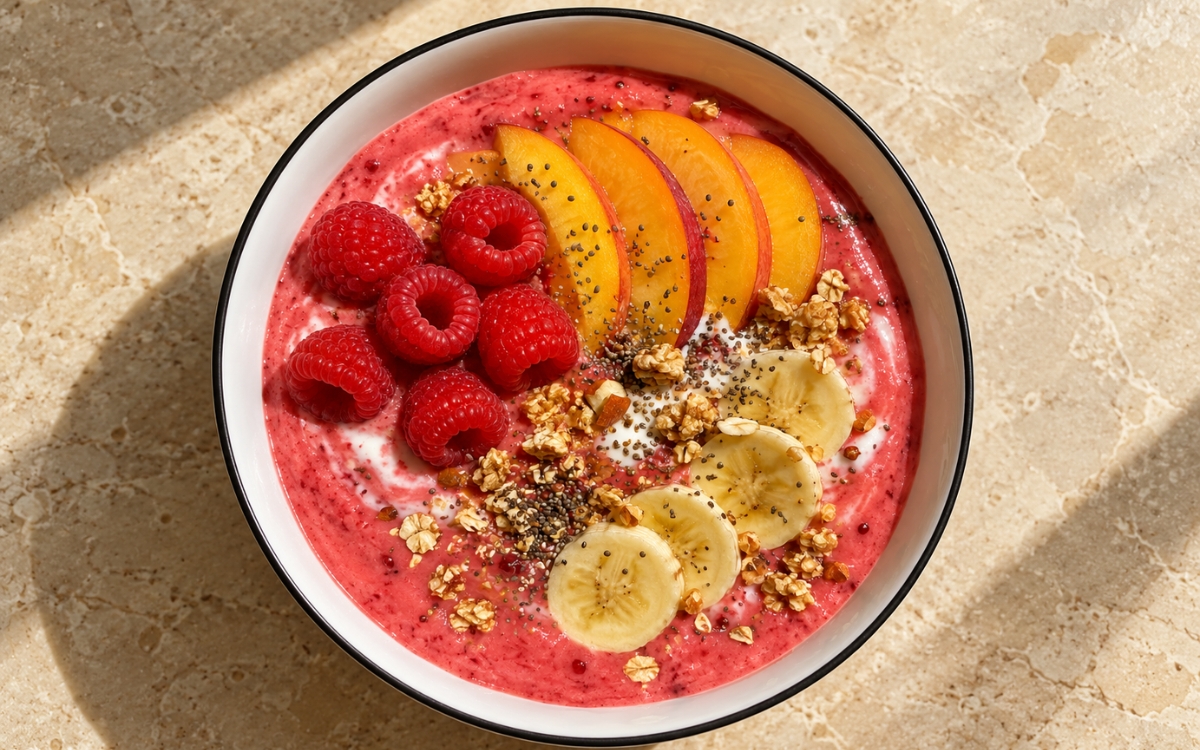
A thick, coral-pink smoothie bowl built from frozen raspberries, peaches, and banana, blended with Greek yogurt until smooth and spoonable, then topped in clean sections with thin peach slices, fresh raspberries, banana coins, granola, chia seeds, and a small yogurt swirl. Starting the blend with the yogurt and liquid before the frozen fruit goes in is what lets the blades catch the mixture right away — the same liquid-first approach used elsewhere in this collection whenever a dense load of frozen fruit needs a head start rather than extra liquid to get moving. The raspberries leave tiny seed specks throughout the base, which is a feature here rather than something to blend away, and the yogurt swirl on top is kept deliberately small so the coral-pink base stays visible around it instead of being covered by a full layer.

Prep Time : 15 min
Total Time : 15 min
Servings : 4
15 min
15 min
4
Ingredients
Smoothie Base
• 500 g frozen raspberries
• 500 g frozen peach slices
• 300 g frozen banana slices, from about 3 medium bananas
• 400 g thick Greek yogurt
• 180–300 ml cold milk, as needed
• 2 to 4 tbsp honey or maple syrup, optional, to taste
• 1 tsp vanilla extract
• 1 to 2 tsp lemon juice, optional, for brightness
• Pinch of fine sea salt
Yogurt Swirl
• 120 g Greek yogurt
• 1 to 2 tsp honey, optional
• 1 to 2 tsp milk, only if needed to loosen slightly
Toppings
• 2 ripe peaches or nectarines, thinly sliced
• 125–150 g fresh raspberries
• 2 medium bananas, sliced into coins
• 100–120 g granola
• 2 to 3 tbsp chia seeds
Directions
- Prep the Toppings and Assembly Items
Thinly slice the peaches, slice the bananas into coins, and measure out the raspberries, granola, and chia seeds. For the yogurt swirl, stir together the yogurt with honey if using, loosening it with 1 to 2 teaspoons of milk only if it’s too thick to swirl. If you have the fridge or freezer space, chill four bowls for 5 to 10 minutes. Every topping needs to be ready before the blender starts, since the base should be assembled while it’s still very thick and cold. - Start the Blender Base
Add the Greek yogurt, milk, honey or maple syrup if using, vanilla, lemon juice if using, and salt to the blender, then blend briefly just to combine. Starting with the dairy and liquid on the bottom lets the blades catch the mixture more easily once the frozen fruit goes in, rather than fighting a dry load from the start. - Add Frozen Fruit and Blend Thick
Add the frozen banana, frozen peaches, and frozen raspberries, then blend until thick, smooth, and creamy, stopping several times to scrape down the sides and push the mixture toward the blades. Add more milk only a tablespoon at a time if the blender stalls. The mixture should turn dense and spoonable, with tiny raspberry specks still visible but no large frozen fruit chunks left. - Adjust Texture and Flavor
Taste and adjust as needed: more sweetener if the fruit came out tart, a little more lemon juice for brightness, a spoonful more yogurt for extra creaminess, a few extra frozen banana slices if it’s too thin, or a tiny splash of milk if it’s too stiff to blend. Stop blending as soon as the bowl turns smooth, since running it longer warms the mixture and softens it more than necessary. - Portion the Bowls
Divide the base evenly among four bowls, about 350–400 ml per bowl, then use the back of a spoon to spread the top into a smooth, even surface. - Top and Finish
Top each bowl with a small yogurt swirl, a section of thin peach slices, a section of fresh raspberries, a section of banana coins, a scatter of granola, and a light sprinkle of chia seeds, keeping the toppings clean and visible with the coral-pink base still showing around them. Serve immediately.
*Notes :
- Frozen fruit is what gives this bowl its structure, which is why fresh raspberries and peaches alone won’t produce the same result. Without the ice crystal breakdown that happens during blending, the base stays loose no matter how long it’s blended.
- Starting the blend with the yogurt and liquid before the frozen fruit matters more than it might seem with a load this dense. Three different frozen fruits going in at once can stall a blender quickly if there’s nothing fluid underneath to help the blades catch, so building that base first keeps the whole process moving smoothly.
- The raspberry seeds that show up as tiny specks throughout the base aren’t a flaw to blend out — they’re part of what gives this bowl its visual texture and ties the color and flavor together. Trying to blend past them longer than necessary only risks warming the base more than it needs to be.
- The yogurt swirl is intentionally kept small rather than spread as a full layer, since the point is a contrast of creaminess against the fruit base, not a separate layer that covers it. A thin swirl lets the coral-pink color of the bowl stay the visual focus, which is exactly what the reference presentation is built around.
Why This Recipe Works
This recipe works because three frozen fruits together — raspberries, peaches, and banana — build a dense, spoonable base without needing ice, which would otherwise dilute the flavor as it melts. Starting the blend with the yogurt and liquid gives the blades something to catch before the frozen fruit load hits, and stopping as soon as the texture turns smooth keeps the bowl from warming past its best consistency. Tasting before portioning accounts for how ripe the peaches turned out, and keeping the yogurt swirl small rather than a full layer lets the bowl’s coral-pink color stay the visual centerpiece.
Ingredient Breakdown
Frozen Raspberries, Peaches, and Banana
The primary structural ingredients — frozen fruit builds the thick, spoonable base fresh fruit alone can’t achieve.
Greek Yogurt
The creamy body — thick yogurt keeps the base dense and provides the material for the swirl on top.
Lemon Juice
The brightness adjustment — used in small amounts to lift the flavor if the fruit tastes flat.
Yogurt Swirl
The finishing contrast — kept small and deliberate so the coral-pink base stays visible underneath.
Chia Seeds
The light finishing touch — used sparingly so it doesn’t compete visually with the fruit toppings.
Granola
The crunch element — added last so it keeps its texture against the cold, soft base.
Flavor Structure Explained
This raspberry peach smoothie bowl follows a layered balance model:
- Cold, dense foundation (frozen raspberries, peaches, and banana)
- Creamy dairy body (Greek yogurt)
- Bright acidic lift (lemon juice)
- Contrasting creamy swirl (yogurt swirl)
- Crunchy finishing layer (granola, chia seeds, fresh fruit toppings)
Frozen raspberries, peaches, and banana together build the bowl’s cold, dense foundation, while Greek yogurt rounds that fruit into something creamy rather than icy. A small amount of lemon juice keeps the sweetness from tipping flat, the yogurt swirl on top adds a second, more concentrated hit of creaminess without covering the base, and the granola and chia seeds finish the bowl with the crunch the soft fruit base can’t provide on its own.
Common Mistakes to Avoid
- Using Fresh Fruit Instead of Frozen – This produces a thin, loose base instead of a spoonable one. Always use frozen raspberries, peaches, and banana for the smoothie base.
- Adding the Frozen Fruit Before the Liquid – This makes it harder for the blades to catch and stalls the blender quickly. Always start with the yogurt and liquid on the bottom.
- Over-Blending Past Smooth – This warms the mixture and softens it more than necessary. Always stop blending as soon as the base turns smooth.
- Making the Yogurt Swirl Too Large – This covers the coral-pink base instead of contrasting with it. Always keep the swirl small and deliberate.
- Letting the Bowl Sit Before Serving – This softens the base and causes the granola to lose its crunch. Always serve immediately after topping.
Variations
Extra-Tart Version
Increase the lemon juice slightly and reduce the honey or maple syrup, letting the raspberries’ natural tartness come through more clearly against the sweeter peach. This works especially well if the peaches used were very ripe and already quite sweet.
Mango Swap
Replace the frozen peaches with an equal amount of frozen mango for a slightly more tropical flavor while keeping the same coral-pink color from the raspberries. The texture and technique stay identical; only the flavor profile shifts.
Extra-Protein Version
Blend in one scoop of vanilla or unflavored protein powder along with the Greek yogurt, adding a small splash more milk if the base turns too thick to move. This makes the bowl a more substantial post-workout option without changing its core flavor.
Nectarine Version
Use fresh nectarine slices for the topping instead of peach, per the recipe’s own suggested swap, for a slightly firmer bite and a touch more tartness against the smooth base. This version pairs particularly well with a slightly smaller yogurt swirl, letting the nectarine’s color stand out more.
Storage & Make-Ahead
This bowl is built to be eaten right after it’s assembled, and the window for that is short by design. The base stays thick because it’s cold and freshly blended, and within fifteen to twenty minutes at room temperature the frozen fruit begins to soften, which lets the granola lose its crunch and the clean topping sections blur together.
The parts that hold up well ahead of time are the ones that don’t touch the blender. Measure the granola and chia seeds into separate containers the night before, and slice the fresh peaches close to serving time rather than far in advance, since cut peaches brown faster than most other toppings in this bowl.
The yogurt swirl can be mixed a day ahead and stored in a small sealed container in the refrigerator, ready to spoon on top without any extra effort at serving time. Freezing your own raspberries, peaches, and banana in bulk is worth doing if this bowl becomes a regular rotation, since it turns the active prep into mostly just measuring and blending.
Granola and chia seeds both store well at room temperature in sealed containers for weeks, so there’s little reason to measure out more than one serving’s worth at a time. The fresh raspberries and peach slices are the only components worth timing carefully, since both lose their clean texture and color after a day or two cut and refrigerated.
Frequently Asked Questions
Can I use fresh raspberries and peaches instead of frozen?
You can for the toppings, but the base needs frozen fruit to reach its thick, spoonable texture. Fresh fruit alone blends into something closer to a drinkable smoothie, since there’s no ice crystal breakdown to thicken the mixture.
Why does my bowl taste too tart or too flat?
This comes down to how ripe the peaches and raspberries were going in, since sweetness varies more in fruit than in most other ingredients. Taste before portioning — a tart batch needs a touch more honey or maple syrup, while a flat-tasting one usually just needs a little more lemon juice.
What can I use instead of Greek yogurt?
Coconut yogurt or a thick plant-based yogurt both work for a dairy-free version, though you may need slightly less added liquid since plant-based yogurts tend to be thinner. The swirl on top works the same way regardless of which yogurt you use.
Can I make any part of this ahead of time?
The blended base doesn’t hold well once it’s made, but the yogurt swirl can be mixed a day ahead, and the granola and chia seeds can be measured into containers in advance. This leaves only the blending and fresh-fruit slicing for the morning itself.
What other smoothies and bowls pair well with this one?
Raspberry Peach Smoothie, Strawberry Smoothie Bowl, Peach Mango Smoothie, Raspberry White Chocolate Muffins, and Beet Berry Smoothie Bowl all share similar berry, stone-fruit, or smoothie-bowl techniques and make good options to try next.
Nutrition Facts
( Per Serving — 1 bowl )
Calories
~380 kcal
Protein
15 g
Fat
7 g
Carbs
66 g
Calories
~380 kcal
Protein
15 g
Fat
7 g
Carbs
66 g
Related Recipes
Related Recipes
-

Apple Pie Smoothie
Thick breakfast smoothie built on soaked rolled oats, peeled apple, applesauce, and Greek yogurt, finished with warm cinnamon and nutmeg.
-
Fresh Dill Yogurt Sauce
Fresh dill and Greek yogurt with lemon and garlic — a light, creamy sauce ready in 10 minutes.
-
Classic Guacamole
Three ripe avocados folded with red onion, jalapeño, lime, and cumin — rustic, rich, and perfectly seasoned in 20 minutes.
You might also like
You might also like
-
Cucumber Apple Green Smoothie
A pale, fresh green smoothie made with cucumber, green apple, spinach, and lemon, finished with cucumber ribbons, apple slices, and lemon zest.
-
Double Chocolate Muffins
Bakery-style double chocolate muffins with tall domed tops and melted chocolate pockets.
-
Idli Sambar Bowl
Soft steamed idlis served in bowls of warm, brothy toor dal and vegetable sambar with a thick spoonful of fresh coconut chutney.


Raspberry Peach Smoothie Bowl
Ingredients
Method
- Thinly slice the peaches, slice the bananas into coins, and measure out the raspberries, granola, and chia seeds. For the yogurt swirl, stir together the yogurt with honey if using, loosening it with 1 to 2 teaspoons of milk only if it’s too thick to swirl. If you have the fridge or freezer space, chill four bowls for 5 to 10 minutes. Every topping needs to be ready before the blender starts, since the base should be assembled while it’s still very thick and cold.
- Add the Greek yogurt, milk, honey or maple syrup if using, vanilla, lemon juice if using, and salt to the blender, then blend briefly just to combine. Starting with the dairy and liquid on the bottom lets the blades catch the mixture more easily once the frozen fruit goes in, rather than fighting a dry load from the start.
- Add the frozen banana, frozen peaches, and frozen raspberries, then blend until thick, smooth, and creamy, stopping several times to scrape down the sides and push the mixture toward the blades. Add more milk only a tablespoon at a time if the blender stalls. The mixture should turn dense and spoonable, with tiny raspberry specks still visible but no large frozen fruit chunks left.
- Taste and adjust as needed: more sweetener if the fruit came out tart, a little more lemon juice for brightness, a spoonful more yogurt for extra creaminess, a few extra frozen banana slices if it’s too thin, or a tiny splash of milk if it’s too stiff to blend. Stop blending as soon as the bowl turns smooth, since running it longer warms the mixture and softens it more than necessary.
- Divide the base evenly among four bowls, about 350–400 ml per bowl, then use the back of a spoon to spread the top into a smooth, even surface.
- Top each bowl with a small yogurt swirl, a section of thin peach slices, a section of fresh raspberries, a section of banana coins, a scatter of granola, and a light sprinkle of chia seeds, keeping the toppings clean and visible with the coral-pink base still showing around them. Serve immediately.