Cream Cheese Frosted Pumpkin Sheet Cake
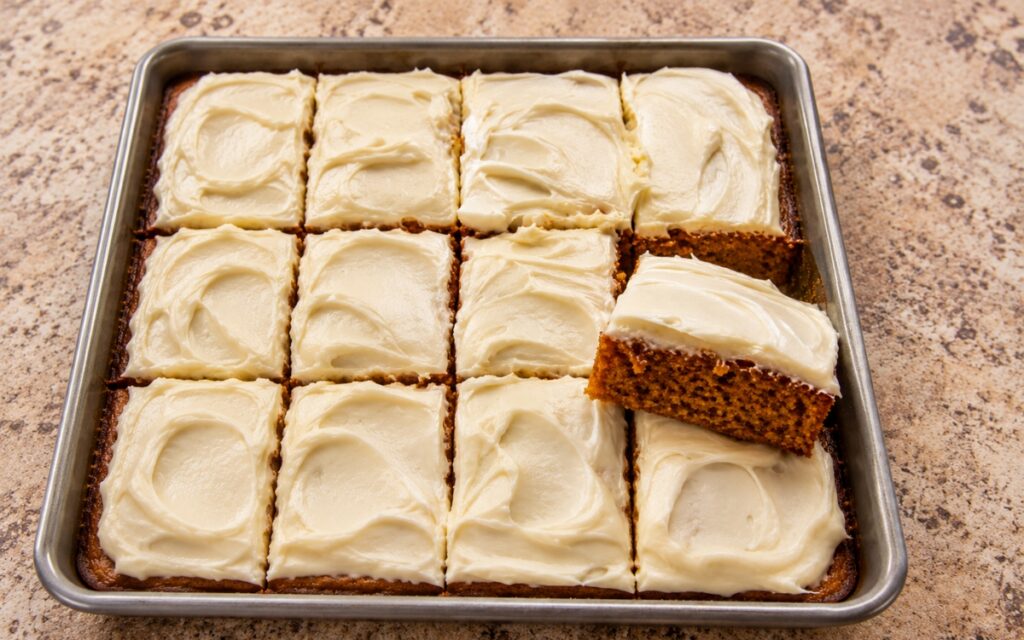
A classic pumpkin sheet cake with a deep orange-brown, very moist and tender crumb, baked in a 9×13-inch pan and finished with a thick, smooth layer of cream cheese frosting spread edge to edge. Using neutral oil instead of butter is what keeps this cake’s crumb soft and plush well past the day it’s baked — the same oil-over-butter approach used elsewhere in this collection whenever a cake needs to stay moist for days rather than just the first afternoon. Whisking the dry ingredients thoroughly before they meet the wet base keeps the baking soda and warm spices from clustering into bitter pockets, and cooling the cake completely before frosting protects the cream cheese layer from melting and dragging across the surface.
- Prep Time : 25 min
- Total Time : 2 hr 15 min
- Servings : 12
Ingredients
Pumpkin Sheet Cake
- 250 g all-purpose flour
- 2 tsp baking powder
- 1 tsp baking soda
- ½ tsp fine salt
- 2 tsp ground cinnamon
- 1 tsp ground ginger
- ¼ tsp ground nutmeg
- ⅛ tsp ground cloves
- 300 g granulated sugar
- 100 g light brown sugar, packed
- 240 ml neutral oil
- 4 large eggs, room temperature
- 425 g pumpkin purée (pure pumpkin, not pumpkin pie filling)
- 2 tsp vanilla extract
- 60 ml whole milk or buttermilk, room temperature
Cream Cheese Frosting
- 225 g full-fat cream cheese, softened
- 115 g unsalted butter, softened
- 300–360 g powdered sugar, sifted
- 1 tsp vanilla extract
- 1 pinch fine salt
Directions
- Prepare the Pan and Oven
Heat the oven to 175°C / 350°F. Grease a 9×13-inch / 23×33 cm metal baking pan and line the bottom with parchment if you want easier lifting, or grease well and lightly flour the pan if skipping the parchment. A metal pan gives the most even bake and the cleanest edges — glass can work too, but usually needs slightly longer baking and tends to produce darker edges. - Mix the Dry Ingredients
Whisk together the flour, baking powder, baking soda, salt, cinnamon, ginger, nutmeg, and cloves in a medium bowl, making sure everything is thoroughly combined so the leavening and spices distribute evenly. Unevenly mixed baking soda or spices can create streaking, bitter pockets, or uneven rise once the cake bakes. - Build the Wet Base
Whisk together the granulated sugar, brown sugar, and oil in a large bowl until combined and glossy, then add the eggs one at a time, whisking well after each addition until the mixture is smooth and slightly thickened. Whisk in the pumpkin purée and vanilla extract until fully smooth, then whisk in the milk or buttermilk. The wet mixture should end up smooth, cohesive, and vividly orange-brown with no streaks of egg or pumpkin remaining. - Combine the Batter
Add the dry ingredients to the wet mixture in two additions, folding gently with a spatula or mixing on low speed just until no dry flour remains, scraping the bottom and sides of the bowl for even mixing but stopping as soon as the batter looks uniform. Don’t overmix once the flour is added — overmixing develops gluten and can make the cake tighter and less tender. The finished batter should be medium-thick, smooth, and pourable. - Pan and Bake
Pour the batter into the prepared pan and spread it evenly into the corners, then bake for 32 to 38 minutes, rotating once late in baking if your oven bakes unevenly. The cake is done when the center springs back lightly when touched, the surface looks set and matte rather than wet, a toothpick inserted in the center comes out clean or with a few moist crumbs, and the internal temperature reads about 96–99°C / 205–210°F. Don’t overbake — pumpkin cakes can dry out quickly if pushed too far, especially around the edges, so pull the cake as soon as the center is set. - Cool Completely
Set the pan on a rack and cool the cake completely before frosting, letting it rest in the pan for at least 1½ hours or until no residual warmth remains. A cake that’s even slightly warm will melt the frosting on contact, causing it to loosen and drag instead of spreading cleanly. - Make the Cream Cheese Frosting
Beat the softened cream cheese and softened butter together in a large bowl until fully smooth, creamy, and lump-free, then add the powdered sugar gradually, mixing on low at first and then medium until smooth. Add the vanilla and a small pinch of salt, beating just until creamy and spreadable. If the frosting seems too soft, chill it for 10 to 15 minutes before using; if it seems too stiff, let it sit at room temperature briefly. Keeping the butter and cream cheese at a similar softness before mixing matters — if one is noticeably colder than the other, the frosting can turn grainy or split. - Frost the Cake
Spread the frosting evenly over the completely cooled cake in a thick, edge-to-edge layer, using an offset spatula to create soft swoops and smooth ridges across the top for a classic sheet-cake finish. The goal is a thick, smooth cream cheese frosting with visible swirls covering the whole cake from edge to edge. - Portion
Cut the cake into 12 equal rectangles for serving. For the cleanest slices, chill the frosted cake for 20 to 30 minutes first, use a long sharp knife, and wipe the blade clean between cuts — chilled frosting cuts more cleanly and helps preserve sharp edges and visible frosting thickness.
*Notes :
- Neutral oil instead of butter is the choice responsible for how moist this cake stays over several days. Butter firms up as it cools, which can make a cake feel drier sooner, while oil stays liquid at room temperature and keeps the crumb soft and plush well past the day it’s baked.
- Whisking the dry ingredients thoroughly before combining them with the wet base deserves more attention than it usually gets. Baking soda and the warm spices here are both potent in small amounts, and uneven distribution can leave bitter pockets or patches of uneven rise scattered through an otherwise good cake.
- Cooling the cake completely before frosting isn’t a step worth rushing, even though it adds real time to the process. Cream cheese frosting melts on contact with residual warmth, and a cake that’s even slightly warm will drag the frosting instead of letting it sit in a clean, thick layer.
- Matching the softness of the butter and cream cheese before beating them together is a small detail that makes a real difference in the finished frosting. If one ingredient is noticeably colder than the other, the mixture can turn grainy or visibly split instead of coming together smooth.
Why This Recipe Works
This recipe works because neutral oil keeps the cake’s crumb moist and soft for days in a way butter alone typically can’t match, and pure pumpkin purée adds both moisture and flavor without the added sugar sweetened pie filling would introduce. Thoroughly whisking the dry ingredients first keeps the baking soda and spices from clustering into bitter pockets, and pulling the cake as soon as the center springs back protects it from drying out at the edges. Cooling the cake fully before frosting keeps the cream cheese layer thick and clean rather than melted, and chilling the frosted cake briefly before slicing produces sharp, bakery-style edges on every square.
Ingredient Breakdown
Neutral Oil
The moisture technique — keeps the crumb soft and plush for days, unlike butter, which firms as it cools.
Pure Pumpkin Purée
The flavor-and-moisture base — using plain purée keeps the sugar and spice levels fully controllable.
Warm Spice Blend
The flavor signature — cinnamon, ginger, nutmeg, and cloves together build the classic fall flavor without overpowering the pumpkin.
Room-Temperature Eggs and Dairy
The emulsification technique — matched temperatures help both the batter and frosting come together smoothly.
Cream Cheese Frosting
The finishing layer — a thick, edge-to-edge spread that depends on a completely cooled cake underneath it.
Buttermilk (optional)
The tang-and-tenderness booster — adds a slight tang and a softer crumb compared to whole milk.
Flavor Structure Explained
This cream cheese frosted pumpkin sheet cake follows a layered balance model:
- Moist, tender foundation (oil-based pumpkin batter)
- Warm spiced core (cinnamon, ginger, nutmeg, cloves)
- Rich, tangy finish (cream cheese frosting)
- Clean sliced presentation (chilled frosting, sharp cuts)
An oil-based pumpkin batter forms the moist, tender foundation of this cake, while cinnamon, ginger, nutmeg, and cloves together build a warm spiced core that stays balanced rather than overpowering the pumpkin. The cream cheese frosting adds a rich, tangy finish once the cake has cooled completely, and chilling the frosted cake before slicing delivers the clean, bakery-style presentation the recipe is aiming for.
Common Mistakes to Avoid
- Using Sweetened Pumpkin Pie Filling Instead of Pure Purée – This throws off the cake’s sugar and spice balance. Always use plain, pure pumpkin purée.
- Frosting the Cake Before It’s Fully Cooled – This melts the frosting and causes it to drag instead of spreading cleanly. Always cool the cake completely, about 1½ hours, before frosting.
- Overmixing the Batter After Adding Flour – This develops gluten and makes the cake tighter and less tender. Always fold just until no dry flour remains.
- Mixing Cream Cheese and Butter at Different Temperatures – This can make the frosting look grainy or split. Always soften both to a similar consistency before beating.
- Slicing Without Chilling the Frosted Cake – This drags the frosting and blurs clean edges. Always chill the frosted cake for 20 to 30 minutes before cutting.
Variations
Stronger Spice Version
Increase the cinnamon to 2½ teaspoons and the ginger to 1¼ teaspoons, per the recipe’s own suggested adjustment, while keeping the cloves restrained so the cake stays balanced rather than tipping toward bitter.
Buttermilk Version
Use buttermilk in place of whole milk for a slightly tangier flavor and a softer crumb, keeping every other measurement and step the same. The batter’s consistency stays nearly identical either way.
Cinnamon Cream Cheese Frosting
Add ½ teaspoon of ground cinnamon to the cream cheese frosting along with the vanilla for a spiced frosting that echoes the warm spices already in the cake. This pairs particularly well with a light dusting of cinnamon on top as a final garnish.
Make-Ahead Two-Day Version
Bake the cake one day ahead, cool completely, and cover tightly, then make the frosting and frost the cake the following day, per the recipe’s own make-ahead guidance, for a dessert that tastes just as fresh as one made entirely same-day.
Storage & Make-Ahead
This cake is genuinely well suited to being split across two days, since baking it one day ahead and frosting it the next doesn’t cost anything in quality. Bake the cake, cool it completely, cover it tightly, and leave it unfrosted overnight, then make the frosting and finish the cake the next day.
Once the cake is frosted, it needs to be refrigerated because of the cream cheese, which isn’t shelf-stable at room temperature the way an uncovered butter-based frosting might be. Keep it tightly covered in the refrigerator, where it holds well for up to 4 days without losing its texture.
For the best eating experience, let refrigerated slices sit at room temperature for 20 to 30 minutes before serving. The crumb softens back toward its original texture and the frosting turns creamy again, rather than tasting dense and slightly firm straight from the fridge.
If you’re cutting the cake for serving rather than storage, chilling the whole frosted cake briefly beforehand makes a real difference in how clean the slices look. A warm or room-temperature frosting tends to drag under the knife in a way chilled frosting simply doesn’t.
Frequently Asked Questions
Can I use sweetened pumpkin pie filling instead of pure pumpkin purée?
No — pumpkin pie filling already contains added sugar and spices, which throws off the carefully balanced sweetness and spice levels in this recipe. Always use plain, pure pumpkin purée, and check the can label carefully since the two products often sit next to each other on shelves.
Why did my frosting turn out grainy or split-looking?
This usually happens when the cream cheese and butter are at noticeably different temperatures before mixing, which keeps them from emulsifying smoothly together. Soften both to a similar consistency at room temperature before beating them together.
Can I bake the cake ahead of time?
Yes, and it works well split across two days. Bake and cool the cake completely, cover it tightly, and frost it the next day — the texture and flavor hold up just as well as a cake made entirely in one sitting.
How long does the frosted cake keep?
Once frosted, it needs to be refrigerated because of the cream cheese frosting, and it keeps well tightly covered for up to 4 days. Let slices sit at room temperature for 20 to 30 minutes before serving so the crumb and frosting soften back to their best texture.
What other desserts and drinks pair well with this one?
Pumpkin Whoopie Pies, Classic Pumpkin Pie, Carrot Cake Cream Cheese Muffins, Pumpkin Spice Iced Latte, and Bakery-Style Pumpkin Cream Cheese Muffins all share similar warm-spiced or cream-cheese-frosted techniques and make good options to try next.
Nutrition Facts
( Per Serving — 1 square )
- Calories
- ~430 kcal
- Protein
- 5 g
- Fat
- 20 g
- Carbs
- 58 g
-

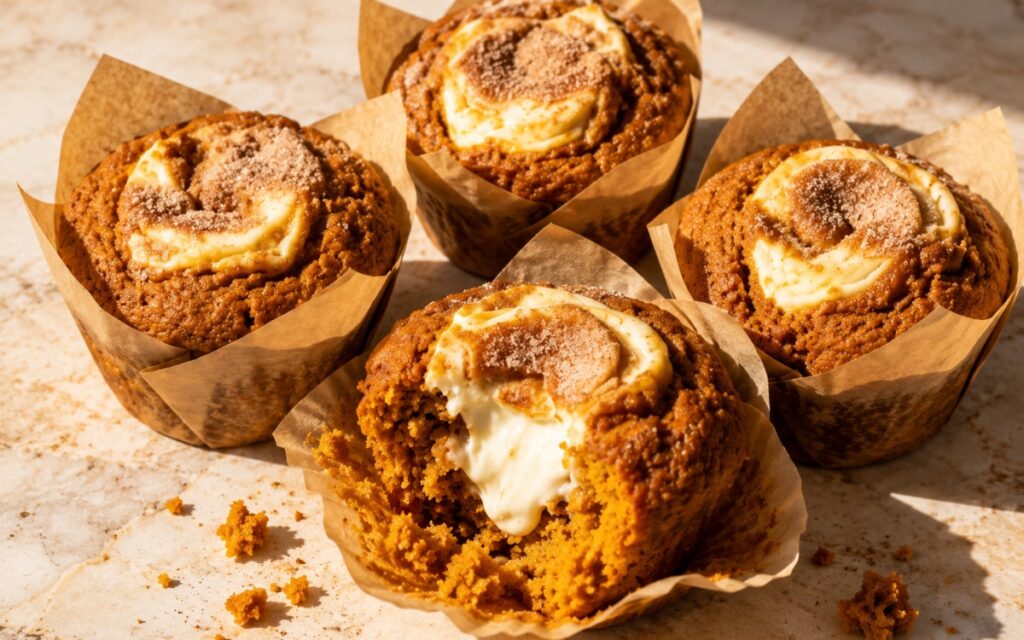
Bakery-Style Pumpkin Cream Cheese Muffins
Bakery-style pumpkin muffins with a creamy cream cheese filling baked into the center.
-
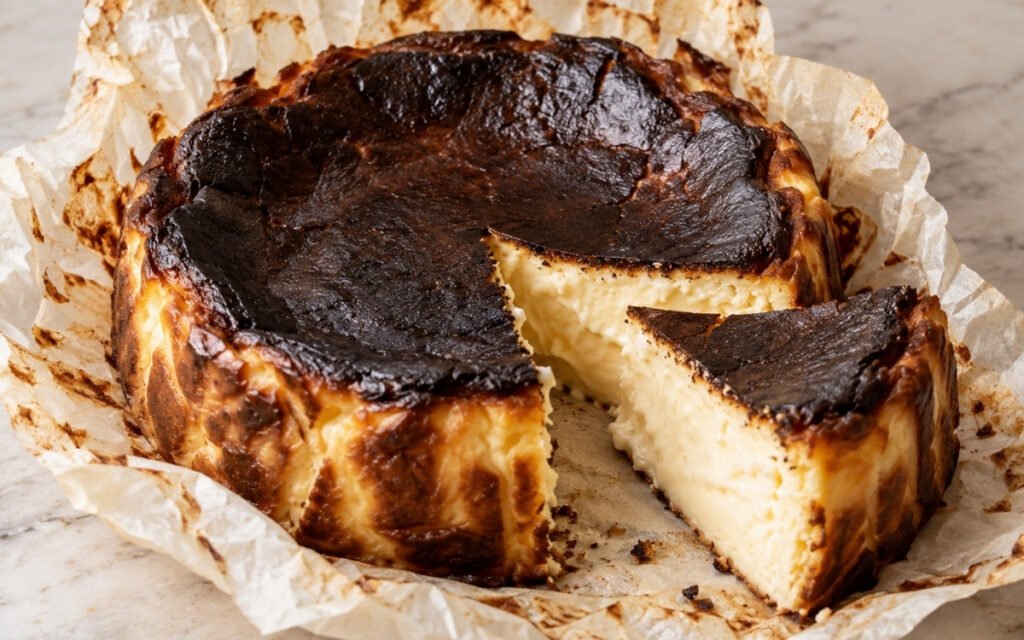
Basque Burnt Cheesecake
A tall, deeply burnt Basque-style cheesecake with a near-black top and a pale ivory custard center that stays soft, creamy, and barely set.
-
Brown Butter Sweet Potato Cream Cheese Muffins
Bakery-style sweet potato muffins with nutty brown butter and a thick cream cheese center.

-
Carrot Cake Cream Cheese Muffins
Bakery-style carrot cake muffins with a walnut streusel topping and cream cheese center.
-
Salted Caramel Espresso Cookies
Soft, thick espresso cookies with gooey salted caramel hidden inside and a light sprinkle of flaky salt.
-
Cheddar Chive Scones
Savory cheddar chive scones with golden craggy tops, buttery flaky interiors, sharp cheddar pockets, and fresh chive flecks throughout.