
Cucumber Yuzu Tonic Mocktail
Yuzu — the Japanese citrus that is simultaneously lemon, grapefruit, and mandarin without being fully any of them — is the specific ingredient that makes this preparation immediately unlike anything else in this collection. Its aromatic complexity is principally carried by yuzu ketone, a compound that is unique to the fruit and responsible for its specifically floral, slightly tropical, resinous citrus character that cannot be replicated by any blend of other citrus juices. The cucumber mashed directly with honey in a completely cold process — no heat at any stage — the honey drawing moisture from the cucumber through osmosis in the 20–30 minute cold infusion while the yuzu zest releases its aromatic oils simultaneously into the honey-cucumber medium. The 20–30 minute infusion limit applies with specific urgency here: yuzu peel’s bitter compounds extract progressively during any infusion period, and the difference between an elegant, precisely floral 25-minute infusion and an over-infused 2-hour version is the difference between a specifically refined Japanese-inspired tonic and citrus rind bitterness. Tonic water rather than club soda for the dry, bittersweet counterpoint that the cucumber’s coolness and yuzu’s floral brightness specifically require. Barely there colour, completely precise flavour.
Prep Time : 10 min
Cook Time : 0 min
Servings : 4
10 min
0 min
4
Ingredients
For the Cucumber Yuzu Base
• 350g cucumber, skin on, cut into small cubes
• 60g honey — this one on Amazon
• 1 yuzu lemon — zest only, or very thin peel strips with minimal white pith
• 60–80ml yuzu juice — start with 60ml, adjust after tasting
• Small pinch of fine sea salt — optional, only if the flavour tastes flat
For the Garnish
• Thin cucumber slices with skin on
• Thin lemon slices
This post may contain affiliate links. As an Amazon Associate I earn from qualifying purchases, at no additional cost to you.
Directions
- Osmotic Cucumber Extraction
Cut the 350g of cucumber — skin on — into small cubes of approximately 1–2cm. The skin is specifically included for the same reason as in the elderflower-cucumber tonic: cucumber skin contains the highest concentration of the fruit’s characteristic cool, green, slightly vegetal aromatic compounds. Add the cubed cucumber to a large bowl with the 60g of honey. Using a muddler, potato masher, or the back of a large spoon, mash the cucumber firmly and continuously — pressing and turning until each cube has broken down into a fibrous, wet, slushy mass. Work thoroughly: every intact cucumber piece is juice and aromatic compounds that have not yet transferred into the surrounding medium. The honey is the extraction medium in this cold process — no heat involved at any stage of this preparation. Honey’s concentrated sugar content creates an osmotic pressure differential against the cucumber’s more dilute cellular fluid: water and water-soluble compounds from the cucumber cells migrate across the cell membranes toward the higher-concentration honey environment, simultaneously releasing the cucumber’s juice and dissolving into the honey’s sugar matrix. This osmotic extraction is specifically effective for cucumber because cucumber is approximately 96% water — the majority of the fruit’s volume is the fluid that the honey draws out through osmosis. The finished mashed cucumber-and-honey combination will appear significantly more liquid than the immediately post-mashing state as the osmotic process works. - Add Yuzu Zest and Cold-Infuse
Add the yuzu zest — either finely zested or cut as very thin peel strips with virtually no white pith attached — to the mashed cucumber-honey mixture. Stir once to distribute. Cover the bowl and refrigerate for 20–30 minutes. This is the infusion window that has the narrowest correct range of any preparation in this collection. Yuzu peel contains two categories of aromatic compounds simultaneously: the desirable volatile esters and ketones (including yuzu ketone) responsible for its specifically floral, complex, tropical-citrus character, and the less desirable limonoids and bitter flavonoids concentrated in the white pith and inner peel that produce bitterness with extended infusion. At 20–25 minutes in cold infusion, the volatile aromatic compounds have transferred meaningfully into the surrounding honey-cucumber medium while the bitter compounds have had insufficient time to extract in significant quantities. At 30 minutes the balance is still correct. Beyond 30 minutes — and significantly beyond with any infusion approaching hours — the bitter compounds dominate progressively until the base tastes of citrus rind rather than the elegant, complex floral citrus the preparation requires. The yuzu zest also infuses into the honey’s sugar matrix specifically — the same fat-soluble aromatic uptake by honey applied in the lime-honey and ginger-honey preparations — producing a more integrated aromatic depth than zest infused into plain water. - Strain and Add Yuzu Juice
After the 20–30 minute cold infusion, strain the entire mashed cucumber-honey-yuzu mixture through a fine-mesh sieve into a clean jug. Press firmly on the solids — more firmly than the gentle pressing used for delicate flower petals, because the cucumber pulp retains a meaningful proportion of the flavoured juice. The finished strained base should be nearly clear to very pale green, specifically fragrant — simultaneously cucumber’s cool, clean greenness and yuzu’s complex floral-citrus character present together as a unified aromatic. Stir in 60ml of yuzu juice. Taste immediately. The base should be bright, specifically floral from the yuzu, cool from the cucumber, and well-rounded from the honey. If the citrus brightness is insufficient, add up to 80ml total. If the flavour tastes flat despite the yuzu and cucumber being vivid, add the optional small pinch of salt — the sub-threshold amplification applied throughout this collection, specifically effective here at brightening the cucumber’s delicate character. Chill until ready to serve. - Assemble and Serve
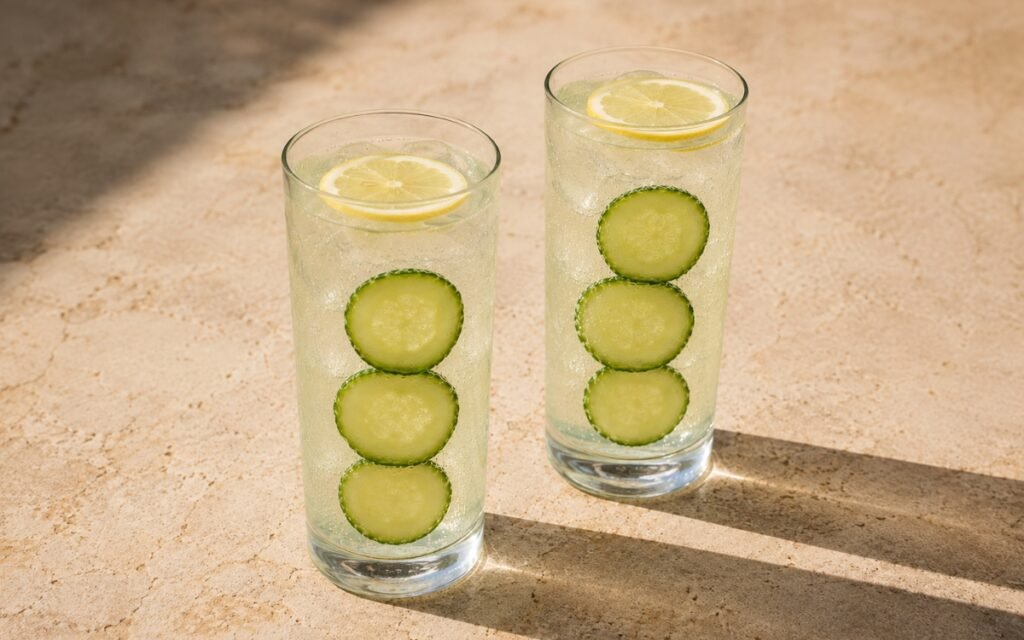
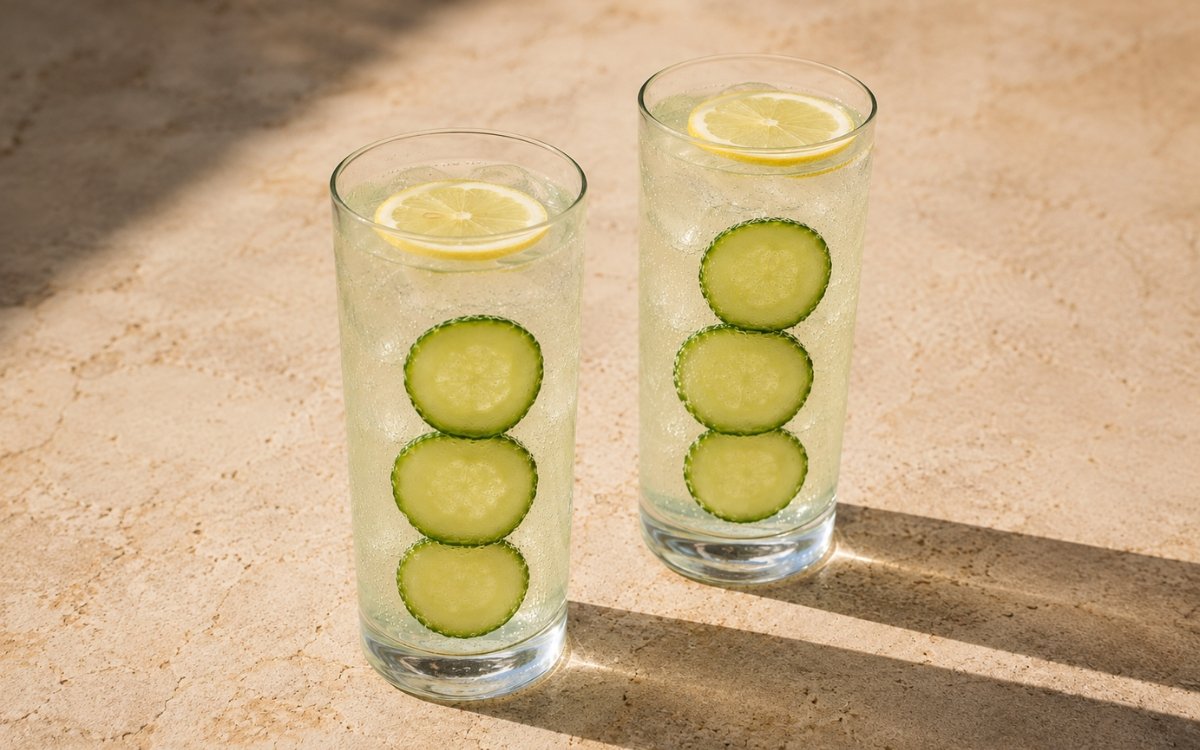
Fill four tall glasses with ice — clear, large cubes are specifically appropriate for this preparation’s Japanese-inspired precision, where the visual clarity of the glass and its contents is part of the aesthetic. Pour 50–60ml of the cucumber yuzu base over the ice in each glass. Top with 125–175ml of chilled tonic water — the specific volume adjusted to the preferred intensity: 125ml produces a more assertively cucumber-yuzu flavoured, more bitter result; 175ml produces a lighter, more refreshing, less intensely flavoured result. Prepare the garnish: slice several rounds of cucumber thinly, with the skin on, and press 2–3 rounds against the inside of each glass beneath the ice level — the green edge of each slice visible through the pale drink, providing the visual signature of the cucumber-forward preparation. Float a thin lemon slice flat on the liquid surface. Serve immediately. Do not let the garnish cucumber rounds soak in the drink for extended periods before serving — they will begin contributing additional flavour and eventually become unattractive.
*Notes :
- Yuzu (Citrus junos) is a small, round citrus fruit originating in East Asia and now cultivated primarily in Japan, South Korea, and China. It is the most aromatic and most complex citrus in common culinary use — its primary distinctive compound, yuzu ketone (threo-γ-dodecalactone), is found in no other citrus and is responsible for the fruit’s specifically tropical, slightly floral, resinous character that makes it immediately identifiable and irreplaceable in preparations where it is used. Yuzu juice and yuzu zest are both used in Japanese and Korean cooking across applications from ponzu sauce to yuzu kosho paste.
- Bottled yuzu juice is available at Japanese grocery stores, specialty food shops, and increasingly at mainstream supermarkets with well-stocked Asian sections. Fresh yuzu is available seasonally — primarily October through December — at Japanese grocery stores. Both fresh and bottled produce excellent results; fresh yuzu’s zest is more intensely aromatic than processed zest.
Why This Mocktail Works
This recipe works because the cucumber is extracted entirely cold through osmotic pressure from the honey — no heat that would produce a cooked, flat, vegetal cucumber note.
The yuzu zest infusion is precisely controlled within the 20–30 minute window that extracts the floral aromatic character before the bitter compounds develop.
Tonic water’s bitterness provides the specifically adult counterpoint to the cucumber’s coolness and yuzu’s florality. And the yuzu juice is added cold after straining for its preserved aromatic freshness.
Ingredient Breakdown
Cucumber Mashed Cold with Honey (Osmotic Extraction)
The no-heat juice technique — honey’s osmotic pressure drawing cucumber’s moisture and aromatic compounds without any cooking that would flatten the fresh, cool character.
Yuzu Zest (20–30 Minute Maximum Cold Infusion)
The defining flavour — yuzu ketone and aromatic esters extracted within the narrow window before bitter peel compounds dominate.
Honey as the Infusion Medium
The aromatic-absorbing sugar matrix — fat-soluble aromatic compounds from both cucumber skin and yuzu zest absorbed into honey more effectively than into watery liquid.
Yuzu Juice (Added Cold After Straining)
The primary citrus brightness — added cold for preserved volatile aromatic character including yuzu ketone.
Tonic Water (Rather Than Club Soda)
The adult bittersweet counterpoint — quinine’s dry bitterness specifically complementary to the cucumber’s cool freshness and yuzu’s floral complexity.
Flavor Structure Explained
This Cucumber yuzu tonic follows a layered balance model:
- Cool citrus core (cucumber and yuzu)
- Gentle floral sweetness (honey)
- Dry bitter contrast (tonic water)
- Aromatic precision (shared clean floral notes)
- Crisp sparkling finish (carbonation)
Cucumber and yuzu define the foundation together, combining cool vegetal freshness with yuzu’s uniquely floral, tropical-citrus complexity. Their shared clean aromatic profile creates a pairing that feels unusually precise and harmonious. Honey softens the sharper citrus edges with rounded sweetness, connecting the cucumber and yuzu without overshadowing either. Tonic water contributes quinine bitterness that adds sophistication and prevents the drink from tasting merely fruity or infused. Carbonation completes the structure by lifting the delicate aromatics upward with every sip, creating a drink that feels crisp, elegant, and distinctly Japanese-inspired in its restraint and balance.
Common Mistakes to Avoid
- Infusing the Yuzu Zest Beyond 30 Minutes – The single most consequential error. Beyond 30 minutes bitter compounds dominate progressively. Always strain exactly at 20–30 minutes.
- Not Mashing the Cucumber Thoroughly – Intact cucumber pieces release their juice slowly and incompletely. Always mash until the entire mass is fully broken down.
- Using Club Soda Instead of Tonic – Club soda provides neutral effervescence without the bitterness that creates the specifically Japanese-tonic-inspired adult character. Always tonic for the correct preparation.
- Adding Too Much Yuzu Peel With White Pith – White pith is the primary source of the bitter flavonoids that over-infusion makes dominant. Always the thinnest possible zest with virtually no white pith.
- Not Pressing the Solids Firmly During Straining – The cucumber pulp retains a significant proportion of the honey-cucumber juice. Always press firmly for maximum yield.
Variations
With Shiso
Add 6 fresh shiso leaves (perilla) to the cold infusion alongside the yuzu zest — the shiso’s specifically anise-adjacent, slightly minty, Japanese herbal character is the most specifically Japanese addition available and produces a genuinely more complex, more culturally specific version.
With Ginger
Add 5g of thinly sliced fresh ginger to the mashed cucumber during the cold infusion — the ginger’s sharp warmth provides the specifically Japanese flavour pairing for cucumber and yuzu that appears across Japanese cold noodle and salad preparations.
With Lychee
Add 60ml of quality lychee juice to the base alongside the yuzu juice — lychee’s geraniol character specifically harmonises with yuzu’s own floral compounds, producing a more intensely floral, more tropical result.
Softer Version
Replace half the tonic water with chilled sparkling water or still water — the tonic’s bitterness is halved and the result is lighter, more refreshing, and more broadly accessible.
Storage & Make-Ahead
Cucumber yuzu base is best prepared and used within 4 to 6 hours. After pressing, the cucumber’s fresh and cooling flavor gradually oxidizes, while the bright aromatic character of the yuzu begins to fade within a day. If you need to prepare it ahead on the same day, it can be made up to 3 hours in advance and stored in a sealed jar in the refrigerator.
Once assembled, the drinks are not suitable for storage and should be served immediately after preparation.
Frequently Asked Questions
What is yuzu?
Yuzu (Citrus junos) is a Japanese-origin citrus with a specifically complex, floral, tropical-adjacent aromatic character produced primarily by its unique compound yuzu ketone. Its flavour is simultaneously similar to lemon, grapefruit, and mandarin while being specifically none of them — the yuzu ketone compound found in no other citrus makes it immediately identifiable and irreplaceable. Available as bottled juice and zest at Japanese grocery stores and specialty food shops.
Why is the 20–30 minute infusion limit so important for yuzu zest?
Yuzu peel contains both the desirable aromatic esters responsible for its floral, complex character and less desirable bitter flavonoids concentrated in the pith layer. At cold temperature, the aromatic esters transfer to the surrounding medium more rapidly than the bitter flavonoids — the 20–30 minute window captures the aromatic character before meaningful bitterness extraction. Beyond 30 minutes the bitterness develops progressively until it dominates the preparation.
Why mash the cucumber with honey rather than juicing or blending?
Juicing produces the most efficient extraction but requires specific equipment. Blending then straining produces a workable result but can produce a slightly more oxidised, slightly more cooked-feeling juice from the blade heat at high speed. Mashing with honey in a cold bowl and then pressing through a sieve is both equipment-accessible and specifically cold-extraction-protective — the osmotic process producing fresh juice without any mechanical heat.
Why tonic water specifically?
The cucumber yuzu combination — cool, clean, specifically floral — requires an adult-tasting counterpoint to avoid tasting like a spa-water spritzer. Tonic water’s quinine bitterness provides specifically the dry, grown-up finish that makes the drink taste like a considered aperitif preparation.
What other cucumber-forward mocktails share this preparation’s character?
The Elderflower Cucumber Spritz Mocktail shares the cucumber-as-primary-flavour direction with a similarly delicate, specifically aromatic secondary character — elderflower’s floral warmth rather than yuzu’s tropical citrus complexity, producing a more European-influenced version of the same cool, clean, elegant cucumber profile. The Cucumber Agua Fresca shares the cucumber’s cool freshness in a still, non-tonic format — the same primary flavour in the simplest possible non-alcoholic water-and-fruit preparation.
Nutrition Facts
( per serving )
Calories
~65 kcal
Protein
0 g
Fat
0 g
Carbs
17 g
Calories
~65 kcal
Protein
0 g
Fat
0 g
Carbs
17 g
Related Recipes
Related Recipes

Lemon Ginger Tonic Mocktail
Sharp lemon peel and ginger syrup with tonic creates a crisp, lightly sweet, spicy, grown-up refresher.
Ginger Lime Beer Mocktail
Sharp ginger beer with lime pulp, mint, and honey creates punchy heat, bright bite, and cooling balance.
Shirley Temple Tonic
Pomegranate grenadine with ginger ale and citrus zest delivers a bright, tart, grown-up take on a nostalgic classic.
You might also like
You might also like
Blackberry Jasmine Iced Tea
Jasmine tea at 75–80°C for 2–3 minutes, lemon peel infused cold, blackberries blended and firmly strained — added with restraint, chilled. Floral and softly fruity.
Rose Lemonade
Edible rose petals steeped in warm syrup exactly 6–8 minutes, strained with light pressing — fresh lemon juice, salt, cold water, chilled. Lemon first, rose warmly behind.
Classic Sparkling Lemonade
Lemon base chilled separately, sparkling water side-poured and gently stirred right before serving — less sugar for carbonation’s sweetness enhancement. Crisp, bright, and fully fizzy.

Cucumber Yuzu Tonic Mocktail
Ingredients
Method
- Cut the 350g of cucumber — skin on — into small cubes of approximately 1–2cm. The skin is specifically included for the same reason as in the elderflower-cucumber tonic: cucumber skin contains the highest concentration of the fruit’s characteristic cool, green, slightly vegetal aromatic compounds. Add the cubed cucumber to a large bowl with the 60g of honey. Using a muddler, potato masher, or the back of a large spoon, mash the cucumber firmly and continuously — pressing and turning until each cube has broken down into a fibrous, wet, slushy mass. Work thoroughly: every intact cucumber piece is juice and aromatic compounds that have not yet transferred into the surrounding medium. The honey is the extraction medium in this cold process — no heat involved at any stage of this preparation. Honey’s concentrated sugar content creates an osmotic pressure differential against the cucumber’s more dilute cellular fluid: water and water-soluble compounds from the cucumber cells migrate across the cell membranes toward the higher-concentration honey environment, simultaneously releasing the cucumber’s juice and dissolving into the honey’s sugar matrix. This osmotic extraction is specifically effective for cucumber because cucumber is approximately 96% water — the majority of the fruit’s volume is the fluid that the honey draws out through osmosis. The finished mashed cucumber-and-honey combination will appear significantly more liquid than the immediately post-mashing state as the osmotic process works.
- Add the yuzu zest — either finely zested or cut as very thin peel strips with virtually no white pith attached — to the mashed cucumber-honey mixture. Stir once to distribute. Cover the bowl and refrigerate for 20–30 minutes. This is the infusion window that has the narrowest correct range of any preparation in this collection. Yuzu peel contains two categories of aromatic compounds simultaneously: the desirable volatile esters and ketones (including yuzu ketone) responsible for its specifically floral, complex, tropical-citrus character, and the less desirable limonoids and bitter flavonoids concentrated in the white pith and inner peel that produce bitterness with extended infusion. At 20–25 minutes in cold infusion, the volatile aromatic compounds have transferred meaningfully into the surrounding honey-cucumber medium while the bitter compounds have had insufficient time to extract in significant quantities. At 30 minutes the balance is still correct. Beyond 30 minutes — and significantly beyond with any infusion approaching hours — the bitter compounds dominate progressively until the base tastes of citrus rind rather than the elegant, complex floral citrus the preparation requires. The yuzu zest also infuses into the honey’s sugar matrix specifically — the same fat-soluble aromatic uptake by honey applied in the lime-honey and ginger-honey preparations — producing a more integrated aromatic depth than zest infused into plain water.
- After the 20–30 minute cold infusion, strain the entire mashed cucumber-honey-yuzu mixture through a fine-mesh sieve into a clean jug. Press firmly on the solids — more firmly than the gentle pressing used for delicate flower petals, because the cucumber pulp retains a meaningful proportion of the flavoured juice. The finished strained base should be nearly clear to very pale green, specifically fragrant — simultaneously cucumber’s cool, clean greenness and yuzu’s complex floral-citrus character present together as a unified aromatic. Stir in 60ml of yuzu juice. Taste immediately. The base should be bright, specifically floral from the yuzu, cool from the cucumber, and well-rounded from the honey. If the citrus brightness is insufficient, add up to 80ml total. If the flavour tastes flat despite the yuzu and cucumber being vivid, add the optional small pinch of salt — the sub-threshold amplification applied throughout this collection, specifically effective here at brightening the cucumber’s delicate character. Chill until ready to serve.
- Fill four tall glasses with ice — clear, large cubes are specifically appropriate for this preparation’s Japanese-inspired precision, where the visual clarity of the glass and its contents is part of the aesthetic. Pour 50–60ml of the cucumber yuzu base over the ice in each glass. Top with 125–175ml of chilled tonic water — the specific volume adjusted to the preferred intensity: 125ml produces a more assertively cucumber-yuzu flavoured, more bitter result; 175ml produces a lighter, more refreshing, less intensely flavoured result. Prepare the garnish: slice several rounds of cucumber thinly, with the skin on, and press 2–3 rounds against the inside of each glass beneath the ice level — the green edge of each slice visible through the pale drink, providing the visual signature of the cucumber-forward preparation. Float a thin lemon slice flat on the liquid surface. Serve immediately. Do not let the garnish cucumber rounds soak in the drink for extended periods before serving — they will begin contributing additional flavour and eventually become unattractive.