Ingredients
Method
Osmotic Cucumber Extraction
- Cut the 350g of cucumber — skin on — into small cubes of approximately 1–2cm. The skin is specifically included for the same reason as in the elderflower-cucumber tonic: cucumber skin contains the highest concentration of the fruit's characteristic cool, green, slightly vegetal aromatic compounds. Add the cubed cucumber to a large bowl with the 60g of honey. Using a muddler, potato masher, or the back of a large spoon, mash the cucumber firmly and continuously — pressing and turning until each cube has broken down into a fibrous, wet, slushy mass. Work thoroughly: every intact cucumber piece is juice and aromatic compounds that have not yet transferred into the surrounding medium. The honey is the extraction medium in this cold process — no heat involved at any stage of this preparation. Honey's concentrated sugar content creates an osmotic pressure differential against the cucumber's more dilute cellular fluid: water and water-soluble compounds from the cucumber cells migrate across the cell membranes toward the higher-concentration honey environment, simultaneously releasing the cucumber's juice and dissolving into the honey's sugar matrix. This osmotic extraction is specifically effective for cucumber because cucumber is approximately 96% water — the majority of the fruit's volume is the fluid that the honey draws out through osmosis. The finished mashed cucumber-and-honey combination will appear significantly more liquid than the immediately post-mashing state as the osmotic process works.
Add Yuzu Zest and Cold-Infuse
- Add the yuzu zest — either finely zested or cut as very thin peel strips with virtually no white pith attached — to the mashed cucumber-honey mixture. Stir once to distribute. Cover the bowl and refrigerate for 20–30 minutes. This is the infusion window that has the narrowest correct range of any preparation in this collection. Yuzu peel contains two categories of aromatic compounds simultaneously: the desirable volatile esters and ketones (including yuzu ketone) responsible for its specifically floral, complex, tropical-citrus character, and the less desirable limonoids and bitter flavonoids concentrated in the white pith and inner peel that produce bitterness with extended infusion. At 20–25 minutes in cold infusion, the volatile aromatic compounds have transferred meaningfully into the surrounding honey-cucumber medium while the bitter compounds have had insufficient time to extract in significant quantities. At 30 minutes the balance is still correct. Beyond 30 minutes — and significantly beyond with any infusion approaching hours — the bitter compounds dominate progressively until the base tastes of citrus rind rather than the elegant, complex floral citrus the preparation requires. The yuzu zest also infuses into the honey's sugar matrix specifically — the same fat-soluble aromatic uptake by honey applied in the lime-honey and ginger-honey preparations — producing a more integrated aromatic depth than zest infused into plain water.
Strain and Add Yuzu Juice
- After the 20–30 minute cold infusion, strain the entire mashed cucumber-honey-yuzu mixture through a fine-mesh sieve into a clean jug. Press firmly on the solids — more firmly than the gentle pressing used for delicate flower petals, because the cucumber pulp retains a meaningful proportion of the flavoured juice. The finished strained base should be nearly clear to very pale green, specifically fragrant — simultaneously cucumber's cool, clean greenness and yuzu's complex floral-citrus character present together as a unified aromatic. Stir in 60ml of yuzu juice. Taste immediately. The base should be bright, specifically floral from the yuzu, cool from the cucumber, and well-rounded from the honey. If the citrus brightness is insufficient, add up to 80ml total. If the flavour tastes flat despite the yuzu and cucumber being vivid, add the optional small pinch of salt — the sub-threshold amplification applied throughout this collection, specifically effective here at brightening the cucumber's delicate character. Chill until ready to serve.
Assemble and Serve
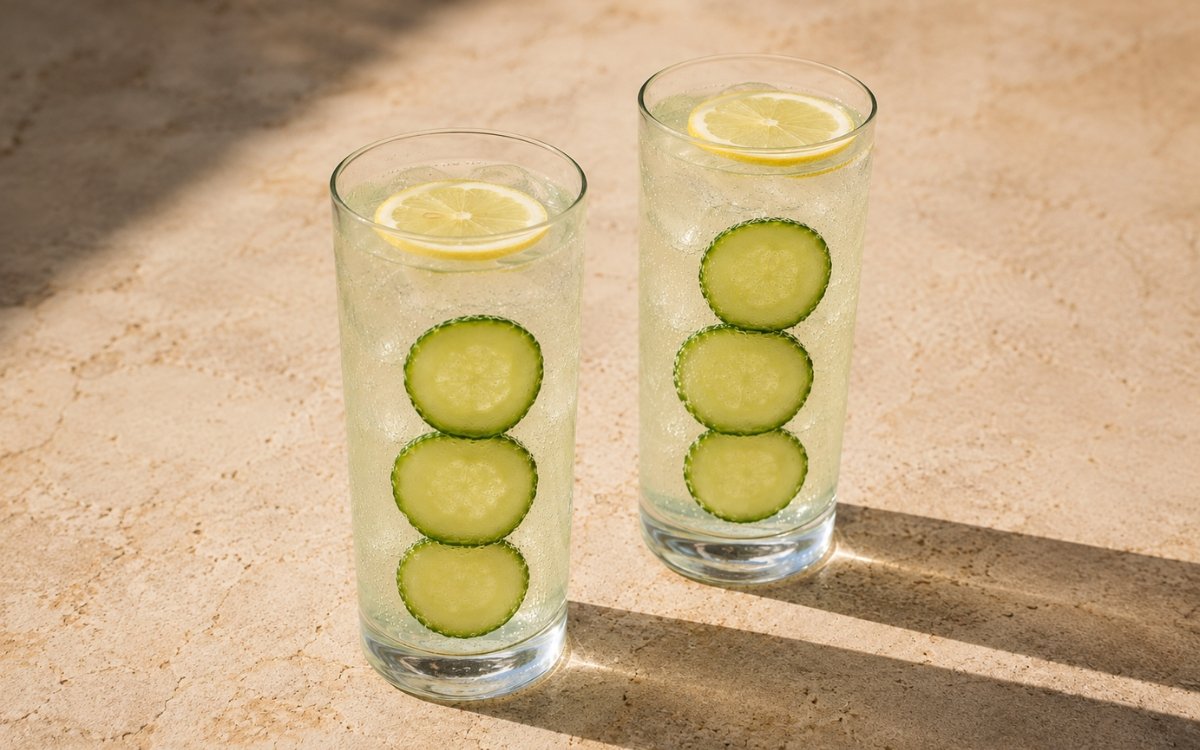
- Fill four tall glasses with ice — clear, large cubes are specifically appropriate for this preparation's Japanese-inspired precision, where the visual clarity of the glass and its contents is part of the aesthetic. Pour 50–60ml of the cucumber yuzu base over the ice in each glass. Top with 125–175ml of chilled tonic water — the specific volume adjusted to the preferred intensity: 125ml produces a more assertively cucumber-yuzu flavoured, more bitter result; 175ml produces a lighter, more refreshing, less intensely flavoured result. Prepare the garnish: slice several rounds of cucumber thinly, with the skin on, and press 2–3 rounds against the inside of each glass beneath the ice level — the green edge of each slice visible through the pale drink, providing the visual signature of the cucumber-forward preparation. Float a thin lemon slice flat on the liquid surface. Serve immediately. Do not let the garnish cucumber rounds soak in the drink for extended periods before serving — they will begin contributing additional flavour and eventually become unattractive.
Notes
Yuzu (Citrus junos) is a small, round citrus fruit originating in East Asia and now cultivated primarily in Japan, South Korea, and China. It is the most aromatic and most complex citrus in common culinary use — its primary distinctive compound, yuzu ketone (threo-γ-dodecalactone), is found in no other citrus and is responsible for the fruit's specifically tropical, slightly floral, resinous character that makes it immediately identifiable and irreplaceable in preparations where it is used. Yuzu juice and yuzu zest are both used in Japanese and Korean cooking across applications from ponzu sauce to yuzu kosho paste.
Bottled yuzu juice is available at Japanese grocery stores, specialty food shops, and increasingly at mainstream supermarkets with well-stocked Asian sections. Fresh yuzu is available seasonally — primarily October through December — at Japanese grocery stores. Both fresh and bottled produce excellent results; fresh yuzu's zest is more intensely aromatic than processed zest.