
Cranberry Orange Iced Tea Pitcher
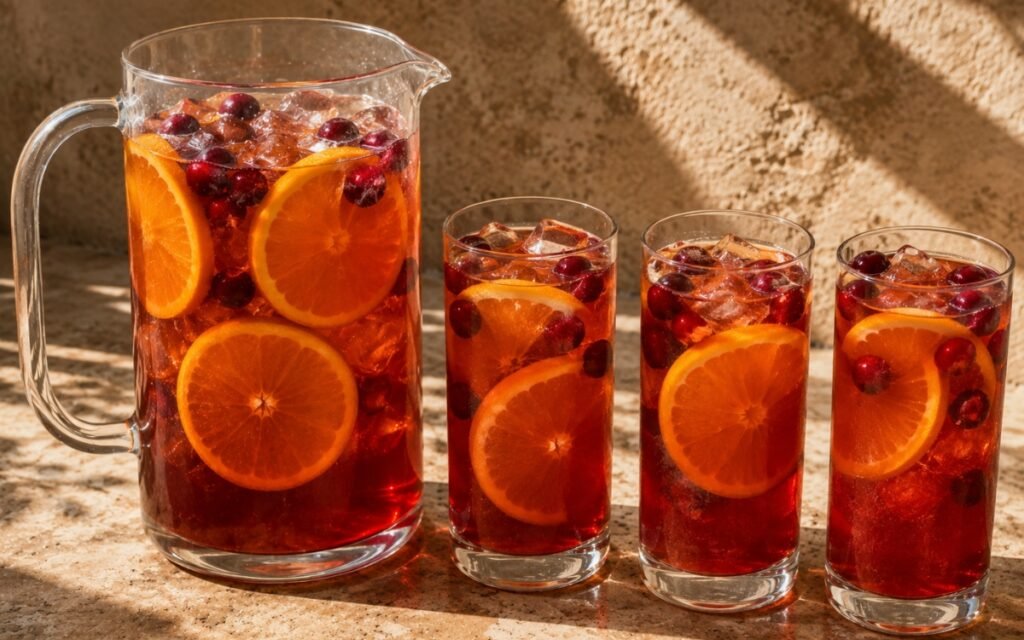
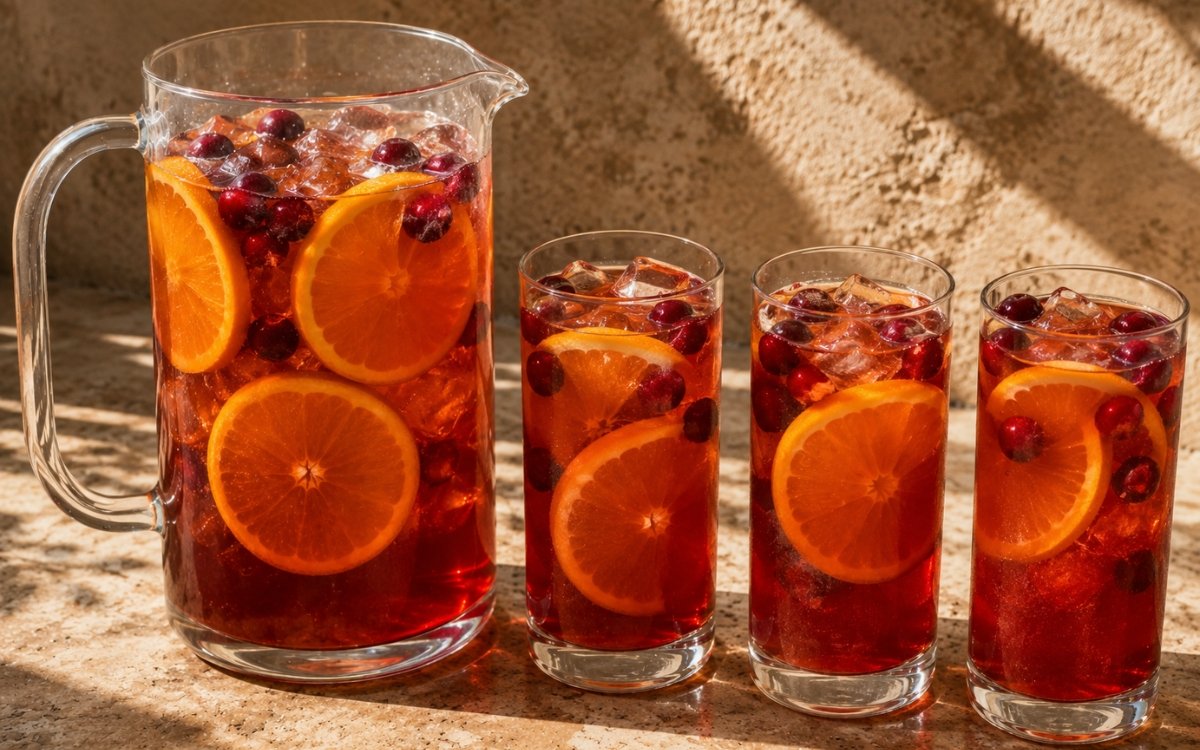
A deep red-amber iced tea pitcher made with strong black tea, tart cranberry, orange peel, honey, and a second cold infusion of orange slices and lightly crushed whole cranberries. Bright, aromatic, and not cooked into a holiday-jam flavor. Lightly crushing rather than pureeing the cranberries is the technique this whole base depends on for staying bright and fresh rather than turning into a holiday-jam flavour — that split-open texture releases real juice for a short cold infusion without cooking the fruit down into anything thick or stewed, the same crack-open-not-puree principle used elsewhere in this collection whenever a firm fruit needs its juice released quickly without any heat. Brewing the black tea properly within a controlled steep time is what gives this drink its strong, clean tannic foundation. A second infusion of thin orange slices and separately, bluntly crushed whole cranberries is what keeps the pitcher looking genuinely alive and fresh rather than flat. The payoff is a pitcher that’s genuinely deep red-amber, bright, and aromatic — bold black tea meeting tart, uncooked cranberry and fresh orange.
Prep Time : 10 min
Cook Time : 0 min
Servings : 8
10 min
0 min
8
Ingredients
For the Black Tea Base
• 28g loose black tea, or 14 black tea bags — this one on Amazon
• 1.5 liters water
• 1 small pinch fine sea salt
For the Cranberry Orange Extraction
• 600g fresh or frozen cranberries, thawed if frozen
• 220 to 280g mild honey, to taste — this one on Amazon
• Zest of 4 oranges, orange part only, no white pith
• 250ml fresh orange juice, strained
To Finish
• 1.8 to 2 liters cold filtered water, as needed
• 60 to 90ml fresh lemon juice, optional, only if extra sharpness is needed
For the Second Infusion
• 2 large oranges, very well washed, sliced into thin wheels or half-wheels
• 250g whole cranberries
• 600 to 800g ice cubes, plus more for serving
This post may contain affiliate links. As an Amazon Associate I earn from qualifying purchases, at no additional cost to you.
Directions
- Brew the Black Tea
Heat 1.5 liters water to 95 to 98°C. Add the black tea and the pinch of salt. Steep for 4 minutes, then strain immediately. Let the tea cool to room temperature. The tea should be strong but clean. If it steeps too long, the tannins become harsh once chilled. Black tea tolerates this near-boiling heat well, but continuing to steep past that specific 4-minute window still draws out increasingly harsh tannic compounds regardless of the tea’s own heat tolerance — that timing is calibrated to extract genuine strength without crossing into that harsher territory. - Prepare the Cranberry Orange Base
Place the 600g cranberries in a large bowl. Lightly crush them with a potato masher or pulse them very briefly in a food processor just until split and broken open. Do not puree. Add the honey, orange zest, and fresh orange juice. Stir well and mash again lightly. Let sit for 20 to 30 minutes. Cranberries are firm, so they need to be broken open. Whole untouched cranberries will not release enough flavor during a short cold infusion. That deliberate splitting-open, stopping well short of a full puree, is what gives the cranberries’ own juice a genuine path to release during this short maceration without pushing the mixture toward the thicker, more processed texture a full puree would introduce. - Strain the Cranberry Base
Pour the cranberry mixture through a fine-mesh sieve into a large pitcher or bowl. Press firmly enough to extract the juice, but do not force a thick pulp through. Discard the spent cranberry skins and solids. Pressing firmly here, rather than only gently, is appropriate specifically because this mixture has already been split open and macerated — that combination of physical opening and time has already done the real flavour-releasing work, so a firmer press simply extracts what’s already loosened rather than forcing anything new or unwanted through. - Combine the Pitcher Base
Combine the strained cranberry-orange juice with the cooled black tea. Add 1.8 liters cold filtered water and stir well. Taste and adjust: more cold water if too strong; more honey if too tart; a little lemon juice if it tastes flat rather than bright. You are aiming for about 4 liters total. This tasting checkpoint matters directly given how much both cranberry tartness and honey’s own sweetness can vary — building in that adjustment stage accounts for that natural variability rather than assuming a fixed recipe always lands at the same balance. - Second Infusion
Add the orange wheels or half-wheels to the pitcher. Take the remaining 250g whole cranberries and bluntly press them with your fingers, the back of a spoon, or a flat knife just until some of them split. Add them to the pitcher. Refrigerate for 1 to 2 hours. The second infusion should make the drink look alive and fresh, with floating fruit, not turn it bitter or overloaded with peel. This second, separately handled batch of only lightly split whole cranberries contributes a fresh, distinct wave of flavour and genuine visual appeal beyond what the first, more thoroughly processed base already extracted. - Serve
Add ice to the pitcher shortly before serving, or fill individual glasses with ice. Pour the cranberry orange iced tea over the ice, making sure each glass gets a few cranberries and an orange slice. Adding the ice only at this final stage, rather than earlier, protects the drink from being diluted before the second infusion has had its full window to actually develop.
*Notes :
- Lightly crushing the cranberries, splitting them open just enough without pureeing, deserves recognition as the technique most responsible for this drink’s genuinely fresh, uncooked character. That specific texture is what gives a short cold maceration real access to the fruit’s own juice, without pushing the mixture toward the thicker, more processed quality this recipe’s own notes explicitly warn against — the whole point is staying bright and tart rather than turning into something resembling a cooked cranberry sauce.
- Pressing firmly during the cranberry base’s straining, in contrast to the gentler pressing this collection typically applies to more delicate ingredients, reflects genuine understanding of what’s actually happening at that stage. By the time straining begins, the cranberries have already been physically split and given real maceration time — a firmer press at this point simply captures juice that’s already been loosened, rather than risking any unwanted extraction the way a firmer press against something like fresh herbs might.
- The two-stage cranberry approach — one batch fully crushed and strained into the concentrated base, a second batch only lightly split and added whole later — deserves attention as a deliberate structural choice giving this drink real layered depth. The first batch builds genuine flavour; the second contributes fresh, visually striking whole fruit that continues developing gently during the final chilling period.
- The recipe’s own explicit distinction between not boiling the cranberries and instead relying on cold maceration deserves to be understood as this drink’s actual organizing principle. Every technique choice here — the light crush, the cold infusion, the brief second infusion window — exists specifically to protect that fresh, tart identity from drifting toward the thicker, cooked, more familiar holiday cranberry flavour this recipe is deliberately built to avoid.
Why This Recipe Works
This recipe works because the black tea is brewed properly within a controlled steep time, extracting genuine strength without tipping into harshness.
The cranberries are lightly crushed rather than pureed, giving a short cold maceration real access to their juice while staying fresh rather than turning jammy.
Pressing firmly during straining is appropriate here given the fruit’s already-loosened structure. A second, separately handled batch of split whole cranberries and fresh orange slices layers in genuine visual and flavour depth.
A final tasting checkpoint accounts for real variability in cranberry tartness and honey’s sweetness, bringing every layer together into one bright, aromatic, genuinely uncooked pitcher.
Ingredient Breakdown
Properly Brewed Black Tea
The bold foundation — steeped within a specific window that extracts real strength without tipping into harshness.
Lightly Crushed Cranberries (Not Pureed)
The critical technique — split just enough to release juice during a short cold maceration, staying fresh rather than jammy.
Firm Pressing During Straining
The appropriate technique — extracts already-loosened juice efficiently, distinct from the gentler pressing more delicate ingredients require.
Second-Stage Split Whole Cranberries
The layering technique — a separate, lightly split batch adds fresh flavour and genuine visual appeal beyond the first extraction.
Orange Zest (No Pith) and Fresh Orange Juice
The citrus depth — layered into the cranberry base itself, building real orange character from the start.
Flavor Structure Explained
This cranberry orange iced tea pitcher follows a layered balance model:
- Bold tannic foundation (properly brewed black tea)
- Sharp tart depth (lightly crushed, cold-macerated cranberries)
- Sweet balancing base (mild honey)
- Bright citrus layer (orange zest, fresh orange juice, thin orange slices)
- Fresh second infusion (split whole cranberries)
Properly brewed black tea provides this pitcher’s bold, tannic foundation, its strength extracted within a controlled steep window. Lightly crushed, cold-macerated cranberries contribute sharp, genuinely fresh tart depth rather than a cooked, jammy character. Mild honey balances that tartness. Orange zest, fresh juice, and thin orange slices layer in bright citrus throughout. A second infusion of split whole cranberries adds fresh flavour and visual life beyond the initial extraction, tying every layer together into one deep, bright, aromatic pitcher.
Common Mistakes to Avoid
- Oversteeping the Black Tea – This produces a harsh, overly tannic base once chilled. Always strain within the specified 4-minute window.
- Pureeing the Cranberries Instead of Lightly Crushing Them – This pushes the base toward a thick, cooked-like texture. Always split them open only lightly.
- Boiling the Cranberries – This turns the flavour thick and jammy rather than fresh and tart. Always use the cold maceration method.
- Zesting Too Deep Into the White Pith – This introduces unwanted bitterness. Always take only the orange part of the zest.
- Holding the Drink Too Long Without Removing the Orange – This introduces bitterness from the peel over extended time. Always remove orange slices after 2–3 hours if storing longer.
Variations
Sugar-Sweetened Version
Substitute granulated sugar for honey for a cleaner, sharper finished iced tea, per the recipe’s own guidance.
Extra-Tart Version
Include the optional fresh lemon juice for a sharper, brighter finished drink.
Sparkling Version
Top each glass with a splash of chilled soda water just before serving for light effervescence.
Frozen Cranberry Version
Use thawed frozen cranberries throughout, following the identical light-crush maceration method.
Storage & Make-Ahead
Best served the same day, but it keeps refrigerated for up to 24 hours.
Remove the orange slices after 2 to 3 hours if storing longer, because the peel can slowly add bitterness.
Add ice only before serving so the pitcher does not dilute too early.
Frequently Asked Questions
Why are the cranberries only lightly crushed rather than fully pureed?
A light crush splits the fruit open just enough for a short cold maceration to access real juice, without pushing the mixture toward the thicker, more processed texture a full puree would introduce. This is what keeps the base tasting fresh rather than jammy.
Why is the cranberry base pressed firmly during straining, unlike more delicate infusions?
By the time straining begins, the cranberries have already been physically split and given real maceration time. A firmer press simply captures the juice that’s already been loosened, rather than risking unwanted extraction the way it might with more delicate ingredients.
Why does this recipe include a second, separate batch of split whole cranberries?
That second batch contributes fresh, distinct flavour and genuine visual appeal beyond the first extraction, giving the finished pitcher real layered depth and a lively, fresh appearance.
Why does this recipe avoid boiling the cranberries entirely?
Boiling would turn the flavour thick, cooked, and jammy — closer to a holiday cranberry sauce than the bright, tart, fresh character this drink is specifically built around. Cold maceration protects that fresher identity.
Are there other cranberry, orange, or black tea drinks worth trying?
Cranberry Orange Lemonade offers a related, citrus-forward cranberry direction worth exploring directly. Black Tea Orange Pitcher and Apple Cranberry Pitcher Drink are also worth trying, and Cranberry Spritzer Mocktail offers a different, lighter cranberry direction worth exploring.
Nutrition Facts
( per serving )
Calories
~85 kcal
Protein
0 g
Fat
0 g
Carbs
21 g
Calories
~85 kcal
Protein
0 g
Fat
0 g
Carbs
21 g
Related Recipes
Related Recipes

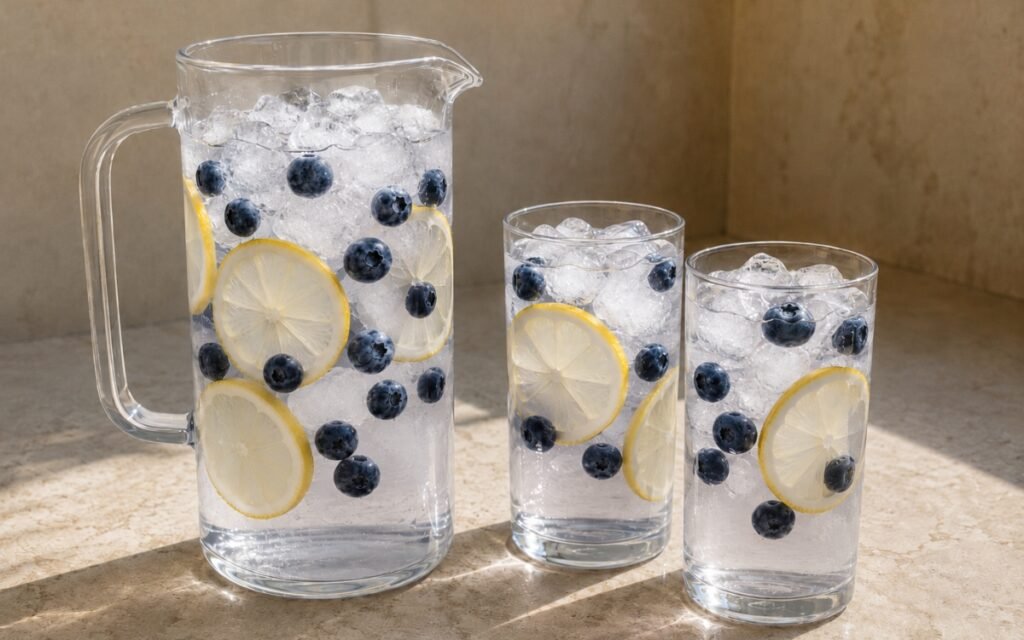
Blueberry Lemon Infused Water
Blueberries mashed for vivid colour, whole blueberries and lemon slices cold-infused in 3L water — removed after 4 hours. Vivid blue-purple to lavender and hydrating.
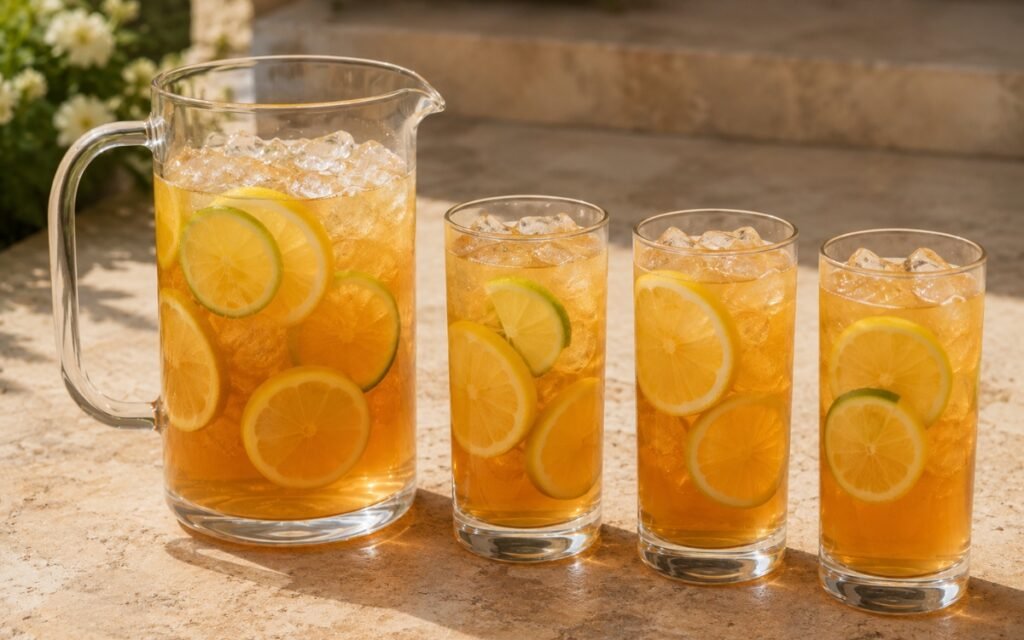
Iced Tea Lemonade Pitcher
Ceylon tea at 90–95°C for 3 minutes, dual lemon and lime zest off heat — 180ml each lemon and lime juice, cold water, chilled. Lemonade leads, tea supports.
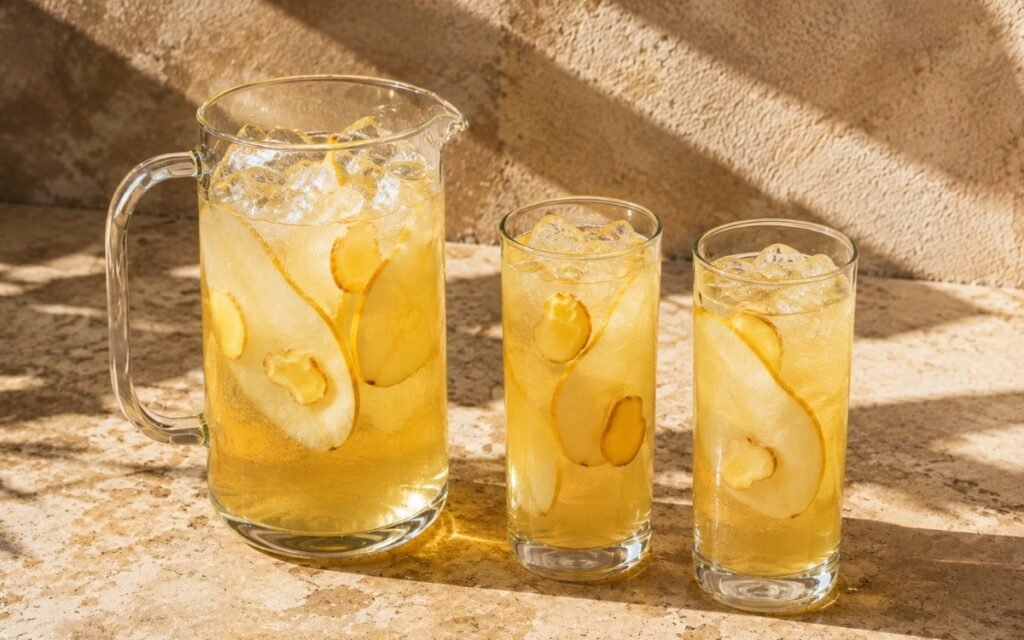
Pear Ginger Pitcher Drink
Cold-infused ripe pears and thinly sliced fresh ginger, both skin-on, with a touch of lemon juice for a pale golden, gently spiced pitcher drink.
You might also like
You might also like
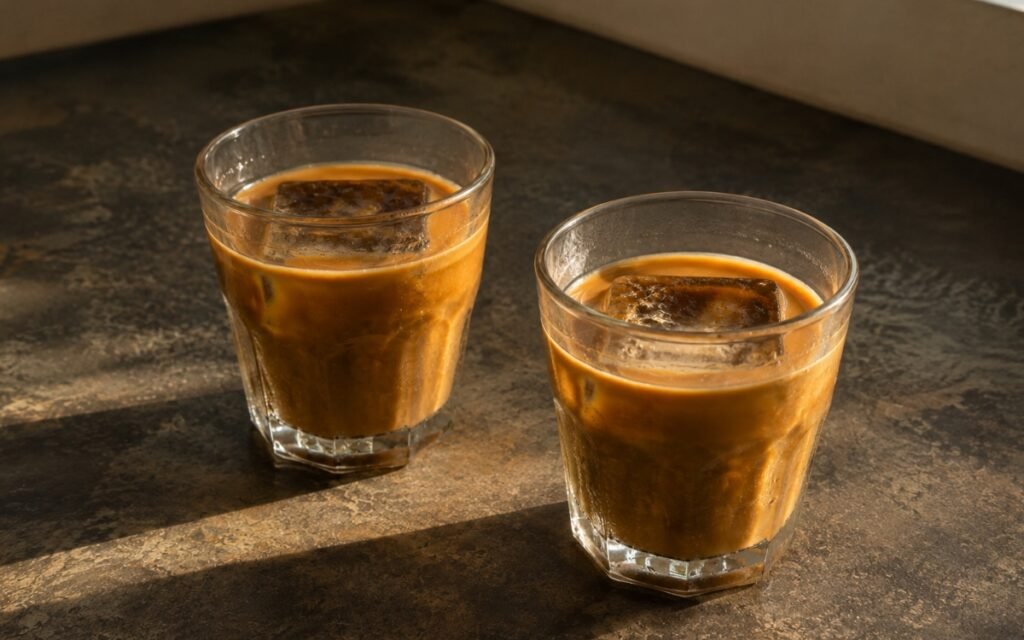
Iced Cortado
Equal parts freshly brewed espresso and cold milk served over a single large ice cube, for a deep caramel-brown, concentrated coffee.
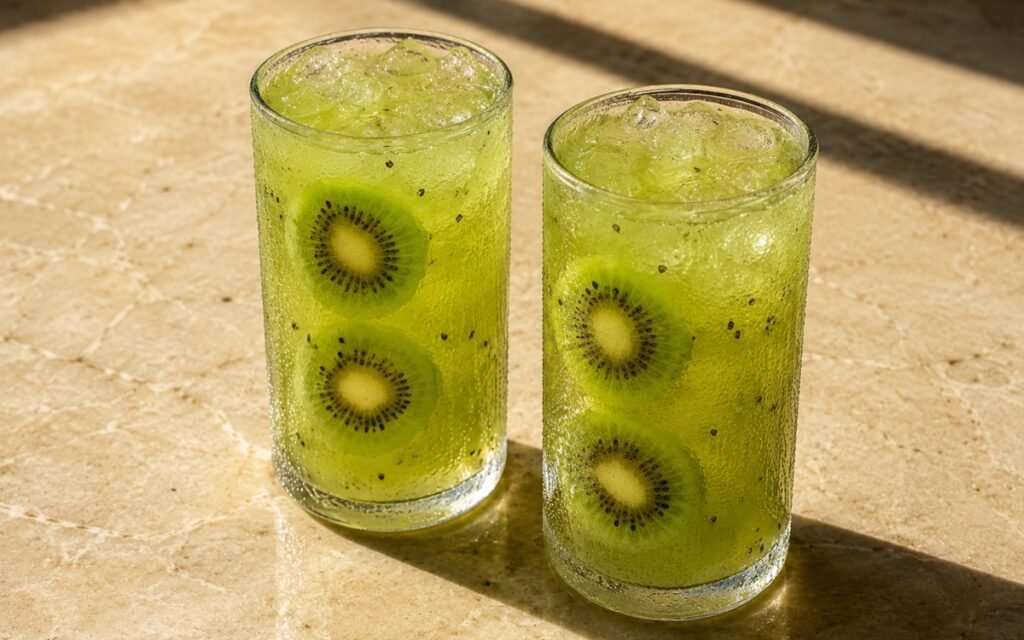
Kiwi Lemonade
Cold-extracted lemon zest and juice combined with blended ripe kiwi for a bright green, slightly pulpy lemonade.
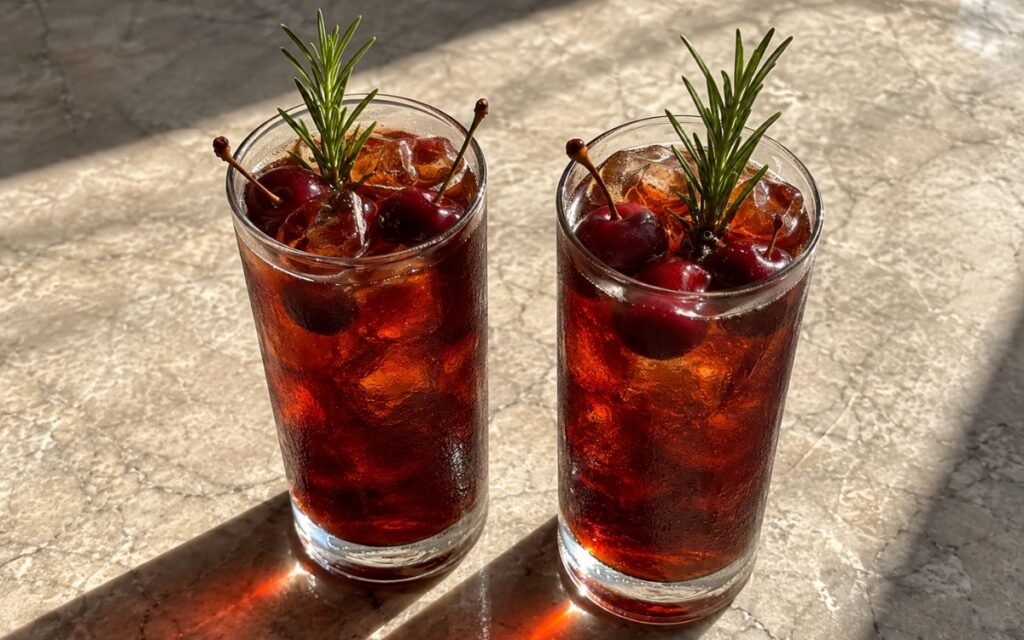
Cherry Rosemary Black Iced Tea
Properly brewed black tea layered with a gently simmered cherry concentrate and an off-heat rosemary infusion for a deep, fruity iced tea.
Cranberry Orange Iced Tea Pitcher
Ingredients
Method
- Heat 1.5 liters water to 95 to 98°C. Add the black tea and the pinch of salt. Steep for 4 minutes, then strain immediately. Let the tea cool to room temperature. The tea should be strong but clean. If it steeps too long, the tannins become harsh once chilled. Black tea tolerates this near-boiling heat well, but continuing to steep past that specific 4-minute window still draws out increasingly harsh tannic compounds regardless of the tea’s own heat tolerance — that timing is calibrated to extract genuine strength without crossing into that harsher territory.
- Place the 600g cranberries in a large bowl. Lightly crush them with a potato masher or pulse them very briefly in a food processor just until split and broken open. Do not puree. Add the honey, orange zest, and fresh orange juice. Stir well and mash again lightly. Let sit for 20 to 30 minutes. Cranberries are firm, so they need to be broken open. Whole untouched cranberries will not release enough flavor during a short cold infusion. That deliberate splitting-open, stopping well short of a full puree, is what gives the cranberries’ own juice a genuine path to release during this short maceration without pushing the mixture toward the thicker, more processed texture a full puree would introduce.
- Pour the cranberry mixture through a fine-mesh sieve into a large pitcher or bowl. Press firmly enough to extract the juice, but do not force a thick pulp through. Discard the spent cranberry skins and solids. Pressing firmly here, rather than only gently, is appropriate specifically because this mixture has already been split open and macerated — that combination of physical opening and time has already done the real flavour-releasing work, so a firmer press simply extracts what’s already loosened rather than forcing anything new or unwanted through.
- Combine the strained cranberry-orange juice with the cooled black tea. Add 1.8 liters cold filtered water and stir well. Taste and adjust: more cold water if too strong; more honey if too tart; a little lemon juice if it tastes flat rather than bright. You are aiming for about 4 liters total. This tasting checkpoint matters directly given how much both cranberry tartness and honey’s own sweetness can vary — building in that adjustment stage accounts for that natural variability rather than assuming a fixed recipe always lands at the same balance.
- Add the orange wheels or half-wheels to the pitcher. Take the remaining 250g whole cranberries and bluntly press them with your fingers, the back of a spoon, or a flat knife just until some of them split. Add them to the pitcher. Refrigerate for 1 to 2 hours. The second infusion should make the drink look alive and fresh, with floating fruit, not turn it bitter or overloaded with peel. This second, separately handled batch of only lightly split whole cranberries contributes a fresh, distinct wave of flavour and genuine visual appeal beyond what the first, more thoroughly processed base already extracted.
- Add ice to the pitcher shortly before serving, or fill individual glasses with ice. Pour the cranberry orange iced tea over the ice, making sure each glass gets a few cranberries and an orange slice. Adding the ice only at this final stage, rather than earlier, protects the drink from being diluted before the second infusion has had its full window to actually develop.