
Slow-Simmered Beef Ragù Pasta
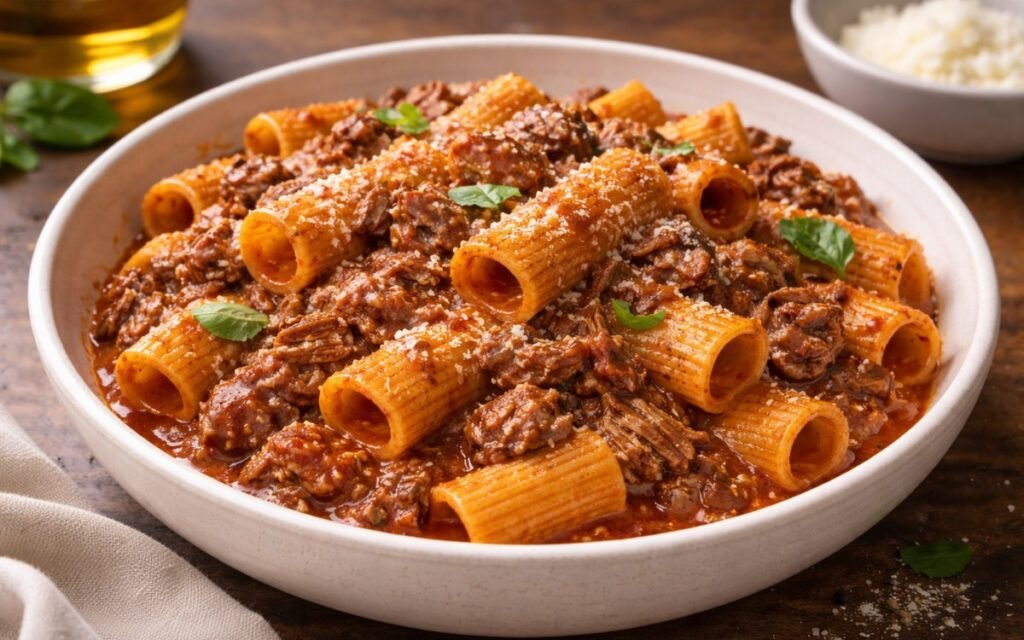
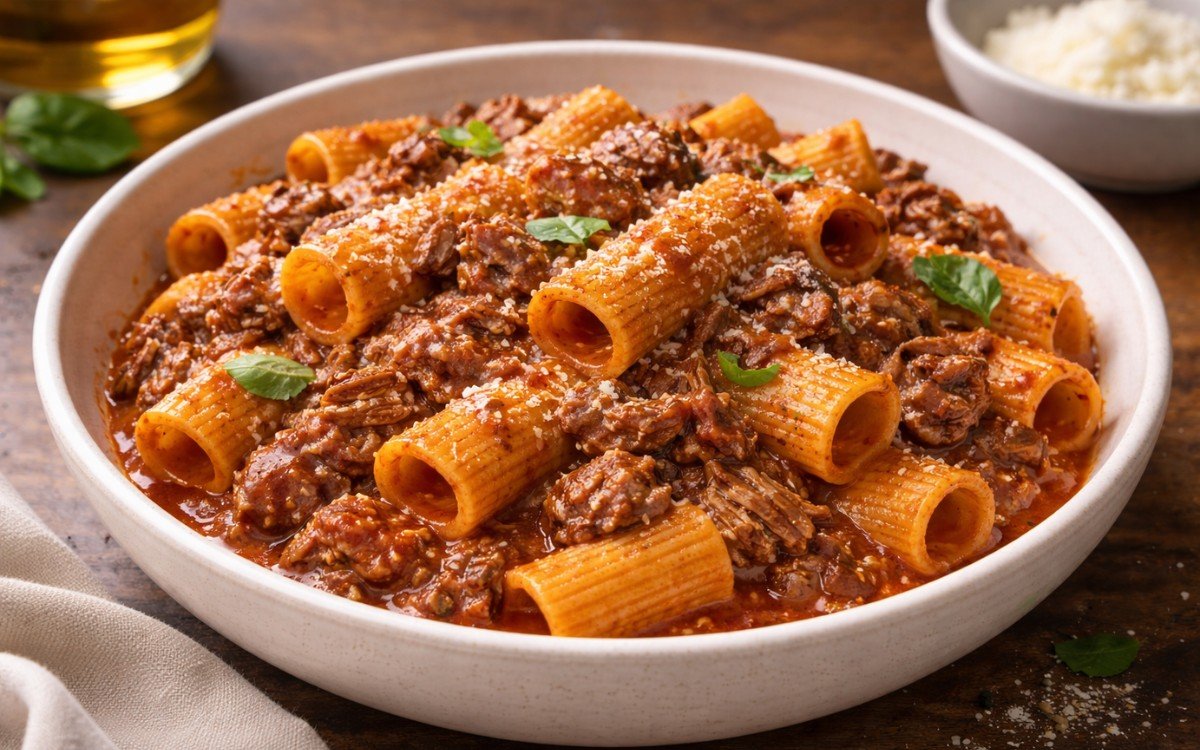
This authentic Italian beef ragù transforms humble ingredients into pure comfort with tender chunks of beef simmered for hours in a rich tomato and wine sauce. The slow cooking process creates layers of deep, complex flavors that cling perfectly to ridged rigatoni pasta. This is the kind of soul-warming dish that makes your kitchen smell like a trattoria in Bologna.
Prep Time : 20 min
Cook Time : 2hr, 45 min
Servings : 4
20 min
2hr, 45 min
4
Ingredients
For the Beef Ragù
• 500g beef chuck, cut into 2cm chunks
• 100g pancetta, finely diced — this one on Amazon
• 150g yellow onion, finely chopped
• 100g carrot, finely chopped
• 80g celery, finely chopped
• 20g garlic (4 cloves), minced
• 30g tomato paste
• 150ml dry red wine (preferably Chianti)
• 400g canned whole San Marzano tomatoes — this one on Amazon
• 300ml beef stock
• 2g fresh rosemary (1 sprig)
• 2 bay leaves
• 30ml whole milk
• 25ml extra virgin olive oil
• 8g kosher salt (divided)
• 3g freshly ground black pepper
• 2g granulated sugar
For the Pasta
• 320g rigatoni pasta — this one on Amazon
• 40g Parmigiano-Reggiano, finely grated — this one on Amazon
• Fresh basil leaves for garnish
This post may contain affiliate links. As an Amazon Associate I earn from qualifying purchases, at no additional cost to you.
Directions
- Prepare and Brown the Beef
Pat the 500g beef chunks completely dry with paper towels and season generously with 5g salt and 3g black pepper. Heat a large Dutch oven over medium-high heat, add the 100g pancetta, and cook for 6-8 minutes until crispy and golden. Remove pancetta with a slotted spoon and set aside, leaving the fat in the pot. Working in two batches, brown the beef chunks deeply on all sides (8-10 minutes per batch) until a rich, dark crust forms. Transfer to a plate. - Build the Soffritto Base
Reduce heat to medium and add the 25ml olive oil to the pot. Add the 150g onion, 100g carrot, and 80g celery. Cook for 12-15 minutes, stirring frequently and scraping up the browned bits, until the vegetables are very soft and beginning to caramelize. Add the 20g garlic and 30g tomato paste, cooking for 2-3 minutes while stirring constantly until the paste darkens to a brick-red color. - Deglaze and Build the Sauce
Pour in the 150ml red wine, increase heat to medium-high, and scrape the pot bottom vigorously to release all the fond. Let the wine reduce by half (4-5 minutes) until syrupy. Crush the 400g whole tomatoes by hand directly into the pot, squeezing each one to break it apart. Add all tomato juices, the 300ml beef stock, rosemary sprig, 2 bay leaves, and 2g sugar. Return the browned beef with any accumulated juices and the crispy pancetta to the pot. - Slow-Simmer the Beef Ragù
Bring the mixture to a gentle boil, then immediately reduce heat to the lowest setting. Partially cover the pot (leave it slightly ajar) and simmer very gently for 2.5 hours, stirring every 30 minutes. The ragù should barely bubble; if boiling too vigorously, reduce heat further. After 2.5 hours, remove the rosemary sprig and bay leaves. Using two forks, shred the beef directly in the pot into smaller pieces. Stir in the 30ml whole milk, which adds richness and helps bind the sauce. Taste and adjust seasoning with remaining 3g salt if needed. - Cook Pasta and Combine
While the ragù finishes, bring a large pot of salted water to a boil. Cook the 320g rigatoni according to package directions until al dente, then drain, reserving 240ml pasta water. Add the cooked pasta directly to the ragù and toss over medium heat for 2-3 minutes, adding splashes of pasta water as needed to create a silky sauce that coats every piece. The ridges of the rigatoni should catch and hold the chunky meat sauce. - Serve and Garnish
Divide the ragù pasta among four warm bowls. Top each serving with a generous amount of the 40g grated Parmigiano-Reggiano and tear fresh basil leaves over the top. Serve immediately with extra Parmigiano-Reggiano on the side. The beef ragù tastes even better the next day as the flavors meld together.
*Notes :
- The key to exceptional beef ragù is patience. The sauce should simmer gently, never boil — aggressive heat tightens the meat fibers and dries the sauce instead of letting it break down. If the ragù reduces too much during cooking, add small amounts of beef stock or water to maintain a thick but saucy consistency. You’re aiming for richness and flow, not a dry meat paste.
- Beef ragù is ideal for make-ahead cooking and actually improves with time. It can be prepared up to 3 days in advance and stored in the refrigerator, or frozen for up to 3 months without losing texture or flavor. Reheat slowly over low heat, adding a splash of water or stock if needed to loosen the sauce back to its proper consistency.
- Adding whole milk at the end of cooking is traditional in Bolognese-style beef ragù and plays a critical role. The milk softens acidity from the tomatoes, rounds out the meatiness, and gives the sauce a more velvety, cohesive texture. Add it only at the end and keep the heat low — boiling after adding milk will flatten the flavor and undo its balancing effect.
Nutrition Facts
( per serving )
Calories
~745 kcal
Protein
44 g
Fat
35 g
Carbs
63 g
Calories
~745 kcal
Protein
44 g
Fat
35 g
Carbs
63 g
Related Recipes
Related Recipes

4-Ingredient Aglio e Olio Pasta
Classic Roman pasta with garlic, olive oil, red pepper flakes—silky, simple, extraordinary.
Black Tea Orange Pitcher
Large-batch black tea pitcher with orange juice and citrus zest, aromatic, cleanly structured, refreshing without juice heaviness.
Pomelo Green Iced Tea
Clean green tea infused with pomelo depth, lightly honeyed, salt-kissed, aromatic, and quietly complex.


You might also like
You might also like
Crispy Tofu Steaks
Golden cornstarch-coated tofu steaks with savory soy-sesame marinade and ultra-crispy texture.
Simple Beef Kofta Skewers
Middle Eastern-spiced ground beef skewers—aromatic, juicy, and perfectly charred on the grill.
Creamy Zucchini Pasta with Burrata
Silky zucchini sauce coats rigatoni, topped with burrata and crispy lemon breadcrumbs perfectly.

Slow-Simmered Beef Ragù Pasta
Ingredients
Method
- Pat the 500g beef chunks completely dry with paper towels and season generously with 5g salt and 3g black pepper. Heat a large Dutch oven over medium-high heat, add the 100g pancetta, and cook for 6-8 minutes until crispy and golden. Remove pancetta with a slotted spoon and set aside, leaving the fat in the pot. Working in two batches, brown the beef chunks deeply on all sides (8-10 minutes per batch) until a rich, dark crust forms. Transfer to a plate.
- Reduce heat to medium and add the 25ml olive oil to the pot. Add the 150g onion, 100g carrot, and 80g celery. Cook for 12-15 minutes, stirring frequently and scraping up the browned bits, until the vegetables are very soft and beginning to caramelize. Add the 20g garlic and 30g tomato paste, cooking for 2-3 minutes while stirring constantly until the paste darkens to a brick-red color.
- Pour in the 150ml red wine, increase heat to medium-high, and scrape the pot bottom vigorously to release all the fond. Let the wine reduce by half (4-5 minutes) until syrupy. Crush the 400g whole tomatoes by hand directly into the pot, squeezing each one to break it apart. Add all tomato juices, the 300ml beef stock, rosemary sprig, 2 bay leaves, and 2g sugar. Return the browned beef with any accumulated juices and the crispy pancetta to the pot.
- Bring the mixture to a gentle boil, then immediately reduce heat to the lowest setting. Partially cover the pot (leave it slightly ajar) and simmer very gently for 2.5 hours, stirring every 30 minutes. The ragù should barely bubble; if boiling too vigorously, reduce heat further. After 2.5 hours, remove the rosemary sprig and bay leaves. Using two forks, shred the beef directly in the pot into smaller pieces. Stir in the 30ml whole milk, which adds richness and helps bind the sauce. Taste and adjust seasoning with remaining 3g salt if needed.
- While the ragù finishes, bring a large pot of salted water to a boil. Cook the 320g rigatoni according to package directions until al dente, then drain, reserving 240ml pasta water. Add the cooked pasta directly to the ragù and toss over medium heat for 2-3 minutes, adding splashes of pasta water as needed to create a silky sauce that coats every piece. The ridges of the rigatoni should catch and hold the chunky meat sauce.
- Divide the ragù pasta among four warm bowls. Top each serving with a generous amount of the 40g grated Parmigiano-Reggiano and tear fresh basil leaves over the top. Serve immediately with extra Parmigiano-Reggiano on the side. The ragù tastes even better the next day as the flavors meld together.
Notes
- The key to exceptional beef ragù is patience. The sauce should simmer gently, never boil — aggressive heat tightens the meat fibers and dries the sauce instead of letting it break down. If the ragù reduces too much during cooking, add small amounts of beef stock or water to maintain a thick but saucy consistency. You’re aiming for richness and flow, not a dry meat paste.
- Beef ragù is ideal for make-ahead cooking and actually improves with time. It can be prepared up to 3 days in advance and stored in the refrigerator, or frozen for up to 3 months without losing texture or flavor. Reheat slowly over low heat, adding a splash of water or stock if needed to loosen the sauce back to its proper consistency.
- Adding whole milk at the end of cooking is traditional in Bolognese-style ragù and plays a critical role. The milk softens acidity from the tomatoes, rounds out the meatiness, and gives the sauce a more velvety, cohesive texture. Add it only at the end and keep the heat low — boiling after adding milk will flatten the flavor and undo its balancing effect.