Ingredients
Method
Slice the Citrus
- Thinly slice the oranges and lemon into even rounds about 3–4 mm thick using a sharp knife. Uniform slices ensure balanced extraction and prevent excessive bitterness from uneven maceration.
Macerate the Fruit
- Add the citrus slices to a large glass pitcher along with the honey and a pinch of fine sea salt. Gently muddle using a wooden spoon or muddler just until some juice is released and the honey begins dissolving. Do not crush or shred the fruit.
Mix the Liquid Base
- Pour in the fresh orange juice and red verjus. Stir slowly until fully combined and taste the base. It should already feel bright, lightly tannic, and controlled rather than sweet or heavy.
Chill to Infuse
- Cover the pitcher and refrigerate for at least 1 hour, ideally 2–3 hours. Stir once halfway through chilling to redistribute the citrus and allow even infusion of oils and tannins.
Finish with Fizz
- Just before serving, slowly pour in the chilled club soda along the inside wall of the pitcher. Stir gently once or twice only, enough to integrate without collapsing carbonation.
Serve Cold
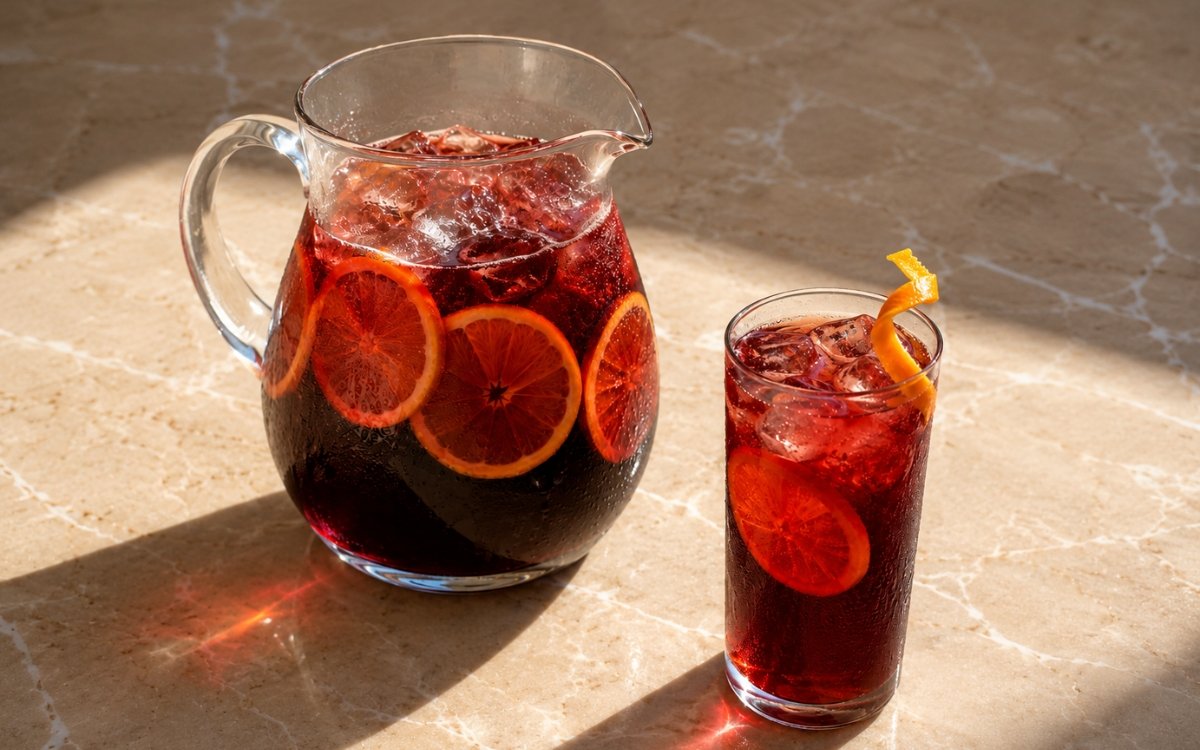
- Fill glasses about two-thirds full with ice, pour over the sangria, and garnish with orange peel twists. Serve immediately while the drink is crisp and lively.
Notes
Use ripe, fragrant citrus whenever possible. The drink has very few ingredients, so fruit quality directly determines the final depth and balance.
Red verjus provides essential tannic structure and dryness. Substituting grape juice or cranberry juice will make the drink noticeably sweeter and less refined.
Make sure the honey is fully dissolved during maceration. Undissolved honey sinks and creates uneven sweetness between servings.
Allowing proper chill time significantly improves flavor integration. Even an additional 30 minutes of resting will make the sangria feel more cohesive and layered.
Add carbonation only at the last moment. Early addition causes the drink to go flat and dull before it even reaches the glass.
Manage dilution carefully by avoiding excessive ice in the pitcher. Ice should primarily be added to serving glasses to maintain clarity of flavor.