Ingredients
Method
Soak the Rice and Mung Beans
- Rinse the sticky rice several times until the water is mostly clear. Soak in plenty of cold water for 6–8 hours or overnight. Rinse the split mung beans and soak separately for 4–6 hours. Drain both very well before cooking. Sticky rice must be well drained before steaming. If too wet, it turns heavy and gummy instead of glossy and distinct. That thorough draining removes any residual soaking water that would otherwise steam the rice into something waterlogged rather than letting it develop its own genuinely glossy, defined texture.
Fry the Shallots
- Slice the shallots thinly and evenly. Heat the oil in a small saucepan over medium-low heat. Add the shallots and fry slowly, stirring often, until evenly golden. Remove them when light golden, not deep brown — they continue darkening from residual heat. Drain on paper towels and sprinkle with a tiny pinch of salt. Low-to-moderate heat is important. If the oil is too hot, the outside browns before the inside dries and they will turn bitter instead of crisp. That deliberate timing, pulling the shallots while still only light golden, accounts for real, continued carryover colour development — waiting for them to look fully done in the pan would mean they've already gone too far by the time they've cooled.
Steam and Mash the Mung Beans
- Drain the soaked mung beans and steam them for 20–25 minutes, until fully tender and easily mashable. Transfer while hot to a bowl and add the salt and optional oil. Mash very thoroughly until smooth, or pulse briefly in a food processor. Spread or press the mung bean paste onto a plate or shallow dish to cool slightly. Before serving, crumble it finely with your fingers, or grate/shave it for a fluffy topping. The mung bean should be fully cooked and soft, not chalky. Undercooked beans make the topping dry and grainy. Pressing the mashed paste into a firm, compact layer before it's crumbled is specifically what gives it the structure needed to produce a genuinely fluffy, shaved texture rather than a loose, wet mash.
Steam the Turmeric Sticky Rice
- In a bowl, mix the drained sticky rice with turmeric and salt until evenly coated. Add 1 tbsp oil and toss. Steam the rice in a steamer lined with cheesecloth or a thin steaming cloth for 25 minutes. Open and fluff gently with chopsticks or a fork. If the rice feels a little firm or dry in the center, sprinkle with 1–2 tbsp water, cover again, and steam for another 10–15 minutes. The rice is done when it is glossy, tender throughout, sticky but still made of distinct swollen grains. Do not boil sticky rice like regular rice for this dish. Xôi xéo should be steamed, which keeps the grains glossy and defined. Coating every grain in turmeric and oil before steaming, rather than adding either partway through, is what lets the colour and richness distribute genuinely evenly throughout the finished rice.
Make the Scallion Oil
- Put the sliced scallions and a pinch of salt in a small heatproof bowl. Heat 2 tbsp oil until hot, then pour over the scallions and stir. Alternatively, warm the scallions and oil together briefly just until wilted. Set aside. Pouring the genuinely hot oil directly over the raw scallions is what gently cooks and wilts them on contact, releasing their own aromatic oils without needing any further direct heat.
Assemble
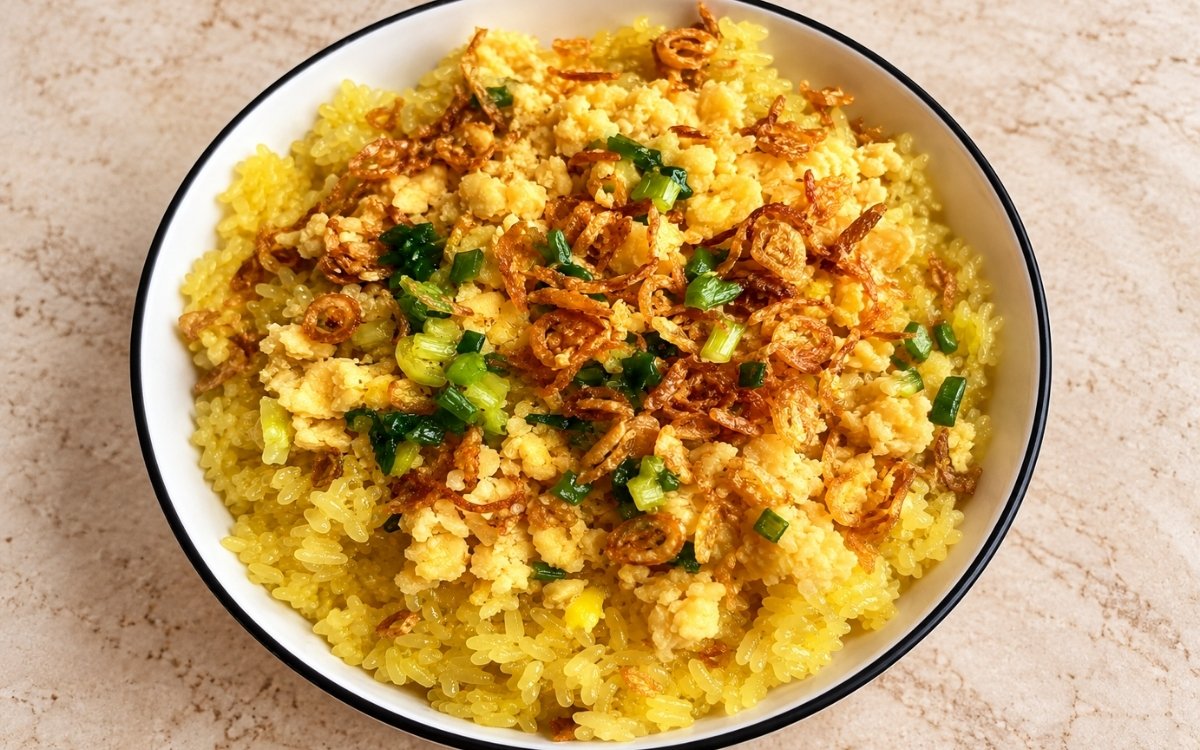
- Divide the hot sticky rice among 4 bowls. Top generously with crumbled mung bean, lots of crispy fried shallots, and a drizzle of scallion oil. Serve warm. Serving everything while the rice is still genuinely hot lets the scallion oil's own aromatics carry properly and keeps the whole bowl at its intended, warm, supple texture right through to the first bite.
Notes
Steaming the sticky rice, rather than boiling it, deserves genuine recognition as the single technique most responsible for this dish's whole defining texture. The recipe's own explicit warning against boiling glutinous rice like regular rice reflects a real, important distinction — steaming is specifically what keeps the grains glossy and individually defined, protecting against the heavy, gummy result boiling would produce instead.
Pulling the fried shallots while they're still only light golden deserves the same attention this technique receives throughout this collection's other fried aromatics. Residual heat continues cooking them noticeably even after they leave the oil, and the recipe's own explicit guidance to remove them before they reach deep brown reflects real understanding that waiting for a fully finished appearance in the pan means they've already gone too far by the time they've actually cooled.
Pressing the mashed mung bean into a firm, compact layer before crumbling it deserves genuine attention as the technique responsible for this topping's more classical, fluffy texture. The recipe's own explicit note that this pressed-and-shaved approach is more traditional than leaving the beans loose reflects a real, deliberate choice about the topping's final character — that compact structure is exactly what allows it to shave or crumble into fine, light pieces rather than sitting as a wet, coarse mash.
Coating every grain of sticky rice in turmeric and oil before it ever goes into the steamer deserves respect as a real, functional technique rather than a simple mixing step. That thorough, upfront coating is what lets the turmeric's own golden colour distribute evenly across every grain during steaming, rather than concentrating unevenly if added only partway through cooking.