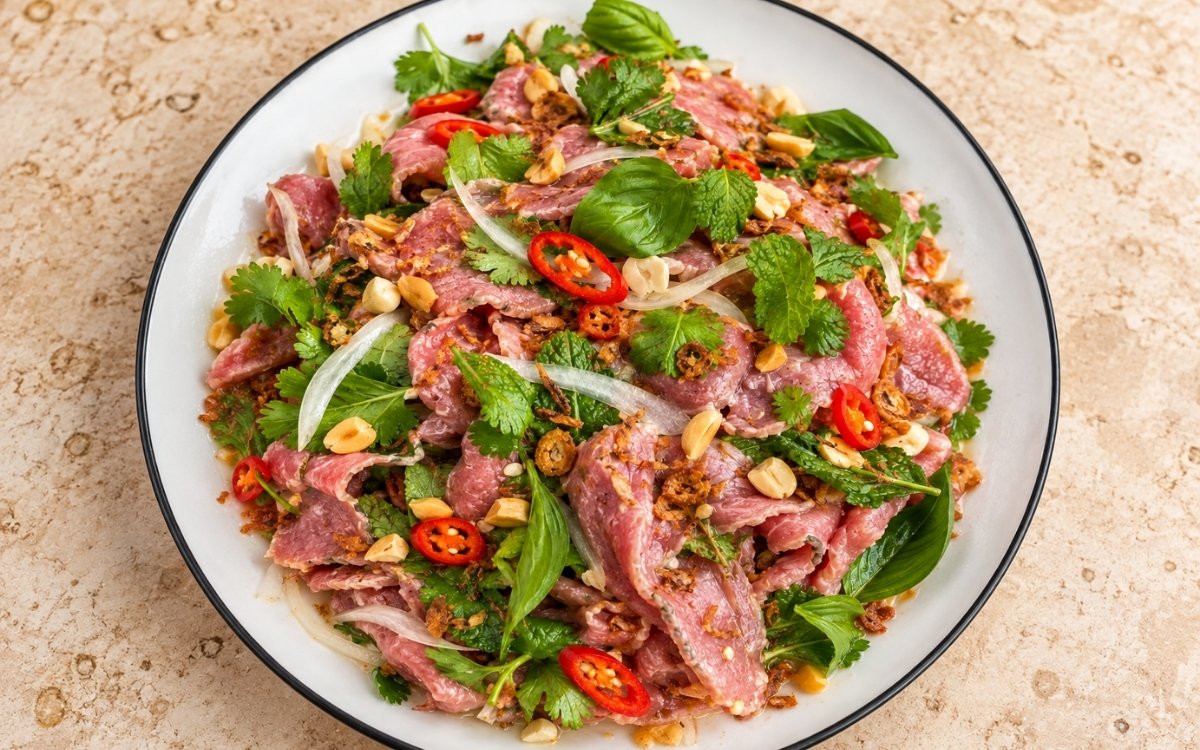
Ingredients
Method
Chill and Slice the Beef
- Place the beef in the freezer for 25–35 minutes, just until firm but not frozen solid. Slice across the grain as thinly as possible. Aim for wide, delicate slices about 1–2mm thick. The beef must be sliced thinly. Thick slices will not cure evenly and will chew tough. Food safety note: lime juice changes the color and texture of beef, but it does not sterilize it like cooking. Use very fresh beef from a reliable source and serve the salad immediately. That brief freeze firms the beef just enough to make genuinely thin, even slicing considerably easier to achieve by hand — fully soft, room-temperature meat would be far harder to cut this precisely.
Soak the Onion
- Place the thinly sliced onion in ice water with rice vinegar or lime juice and a pinch of salt. Soak for 10–15 minutes, then drain very well. The onion should stay crisp but lose its harsh raw bite. Wet onion will dilute the dressing, so drain it properly. That ice water soak draws out some of the onion's own sharp, sulfurous compounds while the cold temperature helps it stay genuinely crisp, and the thorough draining that follows protects the finished dressing from being watered down.
Make the Dressing
- In a bowl, mix fish sauce, lime juice, sugar, warm water, garlic and chili until the sugar dissolves. Taste and adjust. It should be salty, sour, lightly sweet and sharp. The dressing should taste slightly stronger than you want the final salad to taste. The beef, onion and herbs will soften it. That deliberately intense early seasoning accounts for real, predictable dilution once the dressing meets the beef, onion, and herbs — a dressing that tastes perfectly balanced on its own would read as flat once tossed through the whole salad.
Cure the Beef
- Place the sliced beef in a shallow bowl. Add the lime juice, salt, sugar and black pepper. Toss gently and let stand for 5–8 minutes, just until the outside of the beef turns slightly lighter but the center stays pink. Drain off excess lime liquid. Do not leave the beef sitting in lime juice too long. After about 10–15 minutes it becomes grey, firm and less luxurious. That genuinely brief curing window is calibrated precisely to lightly change the beef's own surface texture and colour while protecting its center from the same acid-driven toughening a longer soak would cause throughout.
Toss the Salad
- Add the drained onion, mint, Thai basil, cilantro, optional rau răm and sliced chili to the beef. Pour over enough dressing to gloss everything without drowning it. Toss gently with your hands or tongs. Add half of the peanuts and half of the crispy shallots and toss once more. Add peanuts and fried shallots near the end so they keep texture. If mixed too early, they soften. That deliberate timing — peanuts and shallots added only in this final stage — protects their own real crunch from the salad's own moisture, which would otherwise soften them considerably if given more contact time.
Plate
- Pile the salad onto a shallow plate. Finish with the remaining crushed peanuts, crispy fried shallots, extra herb leaves and a few chili slices. Serve immediately with lime wedges. Reserving a final portion of peanuts, shallots, and herbs specifically for this plating stage keeps those elements genuinely crisp and visible right at the surface, rather than buried and softened throughout the tossed salad beneath.
Notes
Slicing the beef genuinely thin, about 1–2mm, deserves real recognition as the technique most directly responsible for whether this salad's beef cures evenly and stays tender. The recipe's own explicit warning that thick slices "will not cure evenly and will chew tough" reflects a real, common failure — that consistent thinness is what lets the lime juice actually reach and lightly affect the meat evenly throughout each slice within the recipe's own brief curing window.
Keeping the lime curing time deliberately short deserves the same attention this technique receives throughout this collection's other citrus-cured raw or rare proteins. The recipe's own specific description of what happens past 10–15 minutes — grey, firm, less luxurious — reflects real, ongoing chemical change; the beef's own protein structure continues denaturing the longer it sits in acid, and this recipe's brief window is calibrated to stop well short of that fully "cooked" appearance and texture.
Soaking the sliced onion in ice water before it joins the salad deserves genuine attention as a real, deliberate technique rather than a simple rinse. That cold soak softens the onion's own harshest raw bite while the cold temperature itself helps preserve real crispness, giving the finished salad a milder, more pleasant onion component than raw, unsoaked slices would provide.
Adding the peanuts and fried shallots only at the very end, right before or during plating, deserves genuine respect as the detail responsible for this salad's whole textural contrast. Both ingredients soften considerably with any real contact time against the dressing's moisture, and holding them back until the final stage is specifically what protects their own crunch through to serving.