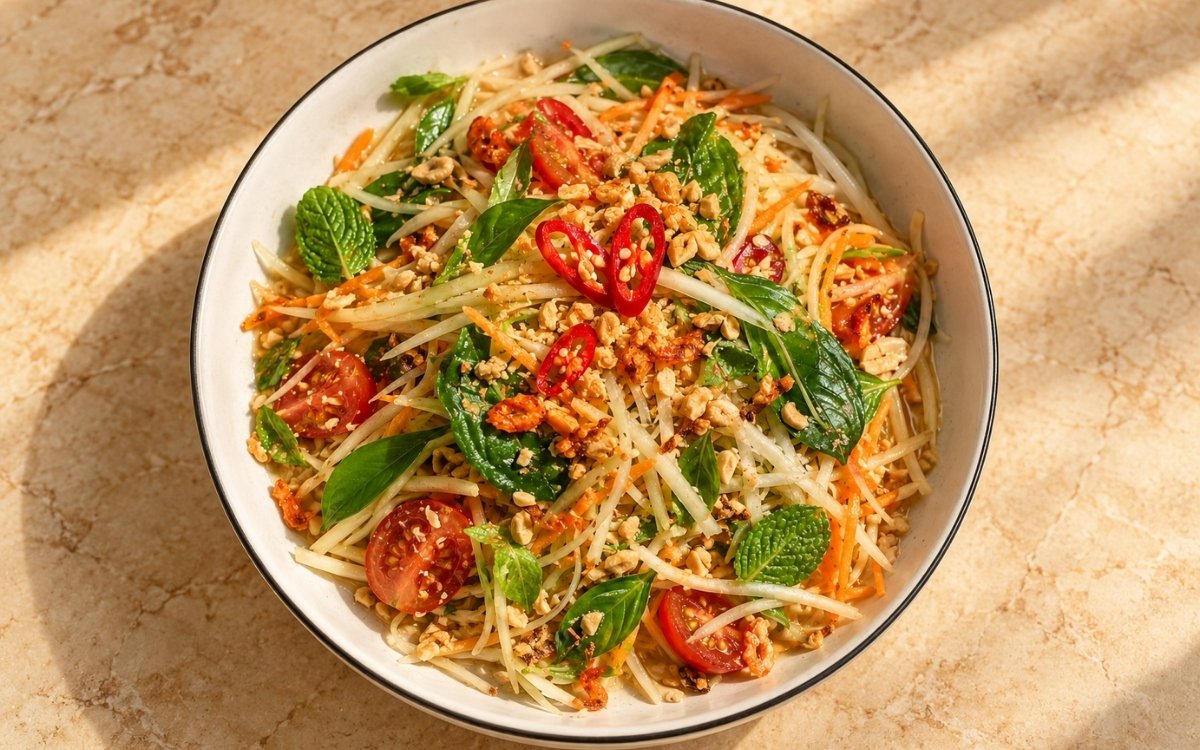
Ingredients
Method
Prep the Papaya and Carrot
- Peel the green papaya. Split it and remove any seeds or soft center if present. Julienne it very finely into thin crisp strips. Julienne the carrot to a similar size. Toss the papaya with 1 tsp salt and let it sit for 10 minutes. This lightly seasons it and pulls out a little excess moisture. Rinse briefly, then squeeze gently but thoroughly. Transfer the papaya and carrot to a bowl of ice water for 5–10 minutes, then drain very well and pat dry. The papaya must stay crisp and light, not wet. If it goes into the salad waterlogged, the dressing will dilute and pool at the bottom. That deliberate salting and squeezing, followed by a genuine ice bath, is what draws out the papaya's own real excess moisture while the cold temperature keeps it genuinely crisp before it ever meets the dressing.
Prepare the Dried Shrimp
- Rinse the dried shrimp briefly. Soak in warm water for 10 minutes just to soften slightly, then drain well. If they are large, chop them roughly. If small, leave them whole. For better aroma, dry-toast them in a small pan over low heat for 1–2 minutes until fragrant. Do not leave the dried shrimp wet. They should be rehydrated just enough to be pleasantly chewy, not soggy. That brief, deliberate rehydration is calibrated precisely to soften the shrimp's own texture without pushing them toward a genuinely wet, soggy result the salad's overall crisp character doesn't call for.
Make the Dressing
- In a bowl, combine the fish sauce, lime juice, sugar, garlic, and chopped chili. Stir until the sugar dissolves. Add 30ml warm water first, then taste. The dressing should be salty, bright and sour, lightly sweet, and punchy from garlic and chili. Add a little more water only if it tastes too intense. The dressing should be strong on its own because it is seasoning a large volume of raw vegetables. If it tastes mild before mixing, it will taste flat after tossing. That deliberately intense early seasoning accounts for real, predictable dilution across this much raw papaya and carrot — a dressing that tastes perfectly balanced by itself would read as noticeably flat once actually tossed through the whole salad.
Prep the Remaining Elements
- Halve the cherry tomatoes. Roughly crush the peanuts. Pick the basil and mint leaves. Slice the red chili into fine rings. If using fried shallots, have them ready for the final toss or garnish. Having every component fully prepped and staged before the actual tossing begins is what lets the salad be assembled quickly right before serving, protecting the papaya's own crispness from any real delay.
Toss the Salad
- In a large bowl, combine the drained papaya, carrot, tomatoes, dried shrimp, most of the peanuts, and most of the herbs. Pour over about two-thirds of the dressing first and toss well. Taste, then add more dressing as needed. Fold in the chili slices and fried shallots if using. Finish with the remaining peanuts and herbs on top. Dress the salad just enough to coat everything lightly. The salad should look glossy and lively, not wet and collapsed. The papaya must still hold its shape and crunch after tossing. Adding the dressing gradually, checking coverage as you go, protects against oversaturating vegetables that were specifically dried to actually hold a light, even coat rather than turning heavy and wet.
Final Balance
- Taste and adjust right before serving: more lime if it needs brightness, more fish sauce if bland, a pinch more sugar if too sharp, more chili if you want more heat. Serve immediately or within 10–15 minutes for best texture. That genuinely narrow serving window reflects how quickly this salad's own real crunch begins to change once dressed — the salt and acid in the dressing continue working on the vegetables the longer it sits.
Notes
Salting and squeezing the papaya, followed by a genuine ice bath, deserves recognition as the technique most directly responsible for whether this salad achieves real, lasting crunch. The recipe's own explicit warning that waterlogged papaya "will dilute and pool at the bottom" reflects a real, common failure point — that combination of drawing out moisture and then chilling is specifically what protects the finished dish's whole texture.
Building the dressing deliberately strong on its own deserves the same attention this technique receives throughout this collection's other dressings meant to season a whole raw salad. The recipe's own explicit framing — "if it tastes mild before mixing, it will taste flat after tossing" — reflects real understanding of how much dilution this large volume of papaya, carrot, and herbs actually causes.
Adding the fresh herbs only near the end, rather than earlier in preparation, deserves genuine attention as a deliberate technique protecting their own real freshness. Basil and mint both lose real brightness and aroma the longer they sit exposed or mixed with acidic dressing, and holding them back until this later stage is what keeps them genuinely vivid right through to serving.
The recipe's own genuinely narrow serving window — immediately or within 10–15 minutes — deserves respect as a real, functional guideline rather than a loose suggestion. Salt and acid continue working on the papaya's own cell structure the longer the dressed salad sits, and that narrow window is what protects the crisp, lively texture this dish depends on.