Ingredients
Method
Prepare and Rinse the Cannellini Beans
- Open the canned cannellini beans and pour them into a colander. Rinse thoroughly under cold running water for about 30 seconds while gently turning them with your hands. This removes the canning liquid, which can have a metallic taste and excess starch that may dull the dressing. Allow the beans to drain completely for one minute so excess water does not dilute the dressing. Transfer the drained beans to a large mixing bowl.
Dice the Tomatoes and Cucumber
- Wash and dry the tomatoes and cucumber. Cut the tomatoes into small cubes approximately 8–10 mm in size, removing any tough core sections if present. If the tomatoes are very juicy, gently scoop out some of the seed pulp to prevent the salad from becoming watery. Dice the cucumber into similarly sized cubes so that the vegetables remain balanced throughout the salad. Add both the diced tomatoes and cucumber to the bowl with the beans.
Prepare the Red Onion
- Peel the red onion and slice it as thinly as possible using a sharp knife or mandoline. Thin slices are important because they soften slightly when dressed and integrate better with the other ingredients. If the onion tastes very sharp or pungent, briefly rinse the slices under cold water and pat them dry with paper towels to mellow their bite while preserving their crisp texture. Add the onion slices to the mixing bowl.
Chop the Fresh Parsley
- Rinse the parsley thoroughly and shake off excess water. Using a sharp knife, finely chop the leaves and tender stems. The parsley should be chopped finely enough to distribute evenly throughout the salad but not so finely that it turns into a paste. Add the chopped parsley to the bowl with the beans and vegetables.
Prepare the Hard-Boiled Eggs
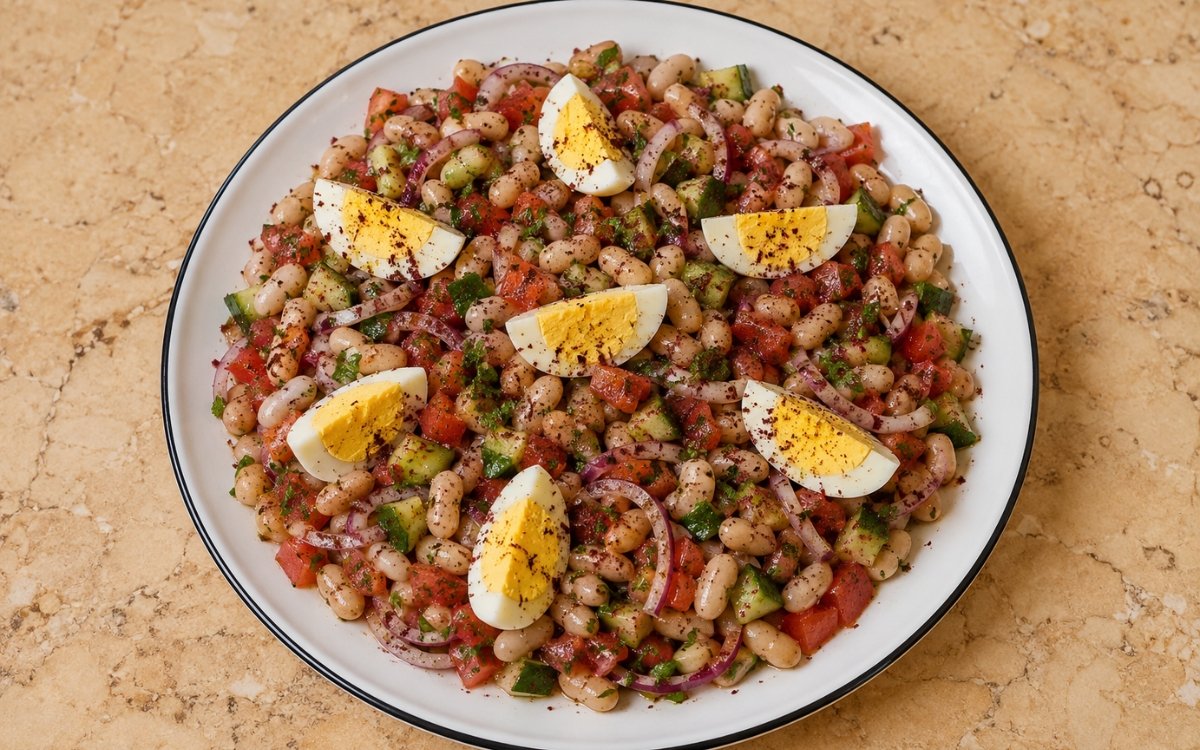
- Peel the hard-boiled eggs and cut each egg into four wedges using a sharp knife. The egg yolks add richness while the whites contribute gentle structure to the finished salad. Set the egg quarters aside for plating later rather than mixing them directly into the bowl.
Prepare the Sumac Lemon Dressing
- In a small bowl combine the olive oil, lemon juice, sumac, salt, and black pepper. Whisk vigorously for about 20 seconds until the mixture becomes lightly emulsified and evenly speckled with sumac. The dressing should taste bright, tangy, and slightly fruity from the sumac, with the olive oil providing smooth richness.
Combine the Salad
- Pour the prepared dressing evenly over the beans and vegetables in the bowl. Using a large spoon or salad tongs, gently fold the ingredients together until everything is evenly coated. Stir carefully so the beans remain intact and do not break apart.
Rest and Plate
- Allow the salad to rest for 8–10 minutes at room temperature so the beans can absorb the lemon and sumac dressing. Transfer the salad to a serving platter and arrange the egg quarters neatly on top. Garnish with additional parsley or a light sprinkle of sumac if desired.
Serve
- Turkish Piyaz can be served immediately at room temperature or lightly chilled. The flavors deepen slightly after resting, making it an excellent mezze dish alongside grilled meats, fish, or flatbread.
Notes
Turkish piyaz is traditionally served as part of a mezze spread, where it functions as a refreshing, protein-rich side dish. The beans provide a creamy base that absorbs the tangy dressing while remaining light and satisfying.
Cannellini beans work especially well because their soft interior and thin skin absorb the dressing quickly without falling apart. If using dried beans instead of canned, they should be cooked until fully tender but still holding their shape.
Sumac is a defining flavor in many Middle Eastern and Turkish dishes. It contributes a tart, citrus-like brightness with subtle berry notes that complement the lemon juice and olive oil.
Thinly slicing the onion ensures that its flavor remains balanced rather than overwhelming the salad. If the onion flavor becomes too sharp, briefly rinsing it in cold water reduces its intensity while maintaining its crisp texture.
Although the salad can be chilled, serving it closer to room temperature often produces the best flavor because olive oil remains fluid and aromatic.