Ingredients
Method
Soften the Bulgur
- Place the fine bulgur in a large heatproof bowl and mix with the ½ tsp salt. Pour over the just-boiled water, stir once, cover tightly with a plate or lid, and let sit for 15–20 minutes until the bulgur absorbs the water and softens. Fluff with a fork and break up any clumps. Use fine bulgur only. Coarse bulgur will not hydrate properly for kısır and will stay hard unless cooked separately. That genuinely fine grind is what allows the bulgur to soften entirely through simple hot-water soaking alone — coarser grinds simply lack the same surface area and structure to fully hydrate without actual cooking.
Prepare the Vegetables and Herbs
- While the bulgur rests, finely dice the tomatoes and cucumber, slice the spring onions, and finely chop the parsley and mint. If the tomatoes are very juicy, let them drain briefly in a sieve or on paper towels. The vegetables should be cut small and evenly so the salad mixes uniformly and stays spoonable, not chunky. That consistent, fine dice matters directly for how the finished salad actually eats — evenly sized pieces let every spoonful carry a genuine mix of components rather than isolated chunks.
Build the Paste Mixture
- In a small bowl, mix together the tomato paste, pepper paste, olive oil, pomegranate molasses, lemon juice, Aleppo pepper, chili flakes, cumin, black pepper, and ¾ tsp salt until smooth. Taste it. It should be bold, tangy, slightly sweet, and a little spicy. Having this mixture fully combined and tasted before it ever meets the bulgur is what lets its own balance be checked and adjusted while it's still easy to work with, before it's committed to seasoning the whole grain base.
Work the Bulgur
- Add the paste mixture to the softened bulgur. Using a spoon or clean hands, mix and lightly rub the mixture into the grains for 2–3 minutes until the bulgur is evenly coated and takes on a light red-orange tint. Let it sit for 5 minutes so the seasoning absorbs. This mixing step matters. Kısır tastes better when the paste and dressing are worked thoroughly into the bulgur rather than simply tossed. That deliberate, hands-on rubbing motion is what actually drives the paste's own flavour into every individual grain — a lighter toss would leave the coating sitting on the surface rather than genuinely absorbed throughout.
Add the Fresh Ingredients
- Add the spring onions, parsley, mint, diced tomato, and diced cucumber to the seasoned bulgur. Mix gently but thoroughly until evenly combined. Taste and adjust with more lemon juice, pomegranate molasses, salt, or chili as needed. If it feels a little dry, add 1–2 tsp olive oil. If it feels too wet, let it stand uncovered for a few minutes before serving. That real-time adjustment, using either more oil or a brief uncovered rest as needed, reflects genuine understanding that the exact moisture balance can vary batch to batch, worth actively correcting for rather than accepting either extreme.
Finish and Serve
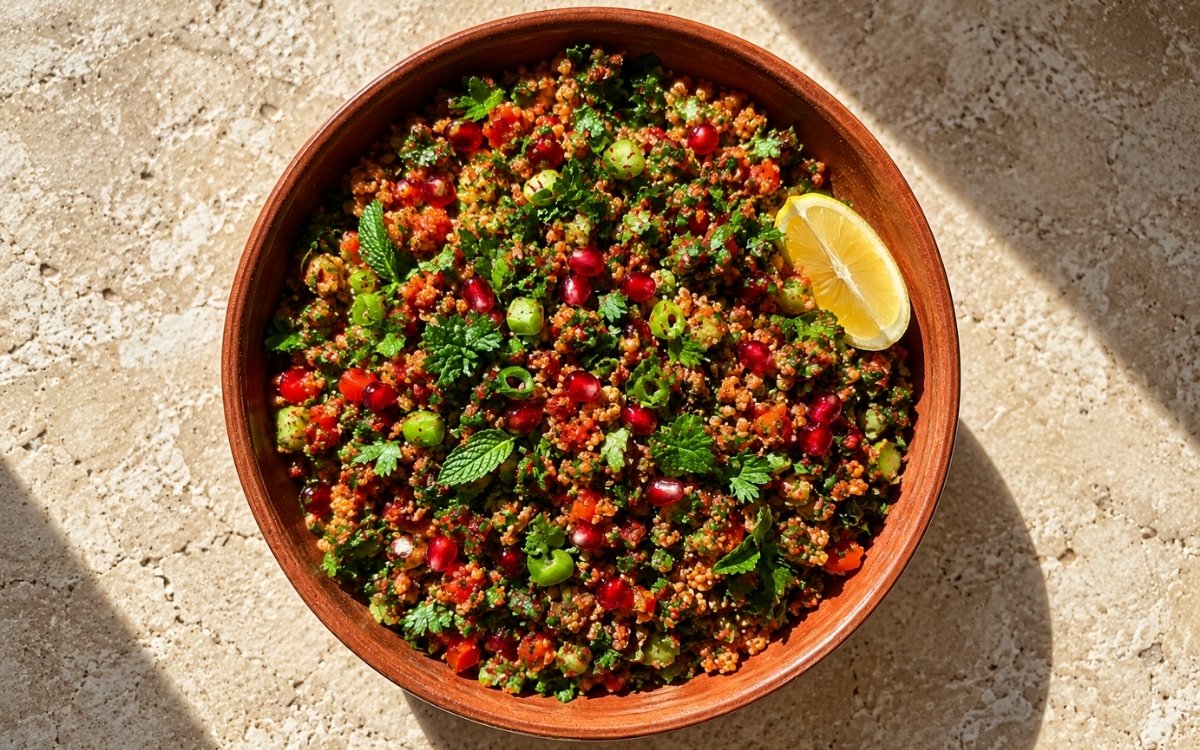
- Transfer to a wide shallow bowl. Scatter over the pomegranate seeds if using and serve with lemon wedges. The final salad should be fluffy, lightly glossy, herb-heavy, and well-seasoned, with distinct grains and no pooling liquid at the bottom. That specific, checkable final appearance — distinct grains, no pooled liquid — is a genuine confirmation that every earlier technique, from the fine bulgur's own hydration through to the vegetables' final timing, has actually worked as intended.
Notes
Using genuinely fine bulgur, rather than medium or coarse, deserves recognition as the technique most directly responsible for whether this dish achieves proper hydration through simple soaking alone. The recipe's own explicit warning that coarse bulgur "will not hydrate properly for kısır and will stay hard unless cooked separately" reflects a real, structural distinction between grinds — this particular method depends specifically on fine bulgur's own greater surface area.
Working the paste mixture thoroughly into the softened bulgur, rather than simply tossing it in, deserves genuine attention as the technique responsible for kısır's real, even flavour throughout. The recipe's own explicit note that "kısır tastes better when the paste and dressing are worked thoroughly into the bulgur rather than simply tossed" reflects real, deliberate technique — that hands-on rubbing motion is what actually drives the seasoning into each individual grain.
Adding the diced tomato and cucumber closer to serving, rather than earlier in preparation, deserves respect as a real, functional timing choice given how much water both vegetables carry. The recipe's own explicit acknowledgment that they "add water" reflects genuine awareness that their moisture, left too long in contact with the seasoned bulgur, would compromise the dish's own intended fluffy, distinct texture.
The recipe's own specific final-appearance target — distinct grains with no pooling liquid — deserves attention as a genuine, checkable confirmation rather than a loose description. That visible result reflects whether every earlier stage, from the bulgur's own fine grind through to the vegetables' careful timing, has actually come together as intended.