Ingredients
Method
Build the Broth
- Put the beef, chicken, cold water, onion, carrot, celery, parsley stems, bay leaf, and peppercorns into a large pot. Bring up to a very gentle simmer over medium heat. Do not rush this stage. As the broth starts heating, skim off the foam and impurities from the surface several times. Start from cold water and heat slowly. This extracts flavor gradually and helps produce a clearer broth. A hard boil early on will cloud the broth and toughen the meat. The cold start gives proteins time to release gradually into the liquid as the temperature climbs, rather than seizing suddenly under a hard boil and clouding the broth with coagulated particles.
Simmer Gently
- Once the broth reaches a light simmer, add the salt and reduce the heat to low. Simmer uncovered or partially covered for 2½ to 3 hours, maintaining only a gentle movement in the liquid. Skim occasionally if needed. The broth should never boil aggressively. You want a quiet simmer with only small bubbles. This is the main difference between a clear brodo and a cloudy soup stock. By the end, the broth should taste full, clean, and savory, and the chicken and beef should be fully cooked and tender. The long, gentle simmer draws flavour slowly from the beef and chicken without the agitation that would cloud the broth.
Strain and Finish the Broth
- Strain the broth through a fine sieve into a clean pot. Discard the vegetables and aromatics. If you want an even cleaner broth, strain it a second time through a finer sieve or cheesecloth. Taste and adjust salt. If the broth is very fatty, let it settle for a few minutes and skim some fat from the top, but do not remove all of it — a light golden sheen is desirable and classical. You should have about 1.8 to 2 liters finished broth. Tortellini in brodo should taste delicate, not greasy. Leave enough fat for flavor, but not so much that the surface becomes heavy. That deliberate restraint in skimming — removing some fat but never all of it — keeps the broth's classical character, since a light golden sheen carries flavour that a fully defatted broth would lose entirely.
Cook the Tortellini
- Bring the strained broth back to a gentle simmer. Add the tortellini and cook according to their type: fresh or refrigerated tortellini usually take 2–4 minutes, dried tortellini usually take 8–12 minutes, or according to package timing. Stir gently once or twice so they do not stick. Cook just until the tortellini are tender and heated through. Do not boil hard after adding the tortellini. A strong boil can break them open and turn the broth starchy or cloudy. If using packaged tortellini that release a lot of starch, you can cook them separately in water and transfer them into hot broth for serving. This keeps the broth cleaner. For good-quality fresh tortellini, cooking directly in the broth is more classical. Keeping the simmer gentle at this stage protects the tortellini's own delicate wrappers from the physical agitation a hard boil would introduce — that same agitation is exactly what causes them to burst and release starch back into the broth.
Serve
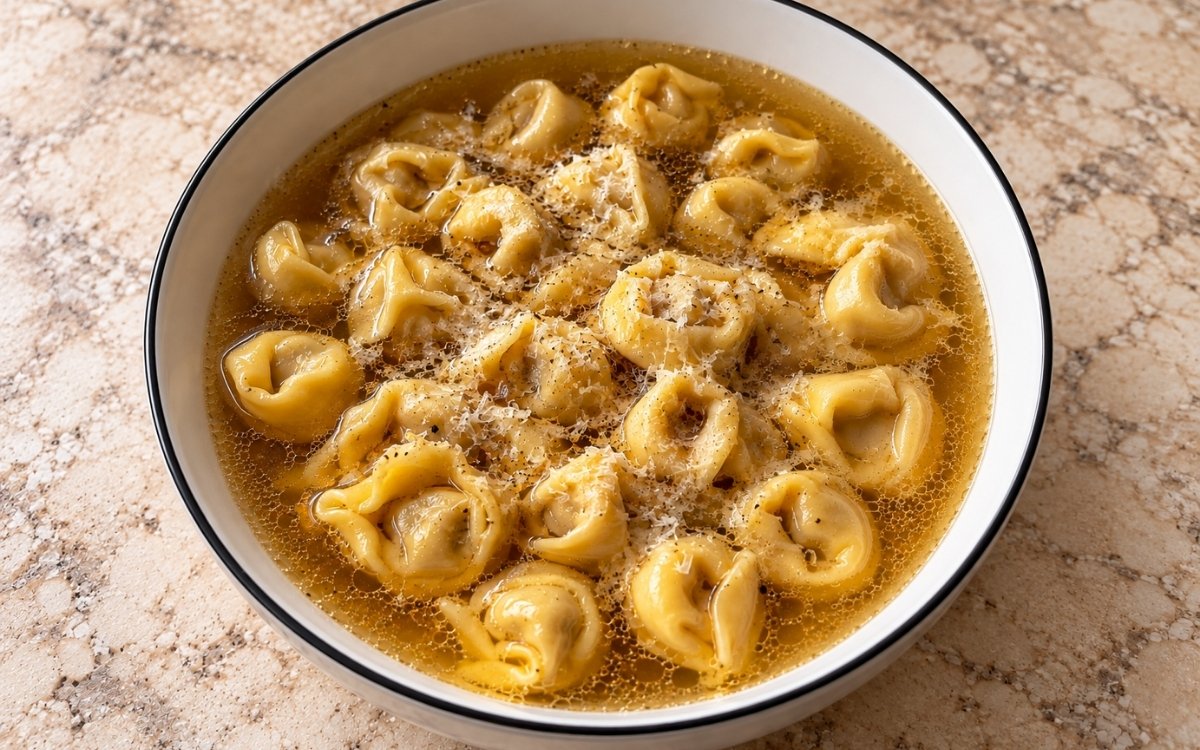
- Warm the serving bowls. Divide the tortellini among the bowls and ladle the hot broth over them. Finish with a light to moderate sprinkle of finely grated Parmigiano-Reggiano. Serve immediately. Warming the bowls beforehand protects the broth's own temperature from dropping the instant it's ladled in, keeping the whole dish hot right through to the first spoonful.
Notes
Start the broth from cold water and heat it slowly; no other step affects clarity as much. A hard boil early on clouds the broth and toughens the meat. Proteins released gradually as the temperature climbs slowly stay in far better control than those forced out suddenly under aggressive heat.
Keep only a quiet simmer with small bubbles for the whole 2½ to 3-hour cook. No later step can rescue a broth that has been allowed to boil hard.
Leave a light golden sheen of fat on the finished broth rather than skimming it all away; this is classical, not an oversight. Some fat carries flavour a fully defatted broth would lose, while too much makes the soup heavy rather than delicate.
Keep the simmer gentle once the tortellini go in, or the broth turns starchy and cloudy. A hard boil at this stage physically agitates the delicate pasta wrappers enough to burst them open, releasing their own starch directly back into the broth this whole recipe was built to keep clean.