Ingredients
Method
Prepare the Beef
- If the cutlets are uneven, place them between sheets of baking paper or plastic and pound gently until evenly thin, about 4–6mm thick. Season both sides with fine sea salt, black pepper, garlic powder, and onion powder. The cutlets should be thin enough to cook quickly and crisp well, but not pounded so hard that they tear. Pounding to an even thickness matters directly for the fry that follows — an unevenly thick cutlet forces a compromise where the thin section overcooks before the thick section has finished, especially over the fairly short frying time this cut needs.
Set Up the Breading Station
- Place the flour in one shallow bowl. In a second bowl, whisk the eggs with the milk or water until completely smooth. In a third bowl, combine the breadcrumbs with the salt, pepper, and optional grated Parmesan or cotija. Coat each cutlet first in flour, shaking off the excess, then in egg, then in breadcrumbs, pressing the crumbs firmly so they adhere evenly. Set the breaded cutlets on a tray and let them rest for 10 minutes. This short rest helps the coating hydrate slightly and cling better during frying. The standard three-stage breading sequence works because each layer gives the next something to grip — the flour gives the wet egg a surface to cling to, and that egg layer is in turn what the breadcrumbs adhere to; skipping or shortchanging any one stage weakens the whole coating's hold on the beef.
Prepare the Toppings
- Warm the refried beans gently over low heat until spreadable. If they are very thick, loosen with a spoonful of water. Slice the avocado, tomato, and onion. Shred the lettuce if needed. Thin the crema slightly only if it is too thick to spread or drizzle. Keep all toppings ready before frying the milanesa so the sandwiches can be assembled while the cutlets are still hot and crisp. Handling every topping ahead of the actual frying is what keeps the final assembly stage — the part of this recipe with the least margin for delay — moving quickly rather than competing with last-minute prep work.
Fry the Milanesa
- Heat about 1–1.5cm of neutral oil in a wide skillet over medium to medium-high heat. Fry the breaded cutlets one at a time or in batches, depending on pan size, until deep golden brown and crisp, about 2–3 minutes per side. Transfer to a wire rack or paper towel-lined tray. The coating should be crisp and deeply golden, while the beef inside should remain juicy and just cooked through. Do not overcrowd the pan or the coating will soften instead of frying properly. Frying in a properly sized batch, rather than crowding the pan, keeps the oil at a stable temperature throughout — crowded cutlets drop that temperature and produce a softened, greasy coating instead of the crisp crust this sandwich depends on.
Toast the Telera Rolls
- Split the telera rolls horizontally. Toast the cut sides lightly in a skillet, comal, or under a broiler until warm and lightly crisped. The bread should be toasted enough to support the fillings, but still soft enough to compress slightly when eaten. This toast gives the roll real structural resistance against the combined moisture of the beans, crema, and fresh vegetables stacked inside — an untoasted telera would have considerably less tolerance for that load.
Melt the Cheese
- Place one fried milanesa cutlet on each bottom half of the toasted telera rolls. Top each cutlet with a portion of Oaxaca cheese. Place under a broiler or cover briefly in a skillet just until the cheese softens and begins to melt. The cheese should melt enough to bind to the milanesa without running off completely. Melting the cheese directly onto the hot milanesa, rather than adding it cold at final assembly, is what lets it bind lightly to the crisp coating beneath it, anchoring the first layer of the sandwich before the rest is built on top.
Assemble the Tortas
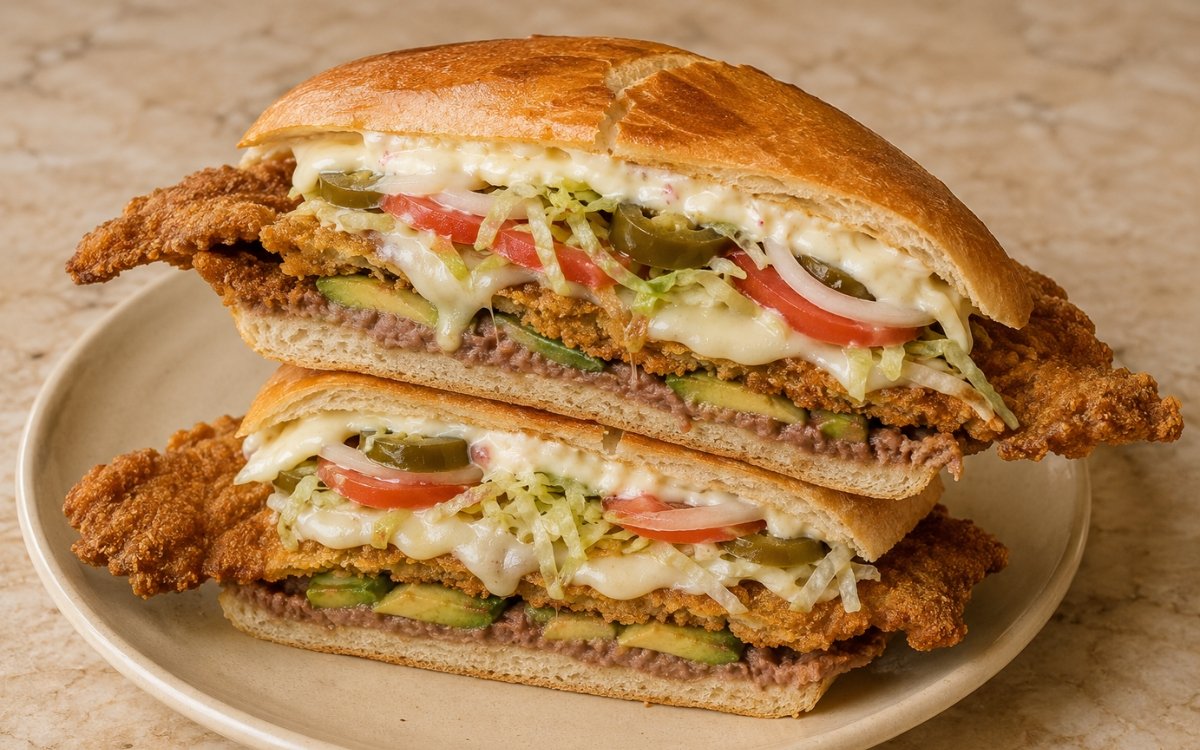
- Spread the warm refried beans on the top half of each roll. Spread or drizzle crema over the beans. On the cheese-topped milanesa, layer sliced avocado, shredded lettuce, tomato slices, white onion, and pickled jalapeños. Close each sandwich with the bean-and-crema side on top. Press gently so the fillings settle but do not crush the cutlet. The final sandwich should feel full and generous, with the milanesa clearly extending beyond the bread. Spreading the beans and crema on the top roll rather than directly onto the hot cheese and milanesa keeps those cooler, wetter components from sitting in prolonged contact with the crisp coating any longer than necessary before the sandwich is closed and served.
Serve
- Serve immediately while the milanesa is crisp, the cheese is still soft, and the bread remains toasted. If desired, cut each torta in half before serving. Holding the finished tortas too long softens the milanesa coating, so serving without delay is what preserves the contrast between the crisp cutlet and everything layered around it.
Notes
The resting period after breading, though brief, is worth treating as a genuine technique step rather than an optional pause. Freshly applied breadcrumbs haven't had time to properly bond with the wet egg layer beneath them, and cutlets fried immediately after breading tend to shed noticeable amounts of coating into the oil, leaving patchy, thin spots on the finished crust. The 10-minute rest gives the coating time to set and hydrate against the meat's surface, producing a crust that stays intact through frying.
Toasting the telera roll is a small step with an outsized effect on how well this sandwich holds together, given how many wet and juicy components are stacked inside it. A soft, untoasted roll simply doesn't have the structural resistance to survive contact with warm refried beans, drizzled crema, and juicy sliced tomato for the length of time it takes to eat a torta this substantial — the light toast buys real, if modest, extra time before the bread begins to break down.
Keeping the refried beans thick rather than loose, and warming rather than thinning them more than necessary, protects the same bread from a different angle. Beans that are too watery soak directly into the roll from the moment the sandwich is assembled, working against the toasting step that was meant to protect it in the first place — thickness here is a genuine defensive measure, not just a texture preference.
The order of assembly — cheese melted onto the hot milanesa first, then beans and crema on the opposite roll half, with fresh vegetables layered onto the cheese-topped side — is deliberate rather than arbitrary. Building the sandwich this way means the coolest, wettest components (crema, sliced tomato) spend the least possible time in direct, sustained contact with the hot, crisp milanesa before the sandwich is closed and eaten.