Ingredients
Method
Prepare the Tomatoes
- Core the tomatoes and cut each in half horizontally. Using your fingers or a small spoon, scoop out and discard the central seed chambers and the watery gel surrounding them — the translucent, water-heavy inner pulp that surrounds the seeds. This is not a step to perform with surgical precision — removing the worst of the watery pulp rather than achieving every seed is the correct approach. The reason for this preparation is specific to the Virgin Mary format: tomato seed gel is primarily water with a relatively low concentration of the flavour compounds present in the outer flesh. Its inclusion in the blended base dilutes the finished drink toward a thinner, more watery flavour without adding meaningful tomato character. The outer flesh and the attached concentrated juice are what provide the deep, specifically ripe tomato flavour the mocktail requires. Roughly chop the prepared tomato flesh into pieces small enough to process evenly. The tomato quality is the single most consequential variable in this recipe. Very ripe, deeply red, fragrant tomatoes — where the flesh has high natural sugar, high acid, and concentrated lycopene content — produce a deeply flavoured, vivid, specifically tomato-forward base. Pale, underripe, or watery supermarket tomatoes out of season produce a bland, flat base that no amount of seasoning can correct. When very ripe fresh tomatoes are unavailable, high-quality canned San Marzano tomatoes — drained of their canning liquid and used at the same weight — are a genuinely acceptable alternative and sometimes produce a more consistently good result than out-of-season fresh tomatoes.
Blend Carefully
- Add the prepared tomatoes, chopped celery stalk, 20ml of lemon juice, 6–8 fresh basil leaves, ½ tsp of fine sea salt, and the 1 tsp of cracked black pepper to a food processor or blender. If using, add the optional Worcestershire sauce, horseradish, hot sauce, and celery salt at this stage. Hold back on the additional salt for now — Worcestershire sauce, celery salt, and fine sea salt are three separate sources of sodium, and the cumulative effect after blending, straining, and chilling is often more than expected from what appears measured when added individually. Blend until smooth — 20–30 seconds at medium speed. Do not blend at maximum speed for an extended time. Aggressive blending at high speed incorporates air into the tomato mixture, producing a pale, foamy, slightly muted result rather than the vivid, deep red colour that shorter blending at moderate speed produces. The goal is a completely smooth mixture — no visible vegetable chunks — that retains the saturated red colour of the raw tomatoes rather than the pale salmon of over-aerated tomato.
Strain to the Correct Consistency
- Pour the blended mixture into a fine-mesh sieve set over a large jug. Using the back of a large spoon, press gently on the tomato mixture to extract the liquid. The pressing should be deliberate — enough pressure to extract the clear, vivid tomato juice and the fine tomato solids that pass through the mesh — but not so aggressive that the fibrous tomato skin pieces and celery fibres are forced through, which produces a thicker, more opaque, slightly rougher-textured result. The finished strained base should have body — it should coat the back of the spoon lightly — but should flow readily rather than sitting in the glass like a purée. The difference between a correctly strained Virgin Mary base and tomato passata is specifically the straining pressure: gentle extraction for body with flow rather than forced extraction for maximum yield.
Taste, Adjust, and Chill
- This tasting step is where the Virgin Mary either succeeds or remains flat. Taste the base carefully and assess each dimension separately. Brightness: if the tomato tastes flat and one-dimensional, add lemon juice in small increments — the acid lifts and vivifies the tomato's own natural acidity, making it taste more specifically of ripe tomato rather than processed tomato. Salinity: if the flavour is present but muted, add fine sea salt in small pinches. Remember that chilling will mellow the flavour slightly — the base should taste assertively seasoned at room temperature. Depth: if the base tastes bright but shallow, a small addition of Worcestershire sauce (if not already included) adds the fermented, umami-rich depth that makes the Virgin Mary taste specifically more complex than seasoned tomato juice. Heat: adjust hot sauce quantity to preference — 2 dashes is noticeable warmth; 4 is clearly spiced. Transfer the adjusted base to the refrigerator and chill for a minimum of 30 minutes. This rest period is not optional — warm tomato juice tastes specifically of cooked, flat, slightly oxidised tomato rather than the fresh, cold, vivid character that is the Virgin Mary's defining quality. The chill simultaneously improves the texture (cold tomato juice has a better body than warm) and the flavour (cold temperatures specifically suppress the flat oxidised notes that appear at room temperature in processed tomato).
Assemble and Serve
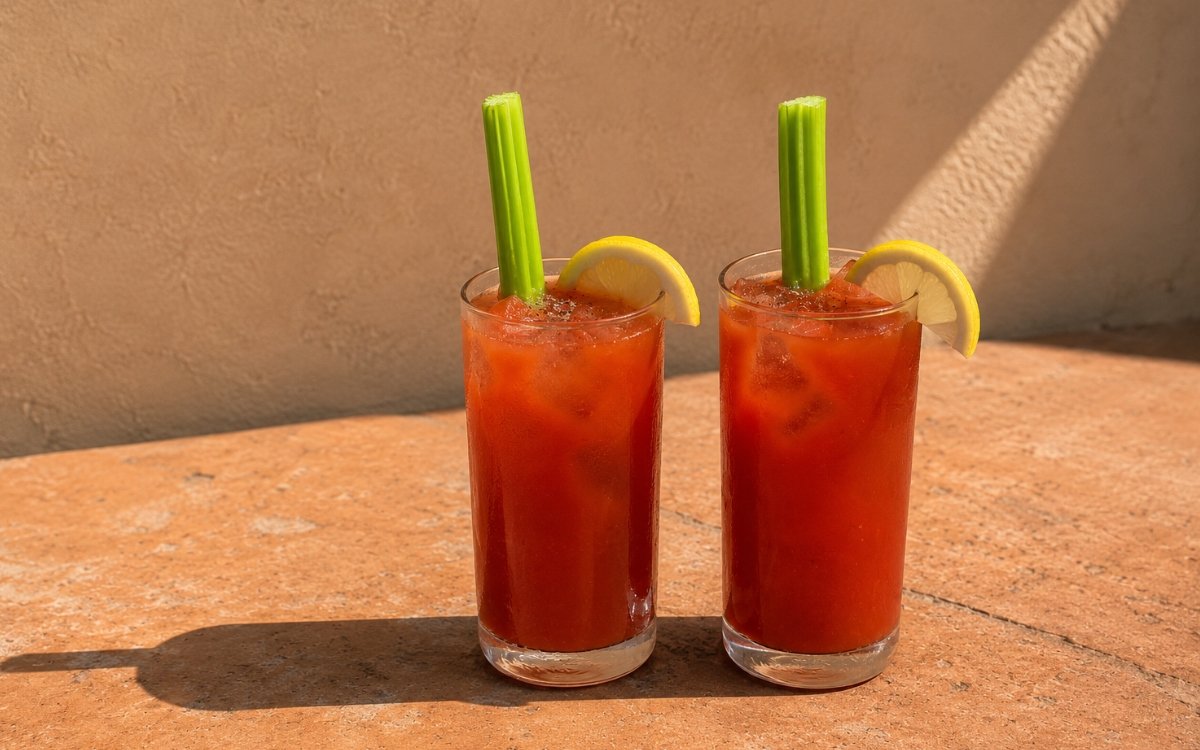
- Fill four tall glasses generously with ice cubes. Divide the chilled tomato basil base evenly among the glasses — approximately 200–220ml per serving. The base is served without carbonation — unlike most preparations in this collection, the Virgin Mary is a still drink. Its specific appeal is the cold, dense, flavourful tomato base encountered clean rather than diluted by carbonation. Crack fresh black pepper generously over each glass — more than feels instinctively necessary, as black pepper's volatile aromatic compounds bloom rapidly at cold temperature and are the specific aromatic element that defines the Virgin Mary format. Tuck a celery stick into each glass as both garnish and stirring tool. Add a lemon wedge or wheel and a pinch of celery salt or flaky salt across the rim if desired. Serve immediately.
Notes
The Virgin Mary's history is specifically that of the Bloody Mary's non-alcoholic version — the Bloody Mary itself was developed at Harry's New York Bar in Paris in the early 1920s by bartender Fernand Petiot, originally a simple combination of tomato juice and vodka. The spiced, seasoned, garnished preparation that is now standard developed gradually through American cocktail culture across the 1930s–1950s. The Virgin Mary is the non-alcoholic variation — technically more challenging than the alcoholic version because the vodka's neutral spirit provides no flavour but does provide the specific mouthfeel and heat that masks flat seasoning. Without it, the tomato quality and seasoning precision become the entire drink.
Worcestershire sauce in a mocktail is the ingredient that most specifically contributes what alcohol usually provides in a cocktail: depth, complexity, and a fermented umami note that makes the overall flavour more specifically sophisticated. In the Worcestershire-free version, the drink is good; with it, the drink is specifically more interesting.