Ingredients
Method
Cut the Potatoes
- Scrub the 800g potatoes clean, keeping the skin on, and dry them thoroughly so they don't slip while you're cutting — a wet, slick potato on a cutting board is genuinely dangerous to work with and also makes it harder to keep your slices consistent. Slice each potato lengthwise into 6mm planks first, working with a sharp, steady knife rather than rushing, then stack those planks and cut them into 6mm fries. Uniform thickness is the main lever for even crisping in this entire recipe, more so than almost any other single variable — if some fries end up noticeably thicker than others, they'll still be soft and underdone in the center at the exact moment the thinner fries around them have already gone dark and started to burn at the edges. Take the time to keep your cuts consistent rather than rushing through this stage; it pays off directly in the final texture.
Soak in Salt Water
- Place the cut fries in a large bowl and pour over a mixture of 1000ml cold water and 15g salt, making sure the fries are fully submerged. Let them soak for 15–20 minutes, swishing the bowl once about halfway through to help release additional surface starch into the water. It's completely normal for the water to turn visibly cloudy as this happens — that cloudiness is the starch you're actively working to remove. Once the soaking time is up, drain the fries thoroughly in a colander, giving them a good shake to remove excess water. This step matters more than it might initially seem: reducing the surface starch on each fry is what keeps them from clumping and sticking together on the baking sheet, and it's also part of what allows the exterior to crisp up cleanly in the oven rather than turning gummy.
Dry Thoroughly
- Preheat your oven to 230°C (450°F) so it has plenty of time to fully come up to temperature while you finish preparing the fries. Spread the drained fries out across clean kitchen towels in a single layer and pat them completely dry, checking carefully for any damp spots that might have been missed — corners and the flat cut sides of each fry are especially easy to leave slightly wet if you're moving too quickly. This drying step is genuinely non-negotiable: moisture left on the surface of the potato converts directly into steam once it hits the hot oven, and steam is the single biggest enemy of a crisp fry. It doesn't matter how hot your oven runs or how carefully you've handled every other step — if the fries go into the oven even slightly damp, they will bake soft rather than crisp, full stop.
Season the Fries
- Transfer the fully dried fries into a large, clean bowl and drizzle over the 45ml of olive oil. Toss thoroughly until every fry has a light, even sheen of oil across its surface — you're aiming for a light coating, not visible pooling oil sitting at the bottom of the bowl, since excess oil actually works against crisping by essentially frying the fries in a shallow, uneven layer of fat rather than letting the oven's dry heat do the work. In a small separate bowl, combine the 5g salt, 3g garlic powder, 3g onion powder, 2g paprika, and 1g black pepper, mixing well so the spices are evenly distributed before they ever touch the fries. Sprinkle this seasoning blend evenly over the oiled fries and toss again, making sure every piece picks up a fair share of spice rather than some fries ending up heavily coated while others are left nearly bare.
Arrange for Roasting
- Line two large baking sheets with parchment paper, since parchment specifically helps prevent sticking without needing additional oil on the pan itself. Spread the seasoned fries out in a genuinely single layer across both sheets, leaving visible space between each individual piece rather than letting them touch or overlap. Crowding the fries traps the steam released during baking right at the surface of the potato, and that trapped steam is exactly what turns what should be crispy fries into soft, steamed potato pieces instead. If you only have access to one baking sheet, it's genuinely better to bake the fries in two separate batches than to try fitting them all onto a single crowded tray — the extra time is worth the payoff in texture.
Bake Until Golden
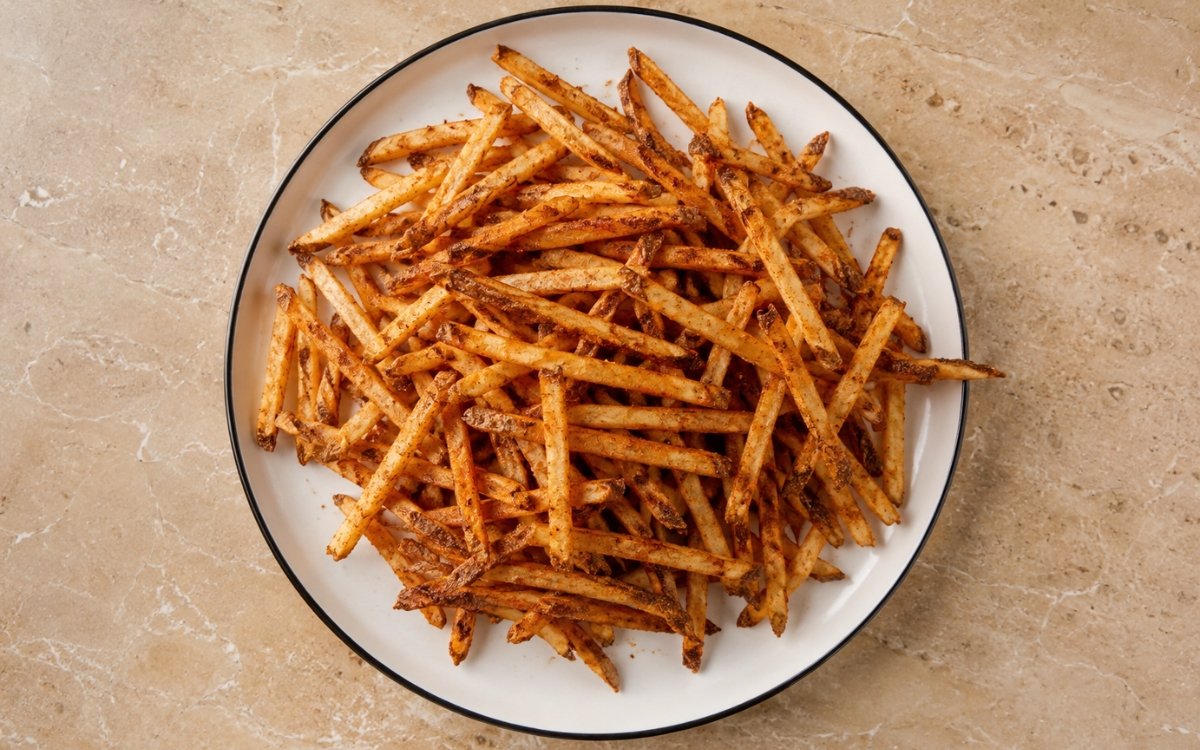
- Bake the fries for 15 minutes on the first side, then carefully flip each fry individually, or use a thin spatula to turn small groups at once if that's faster, and rotate the two baking sheets between the oven's racks to account for any heat variation within your oven. Return the fries to bake for another 15–20 minutes, watching for a deep golden color and listening for an audible crispness at the edges when you nudge a fry with the spatula. If the fries look pale or blond but feel dry rather than genuinely crisp, extend the baking time in small 3–5 minute increments, checking frequently rather than walking away — crispness in this recipe is a combined color-and-texture milestone, not something you can rely on a timer alone to predict, since oven performance and potato moisture content both vary. Serve the fries immediately once they're done, while the crisp texture is at its absolute peak.
Notes
Uniform 6mm cutting is worth the extra few minutes it takes to be careful, since it's the variable that most directly determines whether the entire batch finishes evenly or whether you end up with a mix of overdone and underdone fries pulled from the same tray at the same time.
The salt water soak is doing real, measurable work rather than serving as a purely traditional step. Releasing surface starch specifically improves the fries' ability to crisp cleanly, and the visible cloudiness in the soaking water is direct evidence that the process is working as intended.
Drying thoroughly after soaking is arguably the single most commonly skipped or rushed step in home fry-making, and it's specifically the reason many home-baked fries come out soft despite a hot oven and a careful cut — any residual surface moisture undermines everything else done correctly up to that point.