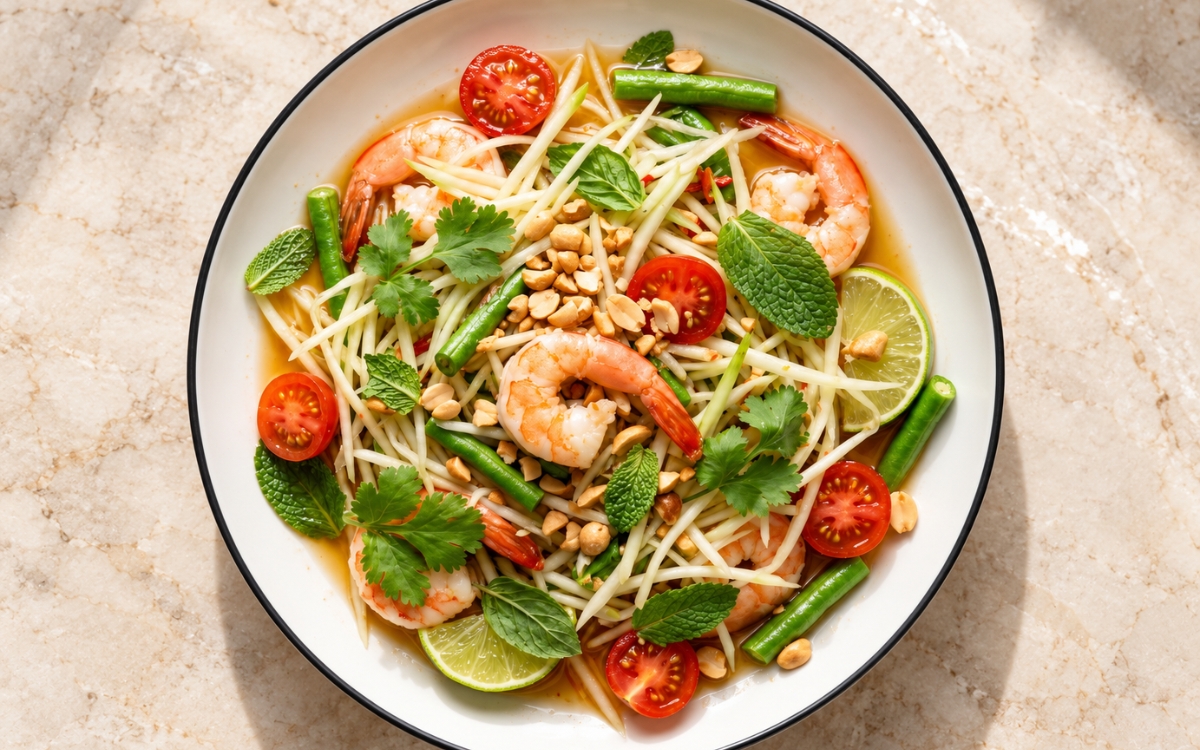
Ingredients
Method
Prepare the Papaya and Vegetables
- Choose a firm, fully green, underripe papaya of about 700–800g, then peel it, halve it lengthwise and scrape out any pale seeds. Shred the flesh into fine, thin matchsticks with a julienne peeler, mandoline or sharp knife, keeping the strands long and separate rather than grating them into a wet mash. For extra crispness, soak the shreds in iced water for 10 minutes, then drain very well and pat or spin them genuinely dry. Meanwhile, halve the 180g cherry tomatoes, trim the 120g long beans and cut them into 4cm pieces, cut the 2 limes into wedges and pick the cilantro, mint and Thai basil leaves, if using. That thorough draining is what stops the finished salad from turning watery, because every drop left on the papaya dilutes the dressing.
Poach the Shrimp
- While the papaya soaks, bring about 1.5 litres of water with the 1 tsp salt to a gentle simmer in a small pot, with small bubbles just breaking the surface rather than a rolling boil. Add the 400g peeled and deveined shrimp and cook for 1½–2 minutes, depending on size, just until they curl into a loose C shape and turn opaque through the centre. Drain immediately and spread them out on a plate to cool, rather than leaving them piled in a warm colander. If the shrimp are large, cut a few in half lengthwise for easier eating, keeping most whole for presentation. That gentle heat and prompt cooling matter because shrimp tighten and turn rubbery within seconds of overcooking, and carryover heat keeps working while they sit hot.
Pound the Dressing Base
- In a large mortar, pound the 4 garlic cloves and 3–5 Thai bird's eye chillies to a coarse paste, starting with 3 chillies if you are unsure, since the heat rises as the salad sits. Add the 70g palm sugar and pound until it is mostly dissolved into a sticky, fragrant paste. Stir in the 6 tbsp fish sauce, 6 tbsp fresh lime juice and the 1–2 tbsp tamarind water, if using, mixing with a spoon until the sugar has dissolved as completely as possible. Taste: the dressing should be clearly salty, sour, lightly sweet and hot, with no single element dominating. That early dissolving of the palm sugar is what keeps the dressing genuinely smooth and evenly balanced, because sugar added later stays gritty and sweetens only some forkfuls.
Bruise and Toss the Salad
- Add the long bean pieces to the mortar and bruise them lightly with the pestle 3–4 times, just until they crack and soften slightly while staying crisp. Add the tomatoes and bruise again lightly, so they release some juice into the dressing but still keep their shape. Add the shredded papaya in batches, tossing with a spoon and pressing lightly with the pestle so the strands absorb the dressing without being crushed. If your mortar is small, transfer everything to a large bowl after the tomatoes and finish tossing there. Fold in the cooled shrimp last. The papaya should be evenly coated and glossy, not swimming in liquid; if a pool forms, drain a little off. That light bruising is what lets the dressing soak into the vegetables, while heavy pounding would leave them limp and wet.
Finish and Serve
- Taste a forkful of papaya and shrimp and correct it with a squeeze from one of the lime wedges or a splash more fish sauce if it tastes flat; it should lean bright and punchy, never dull. Transfer the salad to a large serving bowl or platter, leaving any excess liquid behind. Scatter the 40g chopped roasted peanuts over the top, then garnish with the 12–15g cilantro, 10–12g mint and the Thai basil, if using. Divide into 4 portions, each with about 100g shrimp, and serve immediately with the remaining lime wedges. That last-minute topping and immediate serving matter because the peanuts soften and the papaya loses its crunch as it sits in the dressing.
Notes
Bruising the salad lightly in the mortar deserves genuine recognition as the technique most directly responsible for whether the papaya stays crisp and seasoned or turns limp. The recipe's own instruction to "bruise lightly, do not mash" explains why — a few gentle presses crack the beans, burst the tomatoes and help the papaya absorb dressing, while heavy pounding breaks the strands down into a wet, soft tangle.
Thorough draining of the papaya deserves the same attention this technique receives throughout this collection's other crisp salad dishes, because water is the quickest way to flatten the dressing. The recipe's own note to "drain off a little liquid before plating rather than adding more peanuts to absorb it" reflects how excess liquid dilutes the salt and sour, which extra peanuts would only turn soggy rather than fix.
Choosing a firm, underripe papaya deserves genuine respect as the detail most directly responsible for the salad's crunch. The recipe's own warning that "Ripe papaya will be too soft and sweet" reflects how green papaya has dense, neutral flesh that shreds into crisp strands and carries the dressing, while ripening softens that flesh and adds a sweetness that blurs the sharp balance.
The opacity of the shrimp deserves attention as a genuine, checkable doneness cue rather than a loose approximation. Shrimp are ready the moment they turn opaque through the centre and curl into a loose C shape, usually after 1½–2 minutes — a tight O shape means they have gone too far, and prompt cooling stops carryover heat from tightening them further.