Ingredients
Method
Prepare the Mango and Carrot
- Peel the green mangoes and slice the flesh away from the pit. Cut into very fine julienne strips. Julienne the carrot to a similar thickness. If the mango is very tart, taste a strip now so you know how aggressively to season later. Use firm, fully unripe green mango. It should be crisp and pale, not soft, fragrant, or sweet like ripe mango. The salad depends on a crunchy texture. That early taste test gives you a genuine, real-time sense of the mango's own acidity, letting the dressing's own seasoning be calibrated accurately rather than guessed at.
Prepare the Dried Shrimp and Peanuts
- If the dried shrimp are very hard or salty, rinse them quickly and soak in warm water for 5–10 minutes, then drain very well and pat dry. Leave them whole or chop roughly if large. Roughly crush the roasted peanuts so you get both smaller crumbs and larger bits. Do not leave the dried shrimp wet. Excess moisture will dilute the dressing and make the salad watery. That thorough draining and drying protects the dressing's own concentration from being watered down by any residual moisture the shrimp would otherwise carry into the salad.
Make the Dressing
- In a bowl, combine the fish sauce, lime juice, and palm sugar. Stir until the sugar dissolves as much as possible. Add the garlic if using. Taste the dressing. It should be punchy and slightly stronger than you want the finished salad to be — sour first, then salty, then sweet, with a rounded finish. Palm sugar dissolves more easily if finely grated or chopped. If needed, mash it with the liquid or warm it very briefly. That deliberately punchy early seasoning accounts for real, predictable dilution once the dressing meets the large volume of mango, carrot, and herbs still to come — a milder dressing would read as noticeably flatter once actually tossed through the whole salad.
Combine the Salad
- In a large bowl, combine the green mango, carrot, sliced chilies, shallot if using, about two-thirds of the dried shrimp, and about two-thirds of the peanuts. Add most of the dressing and toss thoroughly but gently. Add the cilantro and Thai basil last and fold just until combined. Let the salad sit for 5–10 minutes, then taste and adjust with more lime juice, fish sauce, or palm sugar as needed. Do not dress too far ahead. The salad should stay crisp and sharp, not soften excessively. Adding the herbs only at this final stage, rather than earlier in the process, protects their own genuine freshness right through to the finished toss.
Finish and Serve
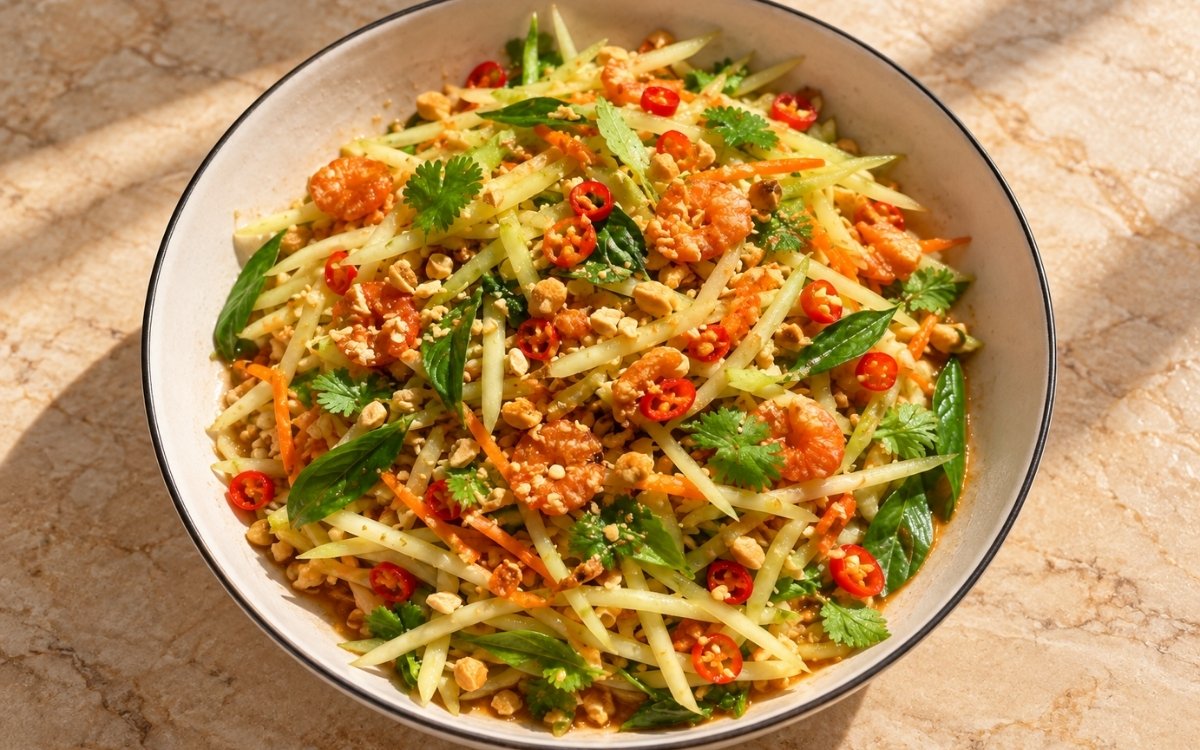
- Transfer to a wide shallow bowl. Scatter over the remaining dried shrimp, the remaining peanuts, and a little extra cilantro and Thai basil. Serve immediately. For the best texture and appearance, the salad should look lightly glossy, not swimming in dressing. Reserving a portion of shrimp, peanuts, and herbs specifically for this final scatter keeps those elements genuinely visible and distinct right at the surface, rather than buried throughout the tossed salad beneath.
Notes
Choosing genuinely firm, fully unripe green mango deserves recognition as the technique most directly responsible for whether this salad achieves its whole defining crunch. The recipe's own explicit warning that "soft or semi-ripe mango will collapse and taste too sweet" reflects a real, common shortfall — that firmness is the actual foundation the entire salad's texture depends on, well before the dressing or any other technique ever comes into play.
Building the dressing deliberately punchier than the finished salad should taste deserves the same attention this technique receives throughout this collection's other large-volume dressed salads. The recipe's own specific ordering — sour first, then salty, then sweet — reflects real, deliberate attention to how these flavours are meant to register in sequence, not simply as one undifferentiated punch.
Dressing the salad only shortly before serving, rather than well in advance, deserves genuine attention as a real, functional timing choice. The recipe's own explicit warning against dressing "too far ahead" reflects a genuine, ongoing process — the dressing's own salt and acid continue softening the mango's crisp texture the longer it sits, working directly against the crunch this dish depends on.
Adding the fresh herbs only at the very final combining stage deserves genuine respect as the detail responsible for protecting their own real brightness. Cilantro and Thai basil both wilt and dull with extended handling or contact with acidic dressing, and holding them back until this last moment is what keeps them genuinely vivid right through to the finished toss.