Ingredients
Method
Make the Teriyaki Sauce
- Combine soy sauce, brown sugar, mirin, sake, ginger, and garlic in a saucepan and bring to a gentle simmer over medium heat. Stir until the sugar fully dissolves and the mixture becomes uniform. This step builds the base of the sauce, where salt, sweetness, and aromatics combine into a balanced glaze rather than separate elements.
Thicken the Sauce
- Add the cornstarch slurry and continue simmering for about 2 minutes until the sauce thickens enough to coat the back of a spoon. Remove from heat and divide into two portions. One will be used during cooking, the other reserved for finishing. A properly thickened glaze is critical — thin sauce will slide off the fish instead of forming that signature lacquered coating.
Season and Marinate the Salmon
- Pat the salmon dry and season lightly with salt on both sides. Brush the top generously with the glazing portion of the sauce and refrigerate for 30 minutes. This short marination allows the surface to absorb flavor without breaking down the texture of the fish, keeping it clean and structured rather than overly soft.
Prepare for Broiling
- Preheat the broiler to high and position the rack about 15 cm below the heat source. Line a baking sheet with foil and brush lightly with oil. Broiling uses intense top-down heat, which is ideal for quickly caramelizing sugars in the glaze while cooking the fish underneath.
Broil and Build the Glaze
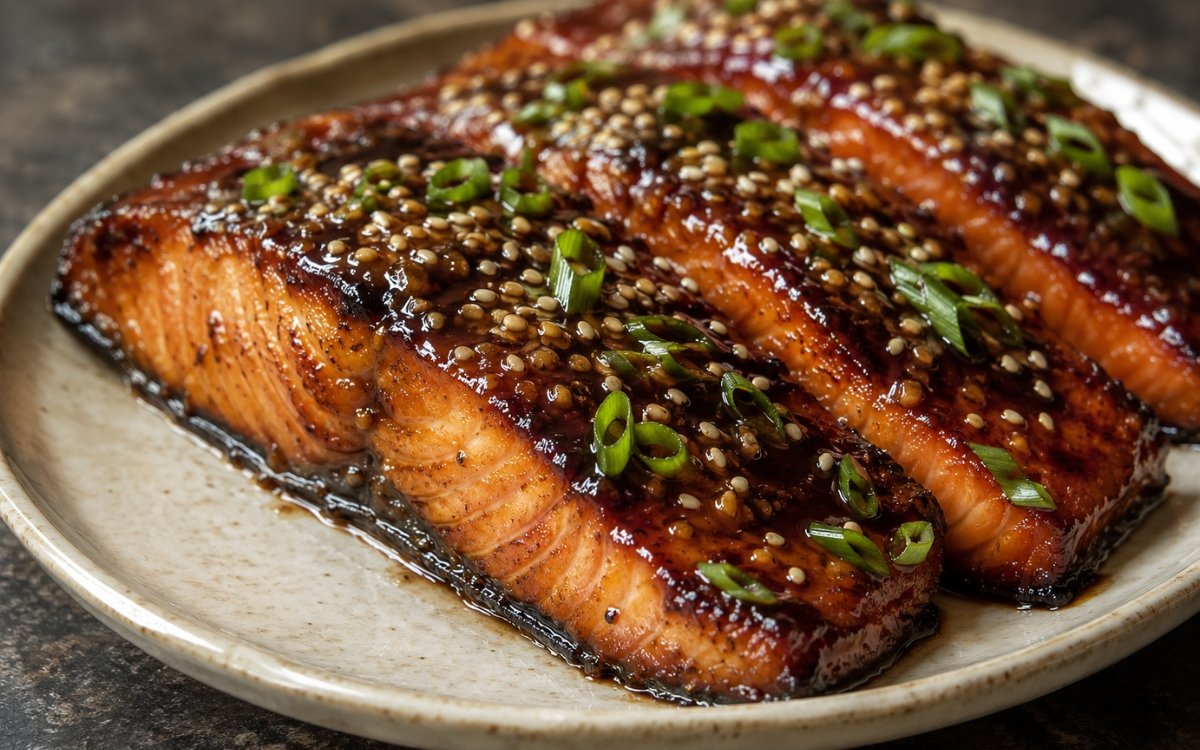
- Place the salmon skin-side down and broil for 4–5 minutes without moving it. Remove briefly, brush with more glaze, then return under the broiler for another 4–5 minutes. This layering process is what creates the glossy, sticky coating — each pass builds another thin layer that caramelizes under high heat, rather than burning all at once.
Finish and Serve
- Remove the salmon once it flakes easily and the glaze is dark, shiny, and slightly sticky. Transfer to plates and drizzle with the reserved sauce that was not used during cooking. Garnish with sesame seeds and scallions and serve immediately while the glaze is still fluid and glossy.
Notes
Dividing the sauce into a glazing portion and a strictly separate finishing portion is a food-safety and flavor decision at once. The glazing portion touches raw fish throughout marinating and cooking, while the reserved portion stays completely untouched until it's drizzled over the finished dish — this ensures the final flavor hit is clean, full-strength teriyaki rather than a portion that's already given some of its character up to the raw fish.
Thickening the sauce with cornstarch before it ever meets the salmon is the technical foundation the entire glazing technique depends on. A thin, unthickened teriyaki sauce would simply run off the fillet's surface under broiling heat, never building the layered, lacquered coating this dish is known for.
The layered broiling approach — glaze, broil, glaze again, broil again — exists specifically to manage sugar caramelization under intense, direct heat. A single thick application of glaze would risk burning before the fish finishes cooking; building it up in stages lets each layer caramelize properly before the next is added.