Ingredients
Method
Cook the Jasmine Rice
- Rinse the 320g of jasmine rice under cold running water until the water running through the grains is clear rather than cloudy — the rinsing removes the surface starch coating that produces gummy, clumping rice. Combine the rinsed rice with 480ml of cold water in a medium saucepan. Bring to a full rolling boil over high heat, then reduce immediately to the lowest possible setting, cover tightly, and simmer for 15 minutes without lifting the lid. The trapped steam inside the covered pot is the primary cooking medium — any escape disrupts the water-to-rice absorption ratio. After 15 minutes, remove from heat and allow to stand covered for 5 minutes. The standing period redistributes steam through the upper layers and allows the bottom grains to firm slightly from the cooling pan. Remove the lid and fluff with a fork using a lifting, separating motion rather than pressing. Keep covered to maintain warmth while the chicken and vegetables are prepared.
Prepare the Teriyaki Sauce
- In a small bowl, whisk together the 120ml of low-sodium soy sauce, 80ml of mirin, 60ml of sake, 45g of light brown sugar, 15g of grated fresh ginger, and 3 minced garlic cloves until the sugar has completely dissolved and the mixture is uniform. This sauce is made entirely before the pan is turned on — having it ready means it can be added to the pan without any concurrent preparation. The four-liquid combination produces the specific teriyaki character that no single component provides alone: soy for the primary umami-salt; mirin for the sweet, slightly sticky glaze quality and the caramelised coating it produces when reduced; sake for the dry, complex fermented grain aromatic depth that lightens the soy's heaviness; and brown sugar for the additional caramel sweetness and the thickening contribution it makes during reduction. Low-sodium soy is specified because the reduction step concentrates the liquid significantly — full-sodium soy in a teriyaki that reduces by half produces an aggressively salty result. The fresh ginger and garlic provide the aromatic sharpness and complexity that distinguish homemade teriyaki from any bottled version. Set aside.
Sear the Chicken Thighs
- Pat the 800g of boneless, skinless chicken thighs completely dry on both sides with paper towels. The drying step is the prerequisite for a proper golden sear — surface moisture converts to steam on contact with the hot oil, drops the pan temperature, and prevents the Maillard caramelisation that produces the golden crust contributing both flavour and the fond that the teriyaki sauce will subsequently be added to. Season both sides generously with salt and freshly ground black pepper. Heat the 15ml of vegetable oil in a large skillet over medium-high heat until shimmering. Add the chicken thighs in a single layer — avoid crowding, which produces steaming rather than searing. Sear undisturbed for 6–7 minutes on the first side until deeply golden-brown with a visible crust that releases naturally from the pan when a spatula is slid under it. Flip and sear the second side for 6–7 minutes until golden and the internal temperature reads 74°C. The consistent undisturbed contact on each side is what develops the crust — moving the chicken too early tears the developing crust and produces uneven browning. Transfer to a plate and rest for 5 minutes — the resting period allows the internal juices to redistribute through the meat before slicing. Slice the rested thighs against the grain into strips approximately 1.5cm wide — the sliced format maximises the surface area available for the teriyaki glaze coating during the final reduction step.
Stir-Fry the Vegetables
- Without cleaning the skillet, add the second 15ml of vegetable oil to the accumulated chicken fond. Increase the heat to high. Add the 200g of julienned carrots, 150g of trimmed snow peas, and 100g of thinly sliced red bell pepper simultaneously. Stir-fry for 3–4 minutes over high heat — keeping the vegetables moving but allowing brief moments of stationary contact with the hot surface for the light charring that adds smoky, caramelised character to what would otherwise be simply softened vegetables. The target texture is crisp-tender: completely heated through and slightly yielding when bitten, but retaining clear crunch throughout — not soft. The three-vegetable combination is specifically chosen for visual and textural variety: carrots for earthy sweetness and orange colour; snow peas for their flat, mild, sweet character and bright green; red bell pepper for its fruity sweetness and red visual contrast against the yellow-gold chicken and white rice. Season lightly with salt and transfer to a plate immediately — residual pan heat continues cooking the vegetables if left in the skillet.
Glaze the Chicken in the Teriyaki Sauce
- Return the sliced chicken strips to the skillet with any accumulated resting juices. Pour the entire prepared teriyaki sauce over the chicken. Bring to a simmer over medium heat. Cook, stirring and turning the chicken continuously, for 3–4 minutes as the sauce reduces and thickens. The reduction is the technique step that transforms the thin, liquid sauce into the glossy, sticky teriyaki coating — as the water evaporates, the soy, mirin, and sugar concentrate progressively. The sauce will visibly thicken and develop a sheen during the 3–4 minute reduction. The correct consistency for a teriyaki glaze is thick enough to coat each slice with a glossy, slightly sticky film that clings rather than running off — when you lift a piece of chicken the sauce should hang briefly before dripping. If after 4 minutes the sauce remains thin, mix 10g of cornstarch with 15ml of cold water and stir this slurry into the simmering sauce — it thickens rapidly within 30 seconds and provides the coating consistency if the natural reduction has not achieved it. Remove from heat immediately once the correct glossy, coating consistency is reached.
Assemble and Serve
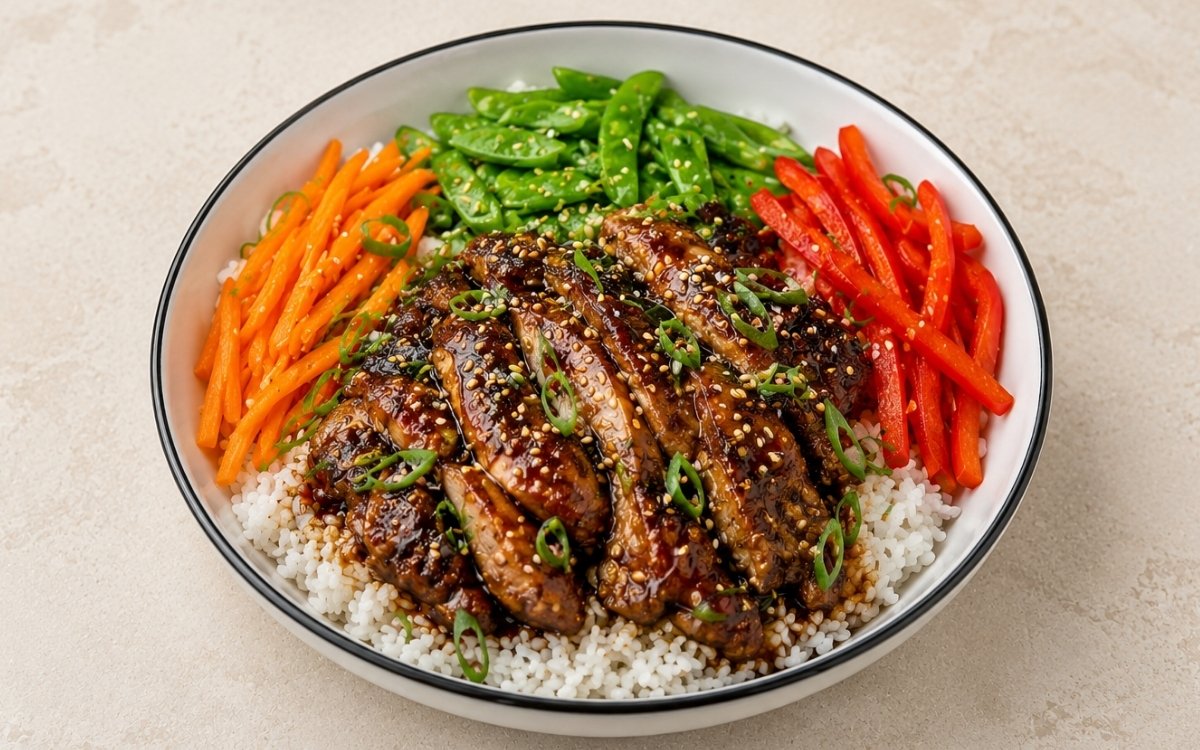
- Divide the cooked jasmine rice among four wide bowls — approximately 200g of cooked rice per bowl, mounded or spread to cover the base. Arrange the glazed teriyaki chicken strips over the rice, allowing the remaining sauce to pool around the chicken and into the rice. Place a portion of the stir-fried vegetables alongside the chicken in each bowl — distinct rather than mixed through, so each component remains visually identifiable and texturally separate until the person eating chooses to combine them. Drizzle any remaining teriyaki glaze from the pan over each bowl — the sauce should extend beyond the chicken and coat some of the rice and vegetables for the most complete flavour distribution. Scatter the sliced green onions over each bowl. Scatter the 15g of toasted sesame seeds over everything. Serve immediately while the chicken is still warm and the glaze is at its glossiest.
Notes
Homemade teriyaki sauce produces a meaningfully better result than bottled teriyaki for three specific reasons. First, the fresh ginger and garlic provide aromatic sharpness and complexity that dried or powdered equivalents in commercial sauce cannot replicate. Second, homemade teriyaki is reduced in the same pan as the seared chicken, picking up the fond from the chicken sear and incorporating it into the glaze — bottled sauce poured over chicken in a pan has no fond to absorb. Third, the reduction is controlled to the correct consistency in real time rather than being a fixed product — if it is too thin, it is reduced further; if it reaches the correct consistency at 3 minutes, it is pulled immediately.
The sake in the sauce is an ingredient worth maintaining rather than omitting for convenience. Sake — Japanese fermented rice wine — contributes a dry, complex aromatic depth that lightens the soy's heaviness and prevents the teriyaki from tasting dense or one-dimensionally sweet-salty. The closest substitute is dry sherry at equal quantity — it contributes comparable fermented grain depth. Omitting the sake and replacing with additional soy or mirin produces a noticeably heavier, less balanced sauce.