Ingredients
Method
Prepare the Pico de Gallo
- Dice the tomatoes, sweet onion, red onion, and jalapeño evenly. Combine them with lime juice, lime zest, olive oil, salt, and black pepper. Let the pico sit for 10–15 minutes, then taste and adjust salt or lime. If it releases a lot of liquid, drain lightly before serving. The pico should stay fresh and chunky, not turn into tomato water. Dicing every component to a genuinely even size keeps the pico's flavour consistent bite to bite, and the short rest lets excess tomato liquid separate out before it reaches the bowl.
Roast the Sweet Potatoes
- Preheat the oven to 220°C. Add the diced sweet potatoes to a large bowl with olive oil, salt, black pepper, smoked paprika, garlic powder, onion powder, and chili powder if using. Toss aggressively until every piece is evenly coated. Spread on a baking tray in a single layer with space between the chunks. Roast for 25–30 minutes, turning once halfway, until browned and crisp at the edges but soft inside. Do not crowd the tray. Crowded sweet potatoes steam and turn limp instead of roasting. Genuine space between each piece is what allows the oven's dry heat to reach every surface directly — chunks touching or piled on each other trap steam in the gaps between them, and that trapped moisture is exactly what prevents the browning and crisping this step is meant to produce.
Cook the Ground Beef
- Heat a wide skillet over medium-high heat. Add the ground beef and break it into medium crumbles. Let it sear undisturbed for 2–3 minutes before stirring so the meat develops browned edges. When the beef is mostly browned but still juicy, add the salt, cumin, smoked paprika, garlic powder, onion powder, oregano, black pepper, and chili powder if using directly into the hot centre of the pan. Stir the spices through the beef and cook for 1–2 minutes until fragrant and slightly caramelised into the meat. If the beef looks dry, add 30ml water and scrape up the browned bits. Finish with lime juice. The beef should be juicy, browned, and lightly crisp in places. It should not be soggy, grey, or dry. Waiting to add the spices until the beef has already begun browning, rather than seasoning it from the start, is what lets them bloom directly in hot fat rather than sitting in cold, releasing liquid — added too early, the same spices taste noticeably duller and more dusty by the time the beef is done.
Prepare the Avocado
- Slice the avocados thinly. Season with salt, black pepper, and a little lime juice. Keep the slices clean so they can be fanned neatly in each bowl. A light seasoning directly on the avocado gives it its own distinct flavour in the bowl, rather than relying entirely on the beef and pico to carry seasoning for the whole plate.
Assemble the Bowls
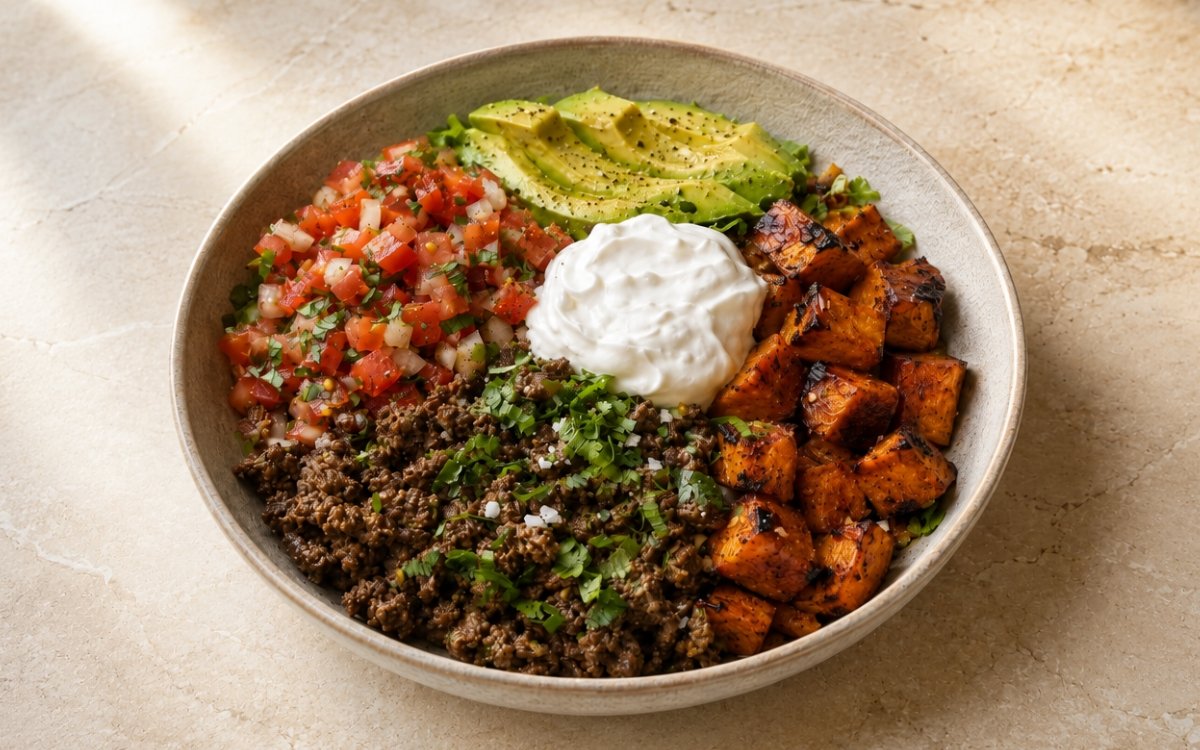
- Divide the roasted sweet potatoes between 4 bowls. Add the seasoned ground beef in a generous section beside the potatoes. Spoon pico de gallo into another section. Add ½ sliced avocado per bowl, fanned along one side. Add 50g sour cream or Mexican crema in a thick spoonful near the centre. Finish with chopped fresh cilantro and lime wedges if using. Keeping every component in its own section rather than mixing them together preserves both the visual presentation and each element's individual texture — the crisp sweet potato edges and the beef's browned crumbles both hold up considerably better when they're not sitting directly under a pool of sour cream or pico liquid.
Serve
- Serve immediately while the beef and sweet potatoes are hot, the pico is fresh, the avocado is cleanly sliced, and the sour cream stays cold and thick. The contrast between the hot roasted potato and beef against the cool pico, avocado, and sour cream is sharpest right at assembly, so serving without delay is what preserves that temperature and texture range through to the table.
Notes
Giving the sweet potato real space on the roasting tray is worth taking seriously rather than treating as a minor detail. Diced sweet potato releases a fair amount of moisture as it roasts, and when pieces are crowded together, that released steam has nowhere to escape except back onto the surrounding potato, softening exactly the surfaces that are supposed to be crisping. A single, properly spaced layer lets that moisture evaporate away instead, which is the difference between genuinely crisp, browned edges and a limp, steamed result with the same ingredients and oven temperature.
Searing the ground beef undisturbed for the first few minutes, rather than breaking it up immediately, is a small patience-based step that has an outsized effect on the finished texture. Beef broken apart and stirred from the moment it hits the pan releases moisture quickly and effectively steams in its own juices, producing pale, soft crumbles. Letting it sit in contact with the hot pan first allows real browning to develop on at least one surface of each piece before it's disturbed.
Timing the spice addition to the point where the beef has already started browning, rather than seasoning from the very beginning, is a technique worth applying consistently. Ground beef in a cold or just-warming pan releases liquid as it initially cooks, and spices added into that liquid steep rather than bloom, tasting flatter and dustier once the beef is finished. Adding them once real fat and heat are present in the pan lets the spices toast and develop their full aromatic character.
This bowl's visual and textural identity depends on every component staying in its own distinct section rather than blending together, which is a principle worth carrying through from assembly to the moment of serving. Sweet potato, beef, pico, avocado, and sour cream are all built with different, specific textures in mind, and combining them into one mixed bowl before serving softens and dulls each of those textures far faster than letting the person eating combine them bite by bite at the table.