Ingredients
Method
Prepare the Blue Corn Tortillas
- Prepare the Homemade Corn Tortilla dough according to its separate recipe, but use blue masa harina instead of regular masa harina. Mix the blue masa harina, salt, and warm water until a soft, hydrated dough forms. Rest covered for 20–30 minutes so the masa fully hydrates. Divide into 24 equal balls of about 22g each. Keep the dough covered at all times so the surface does not dry out. Press each tortilla to about 11.4cm / 4.5 inches diameter and cook on a dry hot skillet or comal until lightly charred, flexible, and cooked through. Stack immediately under a towel so the tortillas steam and stay soft. Blue masa harina behaves slightly differently from standard masa — it tends to dry out at the surface a touch faster once pressed, which is why the covering step is called out specifically here rather than left implicit.
Sear the Suadero
- Pat the suadero pieces dry with paper towels. Season all over with kosher salt and black pepper. Heat the neutral oil in a large Dutch oven or heavy pot over medium-high heat until shimmering. Sear the beef in batches for 3–4 minutes per side, until deeply browned. Do not crowd the pot. Transfer browned pieces to a tray. As with any long braise, this initial sear isn't about cooking the meat through — it's about building a dark, flavourful fond on the bottom of the pot that becomes the backbone of the braising liquid once deglazed, which is why crowding the pot to save time actually costs flavour later.
Build the Braising Base
- Reduce the heat to medium. Add the beef tallow or lard to the same pot. Add the onion and garlic and cook for 3–4 minutes, scraping up the browned bits from the bottom. Add the bay leaves, cumin, Mexican oregano, and smoked paprika, and stir for 30 seconds until fragrant. The tallow or lard adds a richer, more specifically beefy fat note than a neutral oil would at this stage — it's a small addition, but it reinforces the meat's own flavour rather than diluting it, and the 30-second bloom for the dry spices is enough to release their aromatic oils into the fat without scorching them.
Braise the Suadero
- Return the seared suadero and any juices to the pot. Add 750ml water or beef stock. The liquid should come about halfway up the meat, not fully submerge it. Bring to a simmer, then reduce the heat to low, cover, and braise gently for 2½–3 hours, turning the beef every 45 minutes. The suadero is ready when it pulls apart with a fork but still has enough structure to chop. If the pot gets dry before the meat is tender, add more water 150ml at a time. Do not hard-boil the meat; aggressive boiling will dry it out and make the braising liquid muddy. Keeping the liquid at roughly halfway up the meat rather than fully submerging it is what produces a more concentrated, glossier braising liquid at the end — a fully submerged braise dilutes the beef's flavour into a larger volume of liquid, while the shallow braise keeps that flavour more concentrated and reduces down faster and more richly later.
Reduce the Braising Liquid
- Transfer the cooked suadero to a tray and rest for 10 minutes. Strain the braising liquid and skim off some of the fat into a separate bowl. Return the liquid to the pot and simmer uncovered for 8–12 minutes until reduced and glossy. Reserve about 120ml reduced braising liquid for glazing the chopped meat. This reduction is what turns a thin, watery braising liquid into a proper glaze — simmering uncovered drives off excess water while concentrating the collagen and flavour compounds left behind from the long braise, producing a liquid glossy and clingy enough to coat the chopped meat rather than simply moisten it.
Chop and Crisp the Suadero
- Chop the rested suadero into small taco-sized pieces, keeping a mix of tender meat and fatty edges. Heat a large skillet or griddle over medium-high heat with a spoonful of the reserved braising fat. Add the chopped suadero in batches and cook for 3–5 minutes, turning occasionally, until the edges crisp and the meat becomes glossy. Add a small splash of reduced braising liquid to coat the meat, then finish with lime juice. The final texture should be juicy and lacquered, not wet. This second cooking stage is the actual defining step of suadero as a street-taco style rather than simply braised beef — the braise alone produces tender but texturally flat meat, while this hot, fast skillet finish crisps the exposed edges of the chopped pieces and glazes the rest, building the specific lacquered, slightly crisp texture suadero is known for.
Prepare the Salsa Verde
- Toss the tomatillos, onion wedges, jalapeños, and garlic with olive oil and salt. Broil or roast on a hot tray until the tomatillos soften, collapse slightly, and develop charred spots, about 8–12 minutes depending on broiler strength. The onion should be browned at the edges and the garlic softened, not burned. Transfer everything to a blender with the cilantro, lime juice, and 3 tbsp water. Blend until spoonable but still slightly textured. Add more water only if needed. Taste and adjust with salt or extra lime juice. The salsa should be vivid green, bright, tangy, and loose enough to drizzle over each taco. Broiling rather than boiling the tomatillos and aromatics develops a light char and concentrates their flavour through direct dry heat, producing a noticeably brighter, more complex salsa than a simmered version — the charred spots specifically contribute a subtle smokiness that balances the salsa's sharp acidity.
Prepare the Chicharrón
- Chop the crispy chicharrón into small pieces that fit inside a taco. Just before assembly, toss the chopped chicharrón with 30ml hot suadero braising fat. This gives it flavour and shine, but do not let it sit too long or it will lose its crunch. The hot fat coats and seasons the chicharrón in seconds, adding a glossy sheen and beefy flavour without any real cooking time — timing this step for right before assembly, rather than earlier, is what protects the chicharrón's crunch, since prolonged contact with warm fat or moisture will soften it.
Warm the Tortillas
- Rewarm the blue corn tortillas on a dry skillet or comal for 15–20 seconds per side until soft and flexible. Keep covered in a towel. The tortillas should remain pliable with light char marks, not crisp like tostadas. This is a brief warm-through rather than a second full cook, since the tortillas were already fully cooked when first pressed and griddled — the goal here is purely restoring softness and warmth right before the tacos are built.
Assemble the Tacos
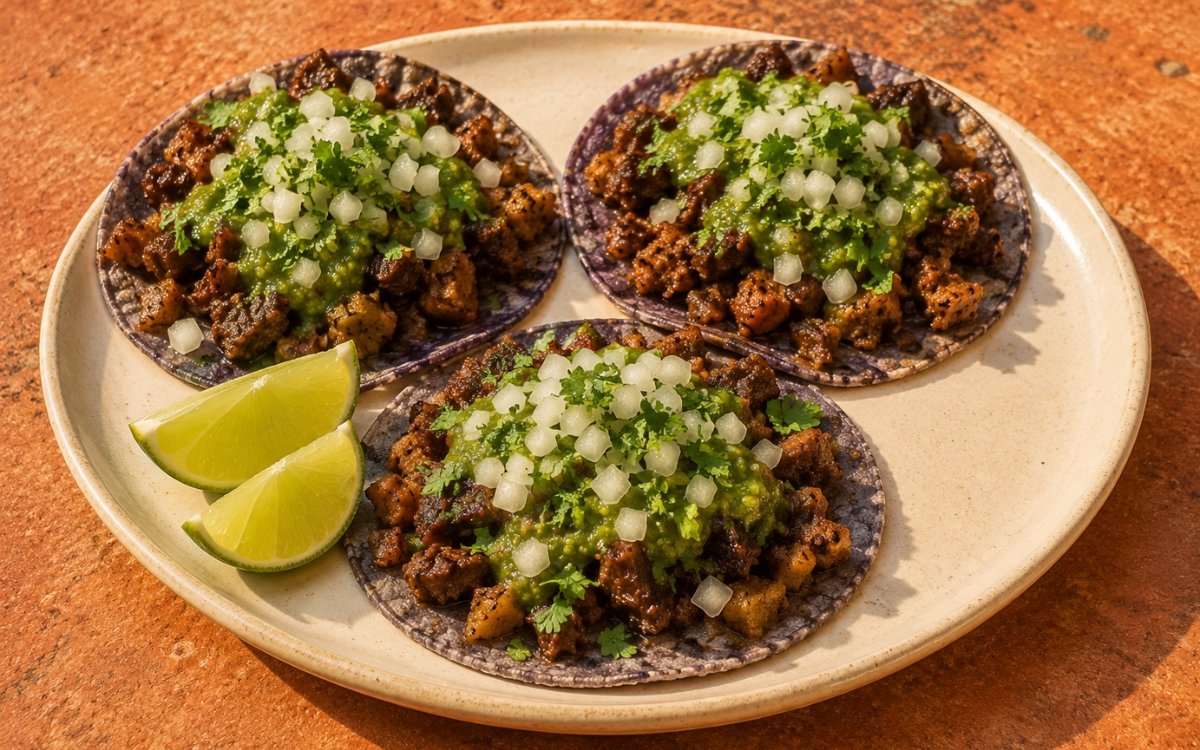
- Place 3 warm blue corn tortillas per serving on plates. Add a generous layer of chopped glossy suadero to each tortilla. Scatter crispy chopped chicharrón over the beef. Drizzle salsa verde over each taco, then top heavily with finely diced white onion and chopped fresh cilantro. Drizzling the salsa directly over the tacos, rather than serving it only on the side, is a deliberate part of this style — the vivid green against the dark, glossy meat and the blue tortilla is as much a colour statement as a flavour one, and the salsa's brightness is meant to hit every bite rather than being optional.
Serve
- Serve immediately with lime wedges beside the tacos. Squeeze fresh lime over the tacos just before eating. The tacos should be hot, glossy, and juicy, with tender suadero, crisp chicharrón, soft blue corn tortillas, sharp onion, fresh cilantro, and bright green salsa verde. Serving without delay protects the chicharrón's crunch above everything else on the plate — even sitting a few extra minutes under the salsa and warm meat will start softening it.
Notes
Suadero's specific texture comes from treating braising and crisping as two distinct, sequential techniques rather than one long cooking process. The braise alone, however long and gentle, produces tender but texturally uniform meat — soft throughout, with nothing to distinguish one bite from another. It's the second stage, chopping the rested beef and finishing it hard in a skillet with a little of its own reduced fat and liquid, that builds the crisp, lacquered edges against a still-tender interior. Skipping or rushing that second stage is the single most common way to end up with beef that tastes like a good braise but doesn't read as suadero.
The decision to keep the braising liquid shallow — roughly halfway up the meat rather than fully submerged — is a concentration choice as much as anything else. A fully submerged braise spreads the beef's flavour across a larger volume of liquid, diluting both the meat and the eventual sauce. The shallower braise used here keeps the beef more intensely flavoured throughout the cook and leaves a smaller, more concentrated liquid behind that reduces to a proper glaze in well under 15 minutes, rather than requiring a much longer reduction to reach the same glossy consistency.
Timing the chicharrón's addition matters more than it might initially seem. Chicharrón's entire appeal in this dish is textural contrast — a genuinely crisp, crackling piece against tender, glossy beef. That contrast is fragile: even brief exposure to the hot, moist chopped meat will begin softening it, which is why it's tossed in hot fat and added at the very last moment rather than mixed in earlier or cooked alongside the suadero.
Blue masa harina is used here specifically for its visual and slightly earthier flavour character, and it behaves a little differently from standard masa in practice — it tends to dry out at the tortilla's surface somewhat faster once pressed and cooked, which is why the recipe calls out keeping both the raw dough balls and the finished tortillas covered more insistently than a standard-masa recipe might. Skipping that covering step is a common way to end up with tortillas that crack when folded.