Ingredients
Method
Bring the Dough to Room Temperature
- Remove the dough balls from the refrigerator 2–3 hours before shaping. Keep them covered so they do not dry out. The dough should feel soft, relaxed, and airy. If it is still cold and tight, it will resist stretching and may shrink back while shaping. That tempering window lets the cold, tightened gluten network genuinely relax before it's ever asked to stretch into a rectangle and roll tightly around a real amount of filling.
Prepare the Oven and Tray
- Preheat the oven to 230–245°C. If using a pizza steel or stone, preheat it for at least 40–45 minutes. Otherwise, line a baking tray with parchment. A hot oven is important. Stromboli needs strong heat to set the bottom crust and brown the outside before the filling overcooks. That genuinely hot oven is what sets the exterior quickly enough to develop real colour and structure before the filling inside has any chance to overcook while waiting on that same heat.
Prepare the Fillings
- Make sure the sauce is thick, not watery. If it is loose, simmer it briefly and cool before using. Grate the mozzarella and have the pepperoni, Parmesan, oregano, garlic powder if using, and pepper ready. Low-moisture mozzarella is the right cheese here. Fresh mozzarella releases too much water and makes the inside soggy. Having every component fully staged and ready before shaping even begins is what lets the actual filling and rolling happen quickly, protecting the shaped dough from sitting too long before it's sealed and baked.
Shape Each Stromboli
- Work with one dough ball at a time on a lightly floured or semolina-dusted surface. For each 250g dough ball, roll or stretch into a rectangle about 25 × 30cm / 10 × 12 inches. Keep the thickness even, but do not make it paper-thin. If the dough keeps shrinking back, let it rest 5 minutes and continue. The dough should be thin enough to roll neatly, but thick enough to hold the filling without tearing. Letting resistant dough rest briefly, rather than forcing it out further, gives the gluten genuine additional time to relax before the next attempt at stretching.
Fill
- Add the fillings, leaving a clean border all around, especially at the far edge and short ends. For each stromboli, spread about 60g sauce in a thin layer, leaving a clean 2–3cm border. Scatter about 120g mozzarella. Add 55–65g pepperoni in an even layer. Sprinkle with 10g Parmesan. Finish with a pinch of oregano, black pepper, and a pinch of garlic powder if using. Do not overload the dough. Too much filling makes it difficult to roll tightly, causes leaking, and can leave the center gummy. That clean, deliberately filling-free border matters directly at the next stage — it gives the seam real, uncontaminated dough to actually seal against rather than trying to press cheese and sauce together.
Roll and Seal
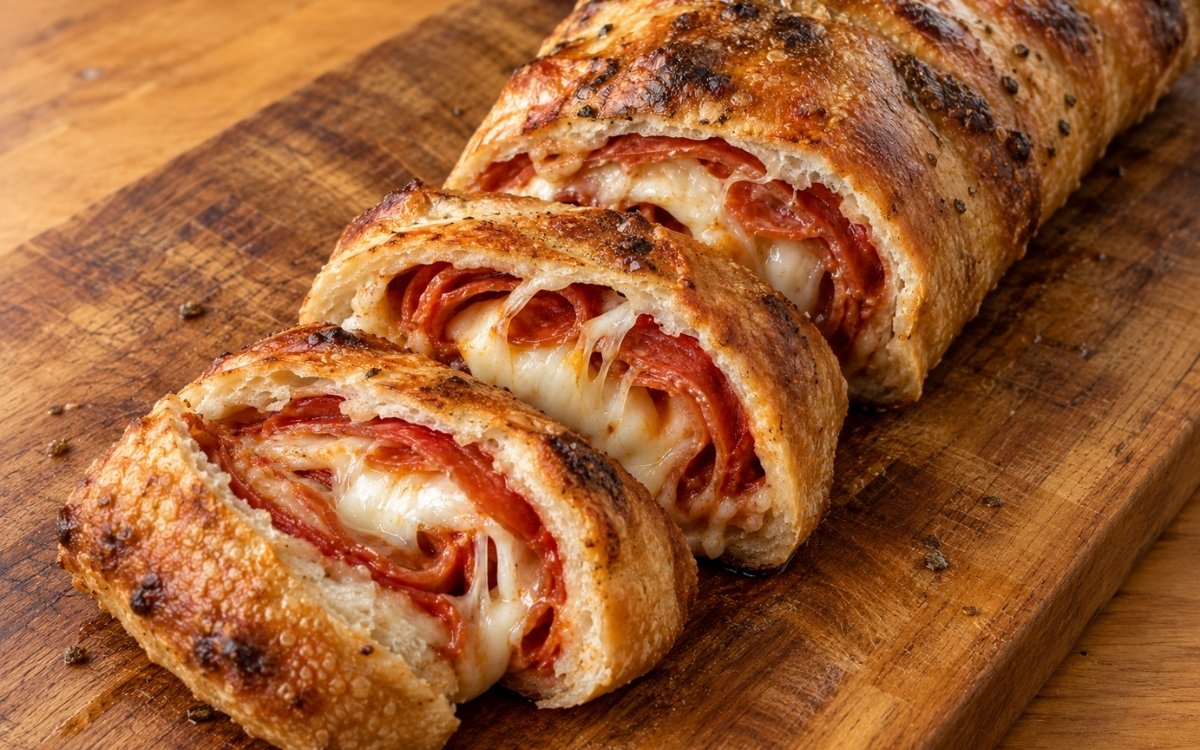
- Roll tightly from the long side. Keep the roll compact, pressing lightly as you go so there are no large air gaps. Seal the seam firmly. Tuck the ends under and pinch them shut. Place seam-side down. A tight roll is important. Loose rolling gives gaps inside and makes the slices fall apart after baking. That genuine compactness, built through consistent light pressure as the roll comes together, is exactly what produces slices that hold their spiral shape cleanly once cut, rather than unraveling.
Vent and Finish
- Transfer the stromboli to the prepared tray or a peel if baking on a stone/steel. Cut small steam vents on top. Brush with egg wash or olive oil. Optionally sprinkle with a little extra Parmesan. The vents are not decorative. They release steam and reduce the chance of the stromboli bursting open in the oven. That deliberate venting gives the dough's own internal steam pressure a controlled, predictable place to escape — without it, that same pressure would find its own way out, often splitting the seam unpredictably instead.
Bake
- Bake at 230–245°C for 18–24 minutes, until the crust is deeply golden brown, the surface is glossy and crisp, the bottom feels set and lightly browned, and a little cheese may bubble from the vents, but the seam should stay closed. If baking more than one tray, rotate as needed for even coloring. If the top browns too fast before the dough is fully baked, lower the oven slightly or move the tray down one level. That willingness to adjust the oven mid-bake protects the dough's own doneness from being sacrificed for the sake of surface colour developing too quickly.
Rest and Slice
- Let the baked stromboli rest for 8–10 minutes before slicing. Slice into thick pieces and serve warm, with extra warmed sauce on the side if desired. Resting matters. If sliced immediately, the molten cheese and sauce will run out and the spiral will not hold its shape cleanly. That extended rest lets the filling's own residual heat settle and firm slightly, protecting the tight spiral structure right through the moment a knife actually cuts into it.
Notes
Rolling each stromboli genuinely tight from the long side, pressing lightly and consistently as the roll comes together, deserves recognition as the technique most directly responsible for whether the finished slices hold their shape. That compactness is what prevents the large internal air gaps a looser roll would leave behind — gaps that, once baked and sliced, cause the whole spiral to fall apart rather than staying cleanly intact.
Leaving a genuinely clean, filling-free border around the dough — particularly at the far edge and both short ends — deserves the same attention this technique receives throughout this collection's other filled, rolled doughs. That border gives the seam real, uncontaminated dough to actually press together and seal against, something that would be considerably harder to achieve if sauce or cheese had already reached all the way to the edge.
Cutting real steam vents into the top before baking deserves genuine respect as a functional necessity rather than decoration, exactly as the recipe's own notes state directly. Those vents give the dough's own building internal steam pressure a controlled, predictable place to escape, protecting the seam from bursting open unpredictably under pressure it was never meant to contain entirely.
Resting the baked stromboli for a full 8 to 10 minutes before slicing deserves attention as a real, necessary step rather than simple patience. That extended window lets the filling's own residual heat settle and firm just enough for a clean cut — slicing too early would send the still-molten cheese and sauce running out, undermining the tight, structured spiral the entire rolling and sealing process was built to produce.