Ingredients
Method
Make the Lemon Sugar
- Wash and dry the lemons well. Finely zest them, taking only the yellow outer peel. Place the zest and 170g sugar in a bowl. Rub together with your fingertips for 2–3 minutes until very fragrant and lightly damp. Let sit for 20 minutes so the sugar absorbs the lemon oils. Rubbing rather than simply mixing the zest into the sugar is what actually ruptures the peel's tiny oil glands, mechanically releasing those aromatic oils directly into the sugar without needing any heat.
Make the Strawberry-Rhubarb Base
- Place the rhubarb, 150g of the strawberries, 250ml water, and 60g sugar in a saucepan. Set over low to medium-low heat and cook gently for 8–10 minutes, stirring occasionally, just until the rhubarb softens and breaks down. Do not boil hard or reduce aggressively. Remove from the heat and stir in the remaining 100g strawberries. Let stand 10 minutes so the fresh strawberry flavor infuses without becoming cooked and jammy. Strain through a fine sieve, pressing gently to extract the juices. Do not force too much pulp through unless you want a slightly cloudier lemonade. Splitting the strawberries into two batches — some cooked alongside the rhubarb, the rest added only once the heat is off — is what lets this base carry two genuinely distinct qualities at once: real cooked depth from the rhubarb-and-first-batch simmer, and bright, fresh strawberry character from the portion that never touches direct heat.
Make the Lemon Base
- Add the fresh lemon juice to the lemon sugar and stir until the sugar mostly dissolves. Let stand 2–3 minutes, then stir again. Strain through a fine sieve, pressing on the zest well, to create a fragrant lemon syrup. The lemon juice's own acidity helps dissolve the sugar while carrying the already-released lemon oils fully into the base, and pressing the spent zest firmly before discarding it captures as much of that flavourful syrup as possible.
Build the Lemonade
- In a large pitcher, combine the lemon syrup, the strawberry-rhubarb syrup, 900ml cold water, and the pinch of salt, if using. Stir well. Taste and adjust with a little more cold water if needed, depending on how concentrated your fruit base is. The final yield should be about 2 liters. This tasting checkpoint matters directly given how much rhubarb's own natural tartness can vary — building in that adjustment stage accounts for that variability rather than assuming a fixed recipe always lands at the same balance.
Chill
- Refrigerate for 30 minutes, until thoroughly cold. That resting period lets the lemon and fruit components fully meld together, producing a more unified flavour than serving the drink immediately after mixing.
Serve
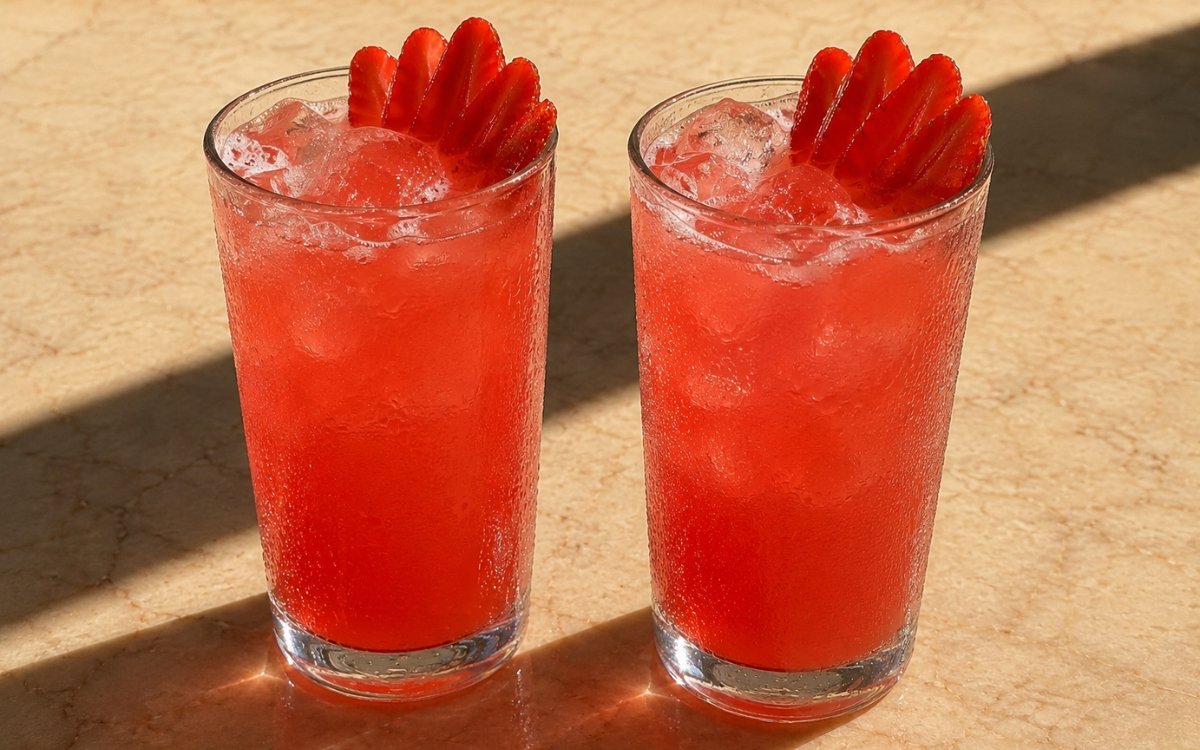
- Fill glasses with ice. Garnish each with a thin fresh strawberry slice fanned at the rim, then pour in the lemonade and serve immediately. Serving right after chilling, rather than letting the pitcher sit out, keeps the drink at its coldest and most refreshing right when it's poured.
Notes
Keeping the rhubarb's cook genuinely gentle and brief deserves recognition as the technique responsible for this drink's whole flavour identity. Rhubarb does need real heat to soften its fibrous stalks and release its characteristically tart flavour, but a hard boil or an extended cook pushes that same process too far, transforming a vivid, tart syrup into something closer to a heavier, more subdued cooked compote — exactly the outcome this recipe is built to avoid.
Splitting the strawberries into two portions, one cooked alongside the rhubarb and one added only once the pan is off the heat, deserves genuine attention as a deliberate technique rather than an unnecessary complication. That first cooked portion contributes real depth and colour developed alongside the rhubarb; the second, added only to infuse rather than actively cook, preserves a genuinely bright, fresh strawberry character that a fully cooked batch alone wouldn't retain.
The straining stage's own guidance — press gently, and only force more pulp through if a cloudier result is specifically wanted — deserves to be understood as a real choice between two valid textures rather than a single correct outcome. A gentle press produces a cleaner, more polished syrup; a firmer press pushes more fruit solids through, producing a fuller-bodied, more rustic-looking finished lemonade. Neither is wrong; the recipe simply leaves that choice open.
The strict avoidance of white pith throughout zesting deserves the same careful attention it receives across every citrus-forward drink in this collection. Lemon pith carries a real, distinct bitterness entirely separate from the fruit's natural tartness — even a small amount worked accidentally into the zest can introduce a flavour that muddies this drink's already-complex balance between rhubarb's tartness and strawberry's sweetness.