Ingredients
Method
Prepare and Dry the Pork Belly
- Pat the pork belly very dry. Place it skin-side up. Using a skewer, cake tester, or the tip of a very sharp knife, prick the skin all over without piercing deeply into the meat. The goal is to create many small channels in the skin so the fat can render and the surface can blister into crackling. Turn the pork belly over. Mix 8g of the salt, the sugar, white pepper, garlic powder, and onion powder. Rub this seasoning thoroughly over the meat side and sides only. Do not rub this onto the skin. Turn the pork skin-side up again. Brush the skin with the vinegar, then sprinkle evenly with the remaining 4g salt. Place the pork belly uncovered on a rack set over a tray and refrigerate for 8 hours minimum, ideally overnight. Before cooking, the skin should look dry, slightly tight, and matte. If it still looks damp or tacky, it needs more drying time. Dry skin is one of the main things that gives you proper crackling. Pricking the skin creates small channels that give trapped fat and steam somewhere to escape during roasting, which is what allows the surface to blister into distinct bubbles rather than staying flat and dense.
Steam-Roast the Pork Belly
- Preheat the oven to 160°C. Place the pork belly skin-side up on a rack set inside a roasting tray. Carefully pour the boiling water into the tray underneath the rack so the water does not touch the pork. Cover the tray tightly with foil. Roast for 1 hour 15 minutes to 1 hour 30 minutes. During this stage, the enclosed steam gently softens the meat and renders the fat without drying the belly out. Remove the tray from the oven and carefully uncover it. The pork should now feel noticeably softer, and some fat will have rendered. Remove any water remaining in the tray. After the steam-roast phase, the meat should not be falling apart, but it should be tender enough that a knife slips in with only light resistance. If it still feels firm and tight, continue covered for another 10–15 minutes. Sealing the tray with foil traps the steam rising from the boiling water directly around the pork, creating a genuinely humid cooking environment that tenderises the meat far more gently than dry oven heat alone — the water itself never touches the pork, so this stage is purely about steam, not braising.
Dry and Crisp the Skin
- Return the uncovered pork belly to the oven at 180°C for 20 minutes to dry the skin fully after the steam phase. Then increase the temperature to 240°C, or switch to a broiler/grill finish, and cook for 20–30 minutes more until the skin is deeply golden, blistered, and very crisp. Rotate the tray if needed so it browns evenly. Watch closely during the final stage. Some areas may blister faster than others. The skin should be audibly crisp when tapped and visibly puffed or crackled across the surface. If it is browned but still leathery, it has not crisped enough yet and needs more high heat. That intermediate 180°C stage exists specifically to dry off any residual surface moisture the steam phase left behind before the truly aggressive heat begins — skipping straight from steaming to the hottest setting would fight against skin that's still too damp to properly blister.
Rest and Slice
- Transfer the pork belly to a board and let it rest for 10–15 minutes. This helps the juices settle and keeps the meat from flooding the board when sliced. Slice into thick pieces, about 2–2.5cm wide, so each piece has a good strip of crackling, fat, and meat. If you slice immediately out of the oven, the juices run and the layers can separate more easily. A short rest helps the belly slice cleanly and stay juicy. This rest lets the pressure built up in the meat's fibres during roasting even back out across the whole piece, rather than releasing in a rush the moment a knife cuts through.
Make the Herb Sauce
- While the pork rests, make the sauce. In a bowl, combine the cilantro, mint, scallions, shallot, chili, and garlic. In a separate small bowl or cup, mix the fish sauce, lime juice, sugar, and oil until the sugar dissolves. Pour this over the herbs and mix well. Add a few grinds of black pepper. Let the sauce sit for 5–10 minutes before serving so the herbs lightly soften and the flavors come together. The sauce should be loose and spoonable with visible sheen, not dry like a chopped salad and not thin like plain dressing. It should taste bright, salty, herbal, lightly spicy, and sharp enough to cut through the pork fat. This brief rest lets the fish sauce and lime juice begin softening the raw shallot and chili's sharpest edges, rounding the sauce's flavour before it's finally spooned over the rich pork.
Serve
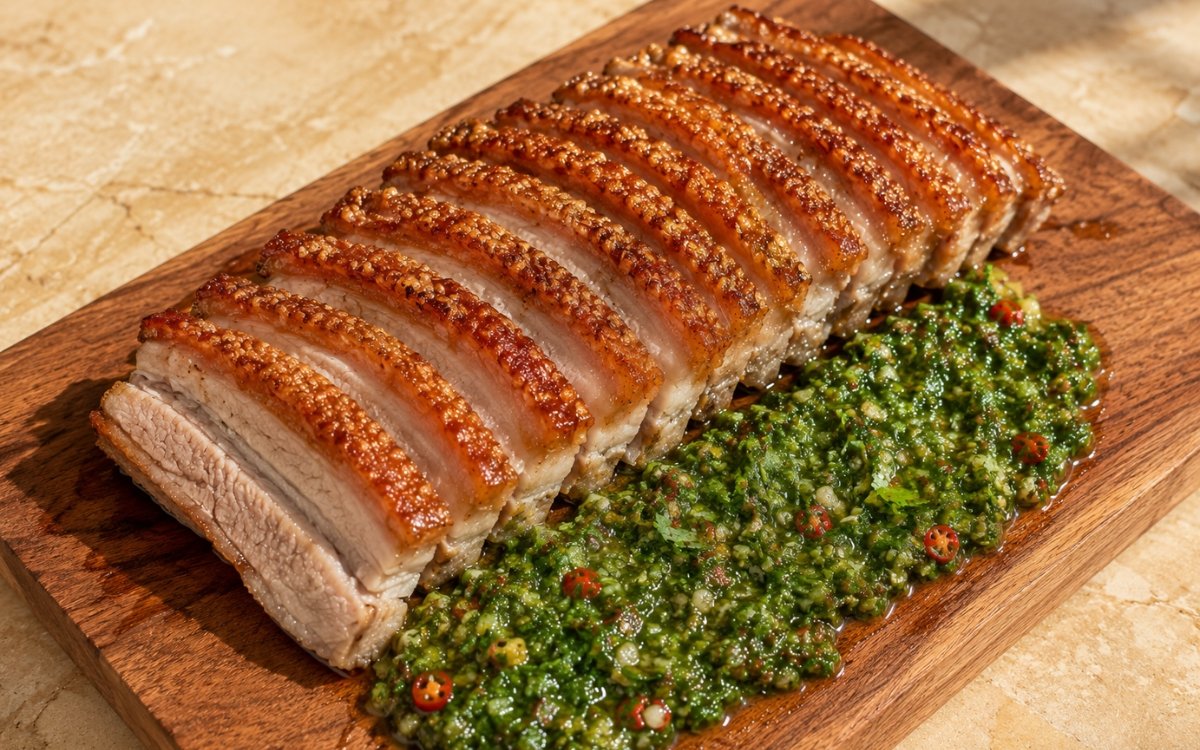
- Fan the sliced pork belly across a board or platter. Spoon some of the herb sauce alongside or over one side of the pork, keeping some extra on the side so the crackling stays crisp for anyone who wants it dry. Serve immediately while the pork is still warm and the crackling is at its crispest. Keeping some sauce off to the side rather than pouring it fully over every piece protects the crackling from softening on contact — anyone who wants extra can spoon it on themselves, right before eating.
Notes
The steam-roasting stage is worth understanding as a genuinely different cooking method from a standard dry roast, not simply a covered version of the same thing. The boiling water beneath the rack generates steam that surrounds the pork without ever touching it directly, tenderising the meat and rendering fat in a considerably gentler, moister environment than dry oven heat provides on its own. This is what allows the belly to become tender without drying out, setting up the skin-crisping stages that follow.
The brief 180°C drying stage between the steam-roast and the final high-heat crisp is a detail worth taking seriously despite its short duration. The enclosed steam phase inevitably leaves some residual moisture on the skin's surface, even with careful technique, and jumping straight from that humid environment to the hottest setting would work against proper crisping. This intermediate stage exists specifically to dry that moisture off before the aggressive final heat is applied.
Keeping wet seasoning strictly confined to the meat side throughout preparation is a rule worth following without exception. Any moisture that reaches the skin, whether from the initial seasoning or later handling, works directly against the entire multi-stage drying and crisping process this recipe is built around — the separation between wet-seasoned meat and dry-treated skin is fundamental to the technique succeeding at all.
The herb sauce's assertive, punchy character is a deliberate calibration rather than an accident of proportions. Pork belly is genuinely rich, and a sauce built to taste balanced on its own, tasted alone with a spoon, will read as noticeably milder once it's asked to cut through that fat. The sauce is intentionally built to taste a little more intense than seems necessary in isolation, specifically because of the richness it's meant to counter.