Ingredients
Method
Cook the Pasta
- Bring a large pot of water to a full rolling boil and add the 12g of kosher salt — the water should taste assertively seasoned, and at this salt level it will. Add the penne rigate and cook, stirring occasionally, until exactly 1–2 minutes shy of the package's al dente time. The pasta finishes cooking in the sauce, which is why the earlier-than-usual pull is important — pasta at full al dente entering the sauce step will be overcooked by the time the sauce has coated every tube. Before draining, reserve 240ml of the starchy pasta water in a heatproof jug and keep it warm throughout. Drain without rinsing — the surface starch on the pasta contributes to the sauce's emulsification.
Bloom the Garlic and Chili in Olive Oil
- Place a large skillet over medium heat and add the 75ml of extra-virgin olive oil. Allow to warm — not hot, but warm, at the temperature where a garlic slice added would begin a gentle sizzle rather than a violent splatter. Add the thinly sliced garlic and 2g of red pepper flakes simultaneously. Cook for 3–4 minutes, stirring frequently, until the garlic is very lightly golden and fragrant — consistently pale-golden throughout, with no brown patches anywhere. The distinction between pale-golden and browned garlic in arrabbiata is the difference between a sauce with sweet, toasted, aromatic garlic character and one with a bitter, acrid note that dominates every other flavour. In a sauce this simple — four ingredients — there is nowhere for browned garlic's bitterness to hide. Control the heat throughout and stir frequently. Add the 30g of Calabrian chili paste and stir for approximately 30 seconds, pressing the paste against the pan surface and working it into the surrounding oil. This brief blooming distributes the chili's fat-soluble aromatic and capsaicin compounds through the oil evenly — the paste's heat becomes pervasive and warm rather than concentrated and harsh. Calabrian chili paste rather than additional dried chili flakes is the specific ingredient choice for this sauce: the fermented, oil-packed Calabrian chilies produce a heat that is fruity, slightly sweet, and building rather than the sharp, immediate intensity of dried flakes. The combination of both — the bloomed flakes adding background warmth, the paste adding the specific Calabrian fruity heat — produces a more complex, more layered heat than either alone.
Add Tomatoes and Simmer
- Add the 800g of hand-crushed whole peeled tomatoes with all their juices. Hand-crushing — squeezing each whole tomato over the pan until it breaks open — produces a varied texture with small, distinct tomato chunks alongside the sauce body. Pre-crushed tomatoes produce a uniformly fine sauce without this textural variation. Add the 6g of salt and stir to combine everything. Bring to a steady, gentle simmer over medium heat. Cook uncovered for 8–10 minutes, stirring occasionally — the sauce should thicken slightly, deepen slightly in colour, and lose the raw tomato sharpness that freshly added canned tomatoes have. By the end of the simmer the sauce should taste bright, concentrated, specifically spicy with the building warmth of the Calabrian chili, and well-balanced between the tomato's acidity and the olive oil's richness. Taste at 8 minutes and adjust with additional salt if needed.
Finish the Pasta in the Sauce
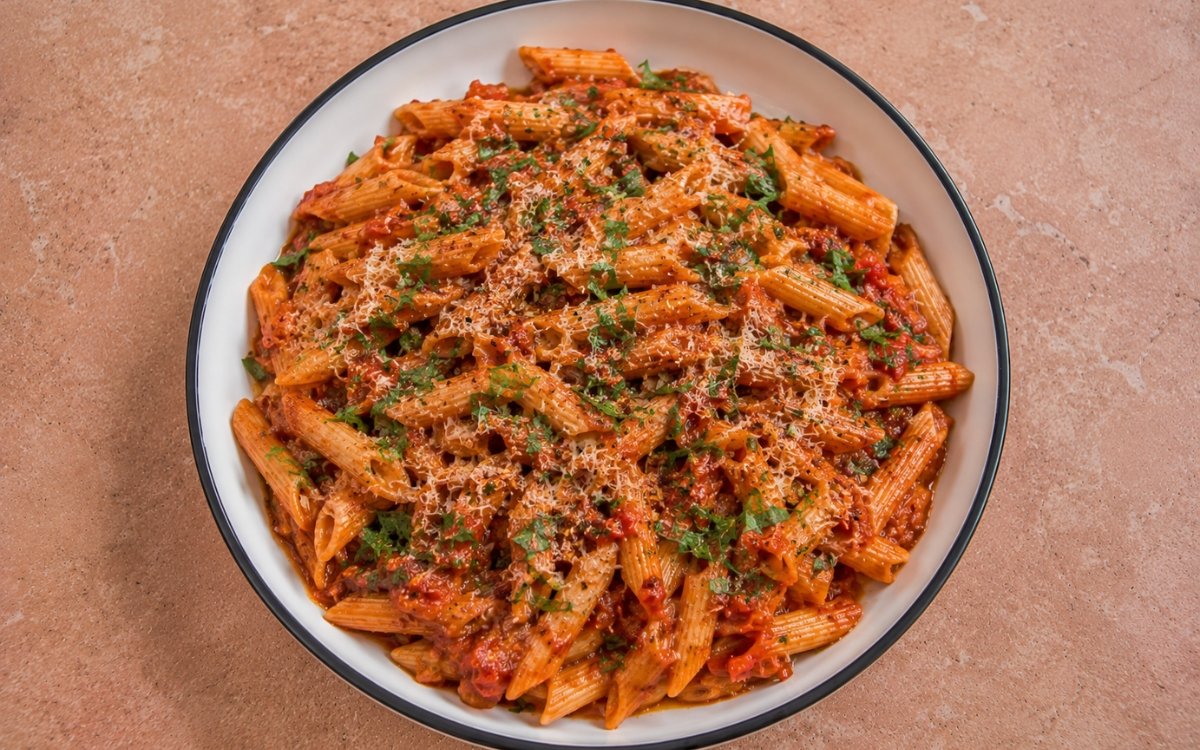
- Add the drained penne directly to the skillet with the simmering arrabbiata sauce. Pour in 120ml of the reserved pasta water immediately. Increase the heat to medium-high. Toss and stir vigorously for 1–2 minutes — the pasta finishes cooking in the sauce during this tossing period, absorbing the spiced tomato character from the outside in while the pasta's own surface starch releases into the surrounding sauce. The starch-and-olive oil emulsification that occurs during vigorous tossing at this temperature produces the glossy, coating consistency that makes every ridged tube of penne rigate worth choosing — the ridges are not decorative but functional, providing the maximum surface area for the coating sauce to adhere to. The correct finished consistency is glossy and cohesive — the sauce clings to the pasta as a film rather than pooling at the bottom of the skillet. If the sauce tightens beyond this point, add the remaining pasta water in 30ml increments while tossing aggressively. A sauce that won't cling is a starch-and-tossing problem, not a more-cheese problem.
Add Parmigiano and Parsley, Serve
- Remove the skillet from the heat completely. Add the 60g of finely grated Parmigiano-Reggiano and the 30g of chopped fresh parsley. Toss quickly — the residual heat of the pasta and sauce melts the Parmigiano smoothly without seizing, the cheese adding savoury, umami-rich depth that grounds the spice and acidity of the arrabbiata. The parsley adds the clean, fresh herbal top note that is the aromatic counterpoint to the chili's heat. Divide among four warm bowls immediately — arrabbiata's brightness and heat intensity are at their best in the first 2–3 minutes of plating; the sauce dulls slightly as it cools. Finish with additional Parmigiano and a drizzle of the best olive oil available over each bowl.
Notes
Arrabbiata — literally "angry" in Italian — is a Roman sauce of disputed origin but undisputed simplicity: olive oil, garlic, tomatoes, and chili. The traditional preparation uses only dried red chilies — no Calabrian paste, no additional components. This recipe's addition of Calabrian chili paste alongside the dried flakes is a deliberate regional upgrade: Calabrian chilies, fermented and packed in olive oil, produce a heat character that is specifically fruity, rounded, and building — the product of the chili's natural sugars caramelising slightly during fermentation and the oil-packing softening the capsaicin's impact. The combination of dried flakes for background warmth and Calabrian paste for the specific fruity-spiced Calabrian character produces a more layered, more specifically Italian-spiced heat than standard arrabbiata.
The olive oil quantity — 75ml for four servings — is generous and deliberate. Arrabbiata is an olive oil-forward sauce: the garlic and chili bloom in the oil, the tomatoes simmer in the oil-infused base, and the finished sauce's gloss comes from the emulsification of the olive oil and pasta starch. Reducing the olive oil produces a thinner, less coating, less richly flavoured sauce. Good-quality extra-virgin olive oil is worth using here — it is not a cooking medium that disappears but a primary flavour ingredient.