Ingredients
Method
Roast the Vegetables
- Heat the oven to 220°C / 425°F. Place the peppers, eggplants, and onions on a tray. Rub lightly with the 2 tbsp olive oil. Roast until the vegetables are deeply softened and lightly charred: peppers for 30–40 minutes, turning once or twice, until blistered, collapsed, and blackened in spots; eggplants for 45–55 minutes, turning once, until the skin is wrinkled and the flesh feels completely soft all the way through; onions for 40–50 minutes, until tender in the center and lightly charred outside. If some vegetables finish earlier, remove them as they are ready. The vegetables must be fully soft and slightly smoky, not just colored. Eggplant especially should feel almost collapsed and custardy inside. That real, thorough softening reflects genuine internal doneness rather than surface colour alone — a vegetable pulled while only lightly browned would still carry a firmer, less silky interior than escalivada actually depends on.
Steam and Peel
- Transfer the hot peppers to a bowl and cover tightly with a plate or wrap for 15 minutes to steam. Let all vegetables cool enough to handle. Then peel the peppers, remove stems and seeds, and tear into wide strips; peel the eggplants if needed, or scrape the flesh away from the skin, then tear into long soft strips; peel the onions, discard any dry or overly charred outer layers, and separate into soft strips or petals. Collect any juices from the tray or vegetables and keep them. Do not rinse the vegetables under water after peeling — that washes away flavor. Just wipe or peel off the loose skin. That covered steaming period genuinely loosens the peppers' own skin from the flesh beneath, making it considerably easier to peel cleanly without tearing the tender roasted flesh underneath.
Dress the Escalivada
- In a bowl, mix the 60ml olive oil, vinegar, garlic if using, and ½ tsp salt. Add the roasted pepper strips, eggplant, onion, and any reserved roasting juices. Toss very gently so the vegetables stay in soft strips rather than breaking down completely. Taste and adjust with more salt and black pepper. Let the vegetables rest for 15–20 minutes so they absorb the dressing. Escalivada is best when the vegetables sit briefly in the dressing before serving. The flavor should be mellow, lightly smoky, and glossy with olive oil. That genuinely gentle tossing protects the vegetables' own real, soft strip shape — vigorous mixing would break them down into something closer to a mash, losing the distinct, silky texture this dish is built around.
Assemble
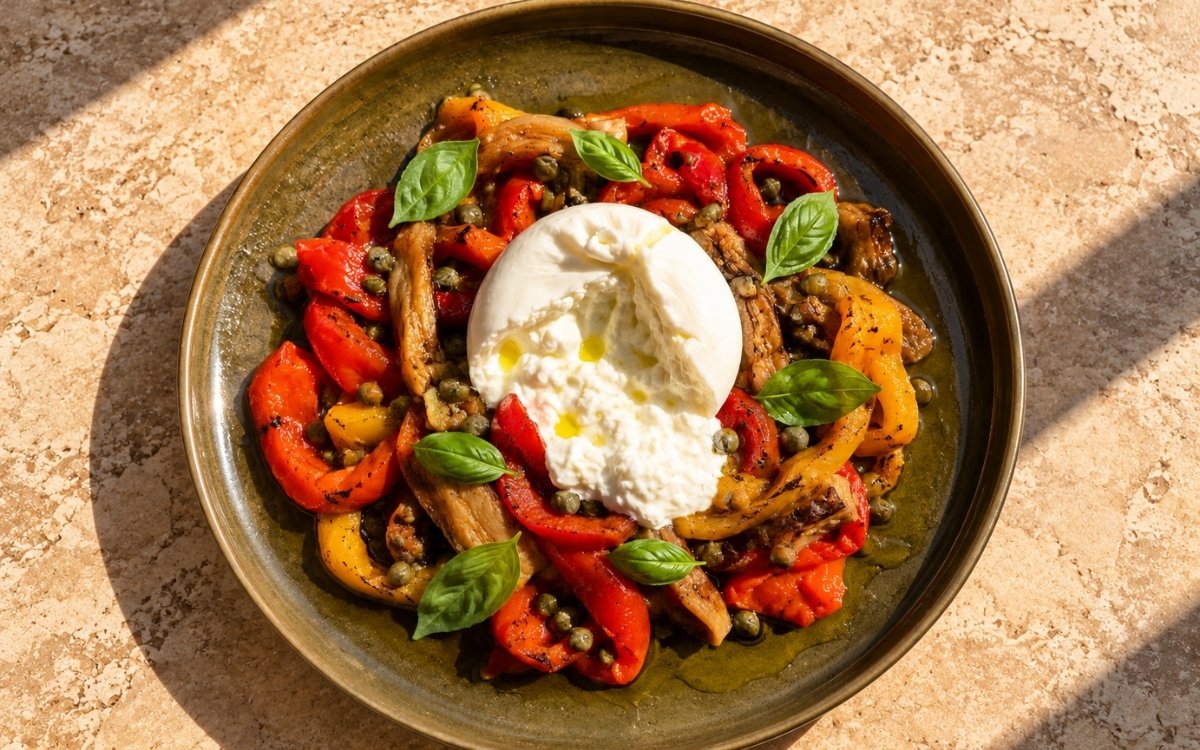
- Arrange the dressed vegetables on a wide shallow serving plate. Place the 2 burrata balls in the center. Tear or open them so the creamy interior spills onto the peppers and eggplant. Scatter over the capers and basil leaves. Drizzle with a little more olive oil and finish with flaky salt. Serve at room temperature or slightly warm. Tearing the burrata open specifically over the vegetables, rather than slicing it neatly to the side, is what lets its own creamy interior spill naturally onto the roasted pepper and eggplant, genuinely combining the two components right at the moment of serving.
Notes
Roasting every vegetable until genuinely fully soft and slightly smoky, never pulling them once merely coloured, deserves recognition as the technique most directly responsible for this dish's whole defining texture. The recipe's own explicit note that eggplant "should feel almost collapsed and custardy inside" reflects a real, checkable doneness target — surface browning alone doesn't guarantee that same real, internal softness.
Never rinsing the peeled vegetables under water deserves genuine attention as a real, deliberate restraint given how directly it protects the dish's own flavour. The recipe's own explicit warning that rinsing "washes away flavor" reflects a common instinct worth resisting — the loose skin should be wiped or peeled away, never rinsed, to keep the vegetables' own concentrated, roasted character intact.
Letting the dressed vegetables rest for a genuine 15–20 minutes before serving deserves the same attention this technique receives throughout this collection's other rested, marinated vegetable dishes. That window is specifically what lets the olive oil and vinegar actually absorb into the roasted vegetables, rather than simply sitting on their surface as a separate, unabsorbed coating.
Tossing the dressed vegetables only gently deserves genuine respect as the detail responsible for escalivada's whole classic presentation. The recipe's own explicit instruction to keep the vegetables "in soft strips rather than breaking down completely" reflects real understanding of how easily this dish could turn into a mash rather than staying visually and texturally distinct.