Ingredients
Method
Combine the Liquid Base
- In a small saucepan, stir together the 60ml soy sauce (or tamari), 30ml mirin (or the 20ml rice vinegar and 10g sugar), 30g honey (or brown sugar) and 10ml rice vinegar until the honey loosens and the liquid looks uniform. Add the 15g finely grated ginger and the 10g finely grated garlic, stirring until the pulp is suspended evenly with no clumps. Mirin contributes gentle sweetness and the glossy finish typical of Japanese glazes, and the rice vinegar and sugar swap is workable but less complex. That grating, rather than mincing, is what dissolves both aromatics smoothly into the sauce.
Bring to a Gentle Simmer
- Place the saucepan over medium heat and warm the mixture, stirring occasionally, until small bubbles form around the edge and it reaches a light simmer. Do not let it boil hard, because the sugars are already beginning to concentrate and the sauce can climb the pan or catch on the base. If you used brown sugar instead of honey, check that the crystals have dissolved fully. That gentle start dissolves the sugars evenly before any real reduction begins.
Reduce to Glaze Consistency
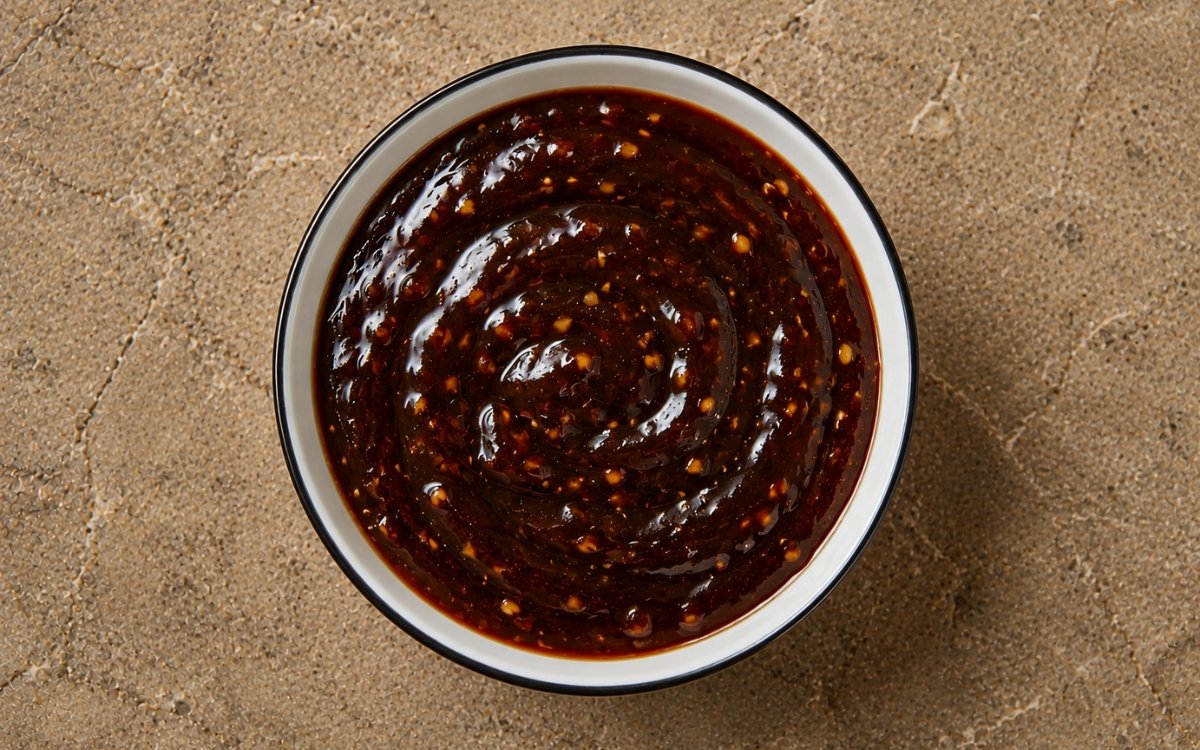
- Lower the heat to medium-low and cook for about 4–5 minutes, stirring frequently and watching closely, because the glaze thickens quickly once the sugars concentrate. It is ready when it coats the back of a spoon and holds a clean line when you draw a finger through it, looking glossy, slightly darkened and syrup-like. Take it off the heat at that point, since it keeps tightening as it cools. That spoon-coating test is what stops the reduction at lacquer rather than burnt toffee.
Adjust Thickness if Needed
- If the glaze reduces too far, stir in 15ml water and warm it over low heat until it loosens to a pourable syrup. For a thicker lacquer suitable for brushing onto proteins, stir the 2g cornstarch and 15ml cold water slurry again, whisk it into the glaze and simmer for about 60 seconds until it visibly tightens and turns slightly more translucent. Use one adjustment or the other, never both. That small correction is what lets one batch suit both brushing and drizzling.
Finish with Sesame
- Remove the pan from the heat and stir in the 10ml toasted sesame oil, then the 5g toasted sesame seeds, mixing until the oil is fully incorporated and the seeds are evenly distributed through the glaze. Taste a drop from the spoon: it should be deeply savoury, gently sweet and warmed by ginger, with a clean nutty finish. That off-heat addition is what preserves the sesame oil’s fragrance instead of cooking it away.
Glaze and Serve
- Use the glaze immediately while it is warm and fluid. Spoon out the amount you need for brushing first, so a brush that has touched raw protein never goes back into the pan, then brush it over salmon, chicken or tofu during the final 3–5 minutes of cooking until the protein is cooked through and the surface is glossy and caramelised. Alternatively, serve it as a dipping or drizzling sauce. That late application is what builds colour and flavour without giving the sugars time to burn.
Notes
Applying the glaze in the final 3–5 minutes of cooking deserves genuine recognition as the technique most directly responsible for whether the finish is glossy or burnt. The honey and soy sugars caramelise and brown quickly under oven or grill heat, so brushing them on earlier gives them time to blacken before the salmon, chicken or tofu is cooked through.
Mirin deserves the same attention it receives in other Japanese-style glazes, because its gentle sweetness and sugars give the finished sauce its characteristic gloss, rounded depth and a faint aroma carried by its alcohol. Rice vinegar with a little sugar is a workable substitute, but the glaze tastes noticeably less complex and less glossy without the real mirin.
The spoon-coating test deserves genuine respect as the detail most directly responsible for stopping the reduction at the right moment, before it tips from syrup into burnt toffee. Draw a finger across the back of a coated spoon — if the line holds cleanly and the glaze does not run back across it, the sauce is at coating consistency and should leave the heat.
Adding the toasted sesame oil off the heat deserves attention as a genuine, checkable choice rather than a matter of taste or habit. Its nutty aromatic compounds are volatile, so stirring it in once the pan is off the burner keeps the fragrance clear and distinct, while simmering it flattens the aroma into a faintly bitter background note that the soy and ginger then overshadow.