Ingredients
Method
Make Garlic Butter
- Preheat oven to 200°C (400°F). In a bowl, mix the 115g softened butter with the 18g garlic, 20g parsley, 5g basil, 3g salt, 1g black pepper, 2g red pepper flakes (optional), and 30g Parmesan until fully uniform, working it thoroughly with a spatula or fork so no streaks of unmixed butter remain. Make sure the butter is truly soft so it spreads easily without tearing the bread — if it's still cool and firm from the refrigerator, let it sit at room temperature a bit longer before proceeding, since rushing this stage with underprepared butter will make the next step noticeably harder and less even.
Prepare the Bread
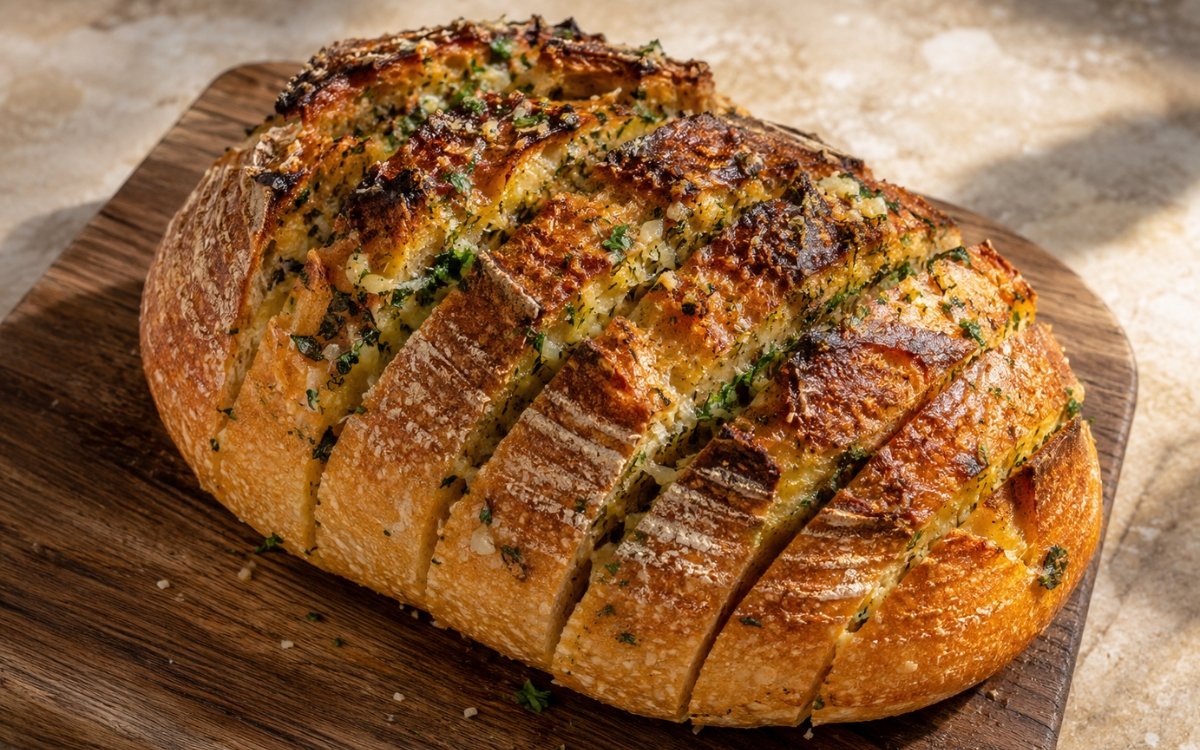
- Cut the 450g sourdough loaf in half horizontally for two large pieces. For pull-apart style, slice into 2.5cm slices without cutting through the bottom crust so the loaf holds together, working with a sharp, serrated bread knife and a gentle sawing motion to avoid crushing the loaf's structure as you cut.
Spread and Wrap
- Spread the garlic butter generously over the cut surfaces, all the way to the edges, and between slices if using the pull-apart method, making sure every exposed crevice gets a genuine coating rather than just the most accessible flat surfaces. Wrap the bread loosely in foil — loose enough to allow a little steam circulation, but sealed enough to keep the interior soft and prevent drying, since a too-tight wrap traps excessive moisture while a too-loose one lets the interior dry out before the butter has fully melted in.
Bake and Serve
- Bake the foil-wrapped bread on a baking sheet for 10 minutes so the butter melts and soaks in. Unwrap and bake 2–3 minutes more until edges are golden and crisp and the butter is bubbling. Slice or portion and serve immediately while hot.
Notes
Ensuring the butter is genuinely soft before mixing, rather than just cool-but-workable, is worth the extra few minutes it might take. Sourdough's characteristically open, irregular crumb structure means firm, unspreadable butter tends to tear and drag at the bread's surface rather than gliding on evenly, and an uneven butter application directly translates into uneven flavor and browning once the bread bakes.
The two-stage baking sequence — foil-wrapped first, unwrapped second — is specifically what allows this recipe to achieve both a soft, fully butter-soaked interior and a genuinely crisp, golden exterior in the same piece of bread. Skipping the foil-wrapped stage would leave the interior underdeveloped, since the butter wouldn't have enough contained heat and time to fully melt and penetrate; skipping the unwrapped finishing stage would leave the bread soft throughout without the crisp edges garlic bread is specifically known for.
Working the garlic butter into every crevice, rather than just spreading it across the most visible flat surfaces, matters particularly for the pull-apart slicing method, where the cuts create considerably more surface area than a simple halved loaf. Missing those interior cuts leaves noticeably plain, unbuttered bites throughout the finished loaf.