Ingredients
Method
Know the Oil-to-Acid Balance
- Classic vinaigrettes use a 3:1 oil-to-acid ratio, which softens acidity and creates a rounder taste. This version uses a brighter 2:1 balance, better suited to lemon and bold greens like arugula. Adjust toward 3:1 if you prefer a milder dressing.
Combine the Flavor Base
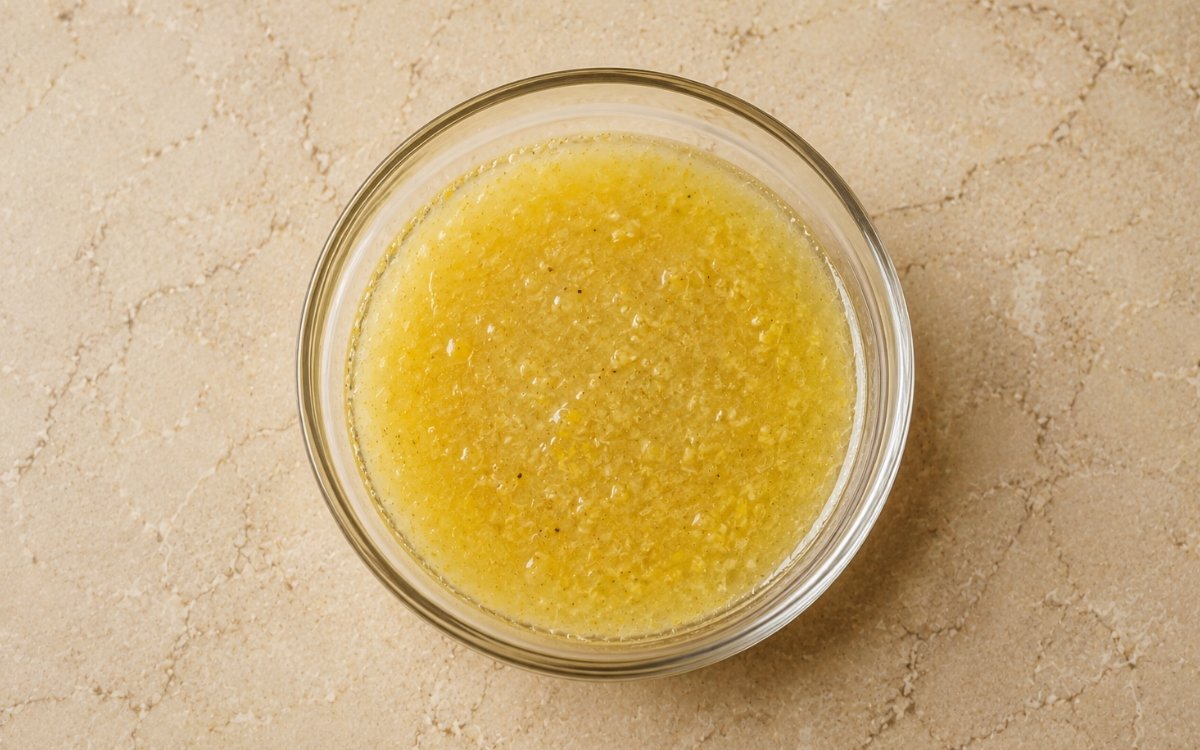
- In a small bowl or jar, mix lemon juice, lemon zest, Dijon mustard, honey, and grated garlic. Dijon acts as the emulsifier, helping oil and acid bind instead of separating. Whisk or shake until the mixture looks smooth and pale.
Start the Emulsion
- If using a bowl, begin whisking steadily while preparing to add the oil. Continuous movement is essential to break the oil into fine droplets and create a cohesive texture.
Add Oil Gradually
- Drizzle the olive oil in a thin stream while whisking rapidly. As the emulsion forms, you can pour more steadily. If using a jar, simply add the oil, seal tightly, and shake for 20–30 seconds.
Season and Adjust
- Finish with salt and freshly ground black pepper. Taste and refine — more lemon for brightness, honey for balance, or salt for depth. Use immediately or shake again before serving if separation occurs.
Notes
The emulsion in a vinaigrette is temporary — it will separate within 30–60 minutes unless stabilized by additional emulsifiers like egg yolk or significant quantities of mustard. This is completely normal and not a sign of failure. Always shake or whisk immediately before using. The jar method is particularly convenient because it allows quick re-emulsification directly in the storage vessel.
Fresh lemon juice and bottled lemon juice are not interchangeable in this recipe. Bottled lemon juice is pasteurized and often contains preservatives that give it a flat, slightly metallic flavor compared to the bright, complex flavor of fresh-squeezed juice. In a dressing where lemon is the primary flavor, this difference is very noticeable.
Lemon zest doubles the lemon character without adding more acidity. The aromatic oils in the zest provide floral, complex lemon fragrance that juice alone cannot replicate. Including both ensures a vinaigrette with genuine lemon character rather than simple sourness.