Ingredients
Method
Prepare the Sauce
- Whisk together the 40ml soy sauce, 15ml oyster sauce, 10ml sesame oil, 5ml rice vinegar, 3g sugar, and 2g white pepper until sugar dissolves. Keep the sauce next to the stove — fried rice moves fast, and pausing mid-cook drops pan heat.
Scramble the Eggs
- Heat a wok or large skillet over high heat until very hot. Add 15ml vegetable oil, swirl, pour in the eggs, and scramble quickly for about 45 seconds until just set (soft curds). Remove to a plate immediately; eggs overcook fast in a hot wok and become rubbery.
Stir-Fry Aromatics and Vegetables
- Add the remaining 30ml oil to the hot wok. Stir-fry the 60g onion for 2 minutes until softened, then add garlic and ginger for 30 seconds until fragrant (keep it moving so it doesn't burn). Add the 100g peas and carrots and stir-fry 2 minutes to heat through and drive off surface moisture.
Fry the Rice
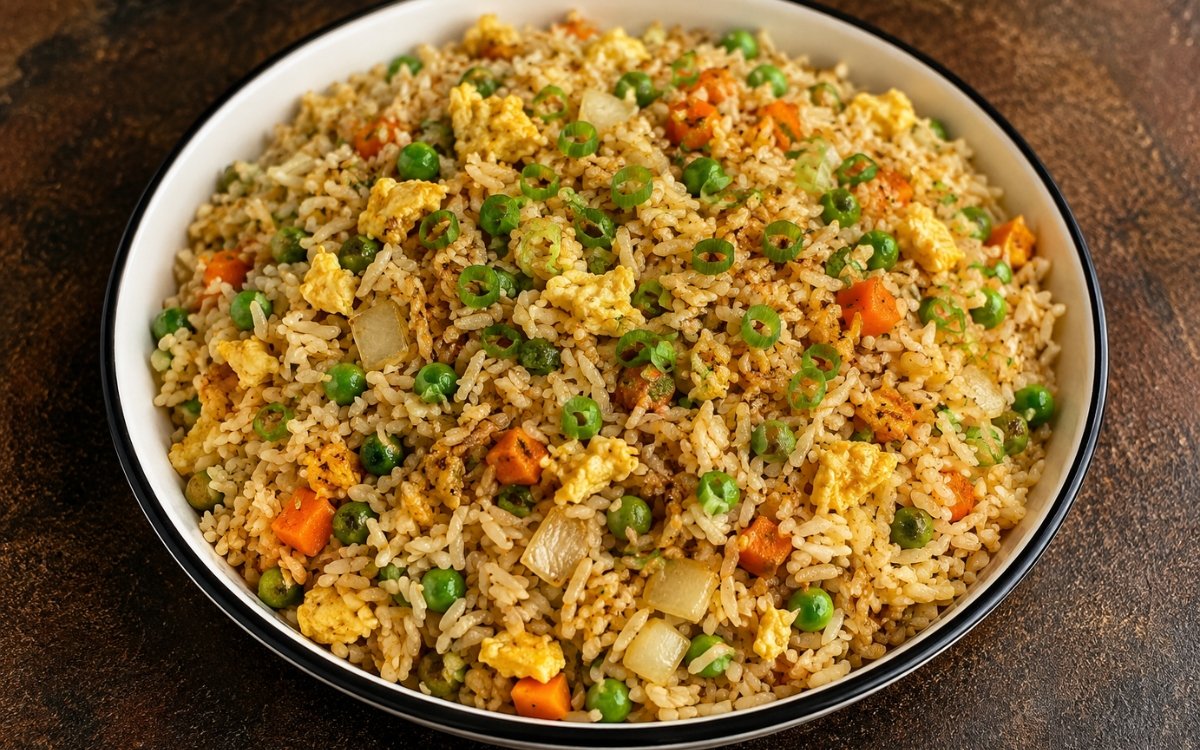
- Add the 450g cooled rice, breaking up clumps with a spatula so grains separate before sauce goes in. Stir-fry 3–4 minutes, tossing constantly, until rice is hot and some grains are slightly crisp. Pour the sauce around the edges of the wok (onto hot metal) and toss quickly to coat; add the scrambled eggs and 30g green onions and toss 1 minute. Serve immediately.
Notes
Having the sauce fully prepared and positioned beside the stove before cooking begins is genuinely essential rather than just tidy kitchen practice. Fried rice moves through distinct stages — eggs, aromatics, vegetables, rice, sauce — in rapid succession over sustained high heat, and any pause to measure or mix ingredients mid-process drops the wok's temperature significantly, undermining the crispness and char this dish depends on.
Removing the eggs from the wok immediately after they're just set, rather than letting them finish cooking alongside everything else, protects their texture specifically. A hot wok continues cooking residual heat into the eggs even off direct flame, and eggs left in that environment through the rest of the cooking process turn rubbery and tough by the time the dish is finished.
Pouring the sauce onto the hot metal at the wok's edges, rather than directly over the rice itself, allows it to briefly caramelize and develop a touch of char before being tossed through — a technique that adds a subtle layer of depth a simple pour-and-stir over the rice wouldn't achieve.