Ingredients
Method
Mix the Kofta Base
- Combine the ground beef, grated onion, garlic, parsley, mint, spices, salt, and pepper in a large bowl. Mix thoroughly using your hands for about 2 minutes until the mixture becomes cohesive and slightly sticky. This is not just combining — this step develops the protein structure (myosin binding) that allows the meat to hold together during cooking instead of crumbling. The mixture should feel tacky and uniform, not loose or grainy.
Form the Skewers
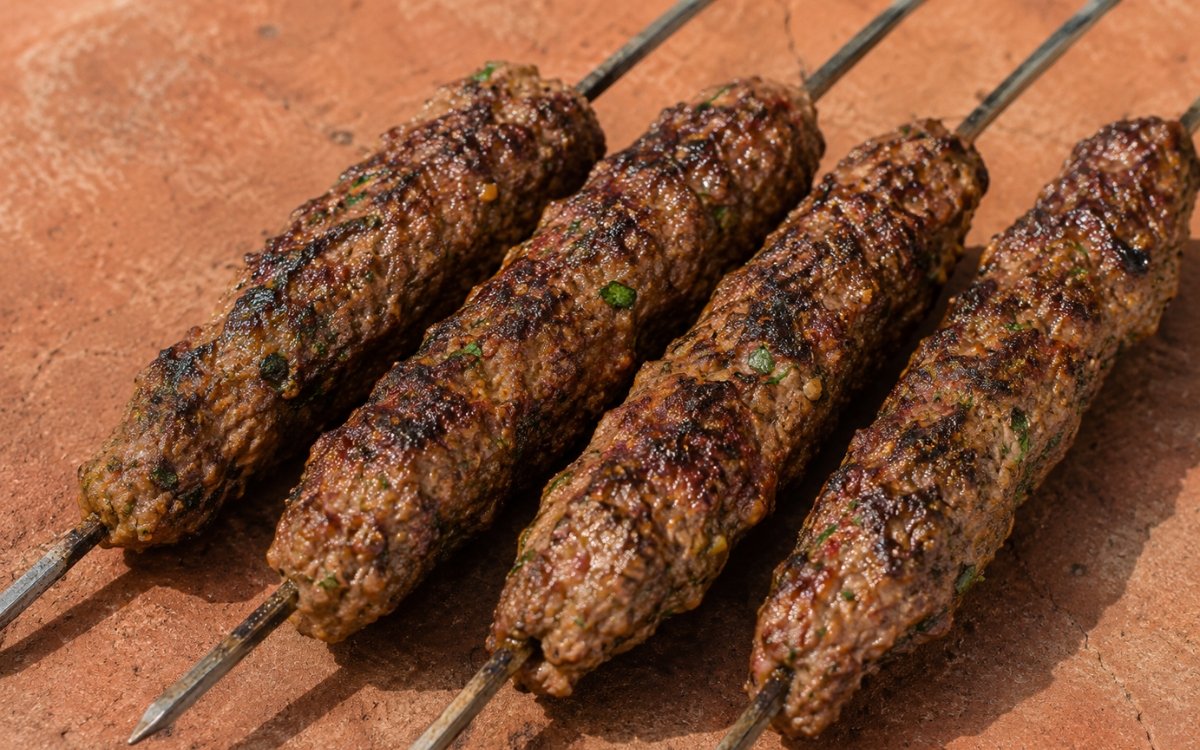
- Divide the mixture into equal portions and press each one firmly around a flat skewer, shaping it into a long, even cylinder. Apply pressure as you shape — loose packing is the main reason kofta falls apart on the grill. The meat should fully grip the skewer with no air gaps. Slight ridges along the surface are beneficial, as they increase surface area for browning.
Chill the Kofta
- Place the formed skewers in the refrigerator for at least 30 minutes. This step firms the fat and stabilizes the protein structure, making the kofta much more resistant to breaking during grilling. Skipping this step results in softer meat that struggles to hold shape under heat.
Preheat the Grill
- Heat the grill or grill pan to high heat and allow it to fully stabilize. The surface must be hot enough to create immediate searing contact. Lightly oil the kofta rather than the grill — this ensures direct contact browning while preventing sticking.
Grill with Controlled Rotation
- Place the skewers onto the grill and cook for 10–12 minutes, turning every 2–3 minutes. Each rotation should expose a new surface to direct heat, building even charring across all sides. Avoid constant flipping — controlled rotation allows proper crust formation while maintaining structure. The kofta should reach an internal temperature of 71°C (160°F), ensuring it is fully cooked while still juicy.
Rest and Serve
- Transfer the kofta to a plate and let it rest for 3 minutes before serving. This allows juices to redistribute and the internal structure to stabilize slightly. Serve immediately while still hot, with visible char and a firm but juicy texture.
Notes
The thorough two-minute hand mixing here is deliberately opposite to the gentle handling used for meatballs elsewhere in this collection, and that difference is intentional rather than inconsistent. Meatballs rely on a panade to stay tender and don't need structural binding strong enough to hold a shape without support; kofta, formed directly around a bare skewer with nothing else containing it, genuinely needs that developed myosin structure to stay intact under its own weight and through grilling.
Firm, deliberate pressure while shaping is what eliminates air gaps within the meat — any pocket of loose, unpacked mixture becomes a weak point that's specifically prone to breaking apart once heat causes the meat to contract and the fat to render.
Chilling for a full 30 minutes before grilling is a genuinely necessary step rather than a convenience one. Cold fat holds the meat's shape more effectively than fat at room temperature, and skipping this step produces kofta that's noticeably more fragile on the grill, at greater risk of slumping or breaking apart during the initial searing stage.