Ingredients
Method
Mix the Dough
- In a large bowl or stand mixer bowl, combine the bread flour and instant yeast. Add the lukewarm water and mix until no dry flour remains. Let it sit for 10 minutes, then add the salt and 20g olive oil. Knead for 8–10 minutes in a stand mixer on low-medium speed, or 10–12 minutes by hand, until the dough is smooth, elastic, and quite soft. This is a wetter dough than standard sandwich bread dough. It should be soft and tacky, but not fully loose like batter. That brief initial rest before the salt and oil are added lets the flour begin hydrating passively, building real gluten structure before either ingredient has the chance to interfere with that early development.
First Rise
- Transfer the dough to a lightly oiled bowl, cover, and let rise at room temperature for 1½ to 2 hours, until noticeably puffy and roughly doubled. The dough should look aerated and feel lighter. If the room is cool, it may need longer. That first rise gives the yeast genuine time to build the airy lightness responsible for this pizza's characteristically thick, focaccia-like interior.
Prepare the Pan and Transfer the Dough
- Generously oil a 23 x 33cm / 9 x 13 inch metal pan with the pan olive oil, making sure the corners and sides are coated well. Transfer the risen dough to the pan. Turn it once so both sides get lightly coated in oil. Gently press the dough outward with oiled fingertips. Do not force it fully to the corners if it springs back. Cover and let it rest for 15 minutes, then press again. Repeat as needed until it fills the pan. The dough must be relaxed into the pan gradually. Forcing it when tight tears the gluten and deflates the dough. That generous pan oiling is doing genuine, active work beyond simply preventing sticking — it will effectively shallow-fry the dough's underside and edges once baking begins, producing the crisp, characteristic Sicilian crust this recipe depends on.
Second Rise in the Pan
- Cover the pan and let the dough proof for 1½ to 2 hours, until it is well-expanded, airy, and visibly puffy. It should rise to fill the pan with a soft, inflated look. Toward the end of this proof, preheat the oven to 245°C / 475°F. The dough is ready when it has a marshmallow-like feel and retains shallow fingertip impressions. Underproofed dough bakes up dense and tight. That specific, checkable texture — soft enough to hold a shallow fingertip impression — is a genuine, reliable readiness cue confirming the dough carries enough built-up lightness to bake up properly airy rather than dense.
Make the Sauce
- While the dough proofs, combine the crushed tomatoes or passata, tomato paste, olive oil, salt, sugar if using, garlic, oregano, and black pepper. Stir well and let sit. The sauce should be thick enough to spoon, not watery. If it looks thin, let it stand longer or simmer very briefly to tighten it slightly, then cool before using. That thicker, spoonable consistency protects the par-baked crust beneath it from soaking up excess liquid once the sauce is added during the final bake.
Dimple and Par-Bake
- When the dough is fully proofed, oil your fingertips lightly and dimple the surface gently all over, pressing straight down without collapsing it. Bake the dough plain for 10–12 minutes, until the top is set and lightly pale golden but not browned deeply. This par-bake is important. It sets the structure so the finished pizza stays airy and does not become soggy under the sauce and cheese. That deliberate dimpling, pressed straight down rather than dragged, releases some of the largest surface gas bubbles without deflating the dough's overall structure, producing a more even surface for the par-bake to set properly across.
Top the Pizza
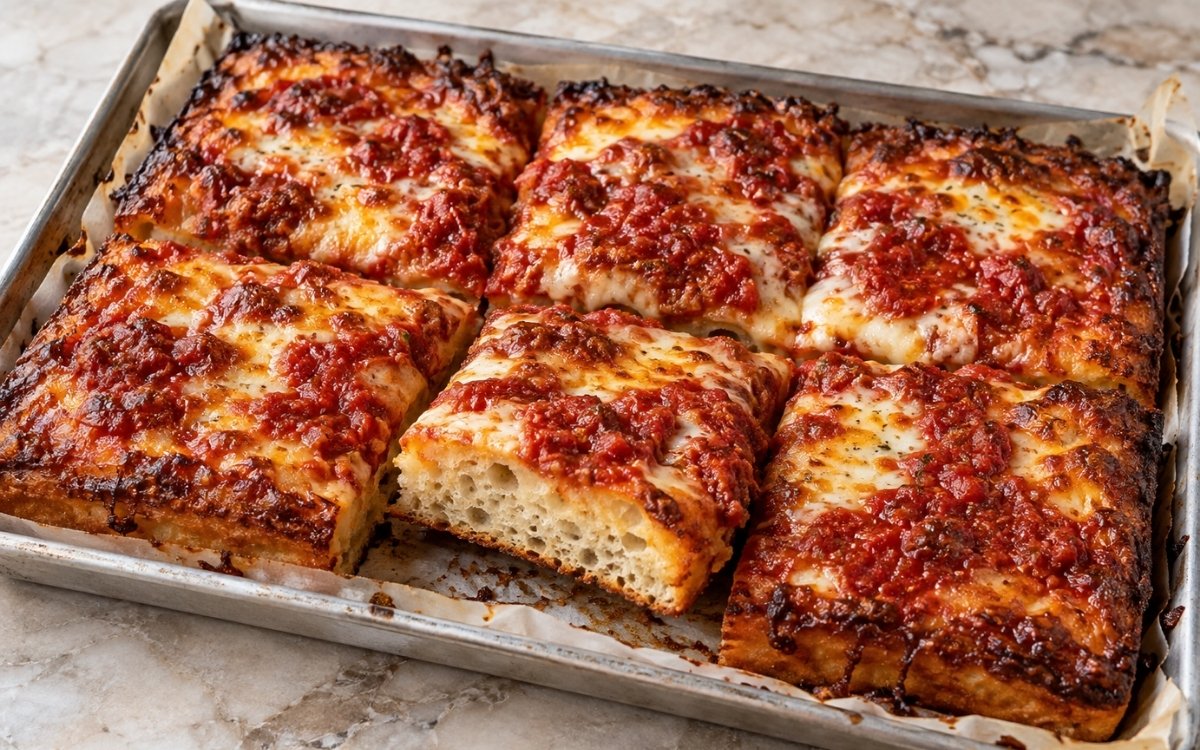
- Remove the pan from the oven. Scatter the mozzarella evenly across the surface, making sure some reaches near the edges for caramelization. Spoon the tomato sauce over the cheese in an even layer or in rustic patches, leaving some cheese visible. Finish with the grated Pecorino or Parmigiano and a light pinch of oregano. Putting the cheese down first and the sauce on top gives the classic Sicilian look and helps protect the crust. Layering the cheese directly against the already-set par-baked crust, rather than the sauce, is what protects that crust from the sauce's own moisture during the remaining bake time still ahead.
Final Bake
- Return the pan to the oven and bake for 12–16 minutes, until the cheese is melted and browned in spots, the sauce looks concentrated and glossy, the edges are deeply golden and crisp, and the underside is baked through and lightly crisp when lifted with a spatula. If the top is done but the bottom needs more color, set the pan directly on the oven floor or the lower rack for 1–2 more minutes, watching closely. That direct contact with the oven's floor or lowest rack delivers considerably more intense bottom heat quickly, catching up an underside that's lagging behind the top's own progress.
Rest and Slice
- Remove from the oven and let the pizza rest in the pan for 3–5 minutes. If the bottom needs to stay crisp, carefully lift the pizza out onto a rack or board after this short rest. Drizzle very lightly with olive oil if desired. Cut into 6 square slices and serve hot. Resting briefly helps the cheese set slightly and keeps the crumb from compressing when sliced. Transferring the pizza off the hot pan and onto a rack, rather than leaving it to sit in its own residual oil, is what protects the bottom crust from continuing to soften from trapped steam and heat underneath it.
Notes
Generously oiling the metal pan before the dough ever goes in deserves real recognition as the technique most responsible for this pizza's genuinely fried, crisp edges. That pooled oil isn't simply there to prevent sticking — it actively shallow-fries the dough's underside and rim as the pizza bakes, and the recipe's own explicit statement that this step "is not optional in Sicilian-style pizza" reflects exactly how central it is to the finished crust's whole character.
Par-baking the dimpled dough plain, before any sauce or cheese ever touches it, deserves genuine respect as one of the recipe's own explicitly named key control points. That early bake sets the crust's internal structure while it's still unencumbered by toppings, protecting the finished pizza from turning soggy or dense once the wetter sauce and cheese are layered on for the remaining bake.
Layering the cheese directly against the crust, with the sauce spooned over it rather than underneath, deserves attention as a deliberate technique specific to this pizza's own classic look and structural needs. That order protects the already-set crust from the sauce's own moisture during the final bake, while still delivering the rustic, cheese-and-sauce patchwork surface a proper Sicilian slice is known for.
The dough's specific, checkable proofing target — a marshmallow-like feel that retains shallow fingertip impressions — deserves genuine attention as a real readiness cue rather than a vague description. Underproofed dough at this stage bakes up dense and tight, missing exactly the thick, airy, focaccia-like interior this style of pizza is specifically built around.