Ingredients
Method
Prep the Oranges
- Slice off the top and bottom of each orange so it sits flat. Using a sharp knife, cut away the peel and all white pith, following the curve of the fruit. Slice the oranges into 5–7mm rounds. Remove any visible seeds. Work over a bowl or plate so you catch all juices. Remove all bitter white pith. The salad should taste sweet, bright, and clean. That deliberate, thorough removal of every trace of pith is exactly what protects this salad's own intended flavour — any pith left clinging to the flesh would introduce a genuine, unwanted bitterness the rest of the dish is specifically built to avoid.
Prep the Fennel
- Trim the fennel bulb. Remove any bruised outer layer if needed. Reserve a few fronds for garnish if nice and fresh. Halve the bulb lengthwise and shave it very thinly using a mandoline or a very sharp knife. The slices should be delicate, pale, and slightly translucent. If the fennel is especially strong or dry, place it in ice water for 5–10 minutes, then drain and dry very well. Fennel must be sliced thinly enough to stay crisp but not bulky or fibrous. That genuinely thin shaving is what keeps the fennel's own texture delicate and crisp rather than thick and fibrous — a coarser cut would carry considerably more of the bulb's own tougher, more assertive structure into every bite.
Assemble the Salad
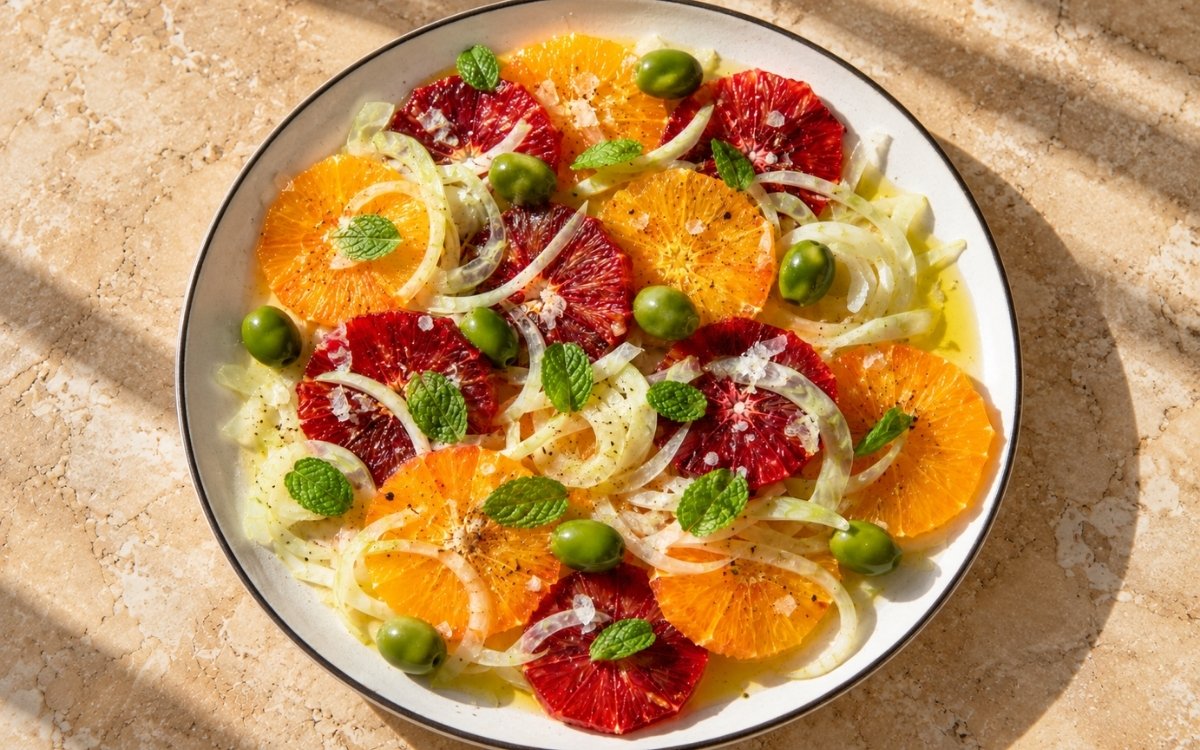
- Arrange the orange rounds on a wide shallow platter or plate in loose overlapping circles, alternating navel and blood oranges for contrast. Scatter the shaved fennel evenly over and between the orange slices. Add the olives and mint leaves. If using fennel fronds, scatter a little over the top. Spoon over any reserved orange juices from the cutting board or bowl. That loose, overlapping arrangement, rather than a tossed pile, is what keeps every component genuinely visible and distinct on the plate — the alternating navel and blood orange rounds specifically build the classic visual contrast this salad is known for.
Dress and Finish
- Drizzle evenly with the olive oil. Sprinkle with flaky sea salt and several grinds of black pepper. Let the salad sit for 5–10 minutes before serving so the fennel softens slightly and the juices mingle. Do not overdress. This salad should look glossy, not oily or wet. That brief resting period gives the fennel real time to soften just slightly while the oranges' own juices and the olive oil have a genuine chance to mingle together across the plate before serving.
Notes
Removing every trace of the oranges' own bitter white pith deserves genuine recognition as the technique most directly responsible for this salad's real, clean sweetness. The recipe's own explicit instruction that "the salad should taste sweet, bright, and clean" reflects exactly what's at stake — any pith left behind carries a genuine, unwanted bitterness that would work directly against the dish's intended character.
Shaving the fennel genuinely thin, using a mandoline or very sharp knife, deserves the same attention this technique receives throughout this collection's other thinly sliced raw vegetable preparations. The recipe's own explicit target — "delicate, pale, and slightly translucent" — reflects a real, checkable standard; fennel cut any thicker would carry considerably more of its own fibrous, bulky structure into the finished salad.
Arranging the salad in loose, overlapping circles rather than tossing everything together deserves genuine attention as a deliberate presentation choice central to this dish's own classic character. The recipe's own explicit target — "clearly visible orange rounds, fennel ribbons, scattered olives, and mint rather than a tossed pile" — reflects real, considered attention to how this salad is meant to look as much as how it tastes.
The brief resting period before serving deserves respect as a real, functional step rather than simple patience. That window gives the fennel genuine time to soften just slightly while the oranges' own juices and the drizzled olive oil have a real chance to mingle together across the plate, rounding out the finished dish's flavour.