Ingredients
Method
Make the Salted Caramel Sauce
- Add the sugar and water to a small saucepan. Cook over medium heat without stirring, swirling the pan occasionally, until the sugar dissolves and turns a deep amber caramel. Remove the pan from the heat and carefully pour in the warm cream. It will bubble aggressively. Stir until smooth, then add the butter, fine sea salt, and vanilla if using. Stir again until fully combined. Let the sauce cool slightly until it is fluid but no longer extremely hot. The sauce should be smooth, glossy, and pourable. If it is too pale, it will taste flat and overly sweet. If it goes too dark, it will taste bitter. You want a rich amber caramel, not burnt sugar. Cooking the sugar dry, swirling rather than stirring, lets it colour evenly and predictably — stirring with a spoon at this stage risks crystallising the sugar back into a grainy mass rather than letting it melt cleanly into caramel.
Brew the Espresso
- Brew 120ml espresso total, equal to 4 standard 30ml shots. While still hot, stir 20ml of the salted caramel sauce into the espresso until fully dissolved. Mixing part of the caramel into the hot espresso matters. It gives you a properly integrated caramel-coffee base instead of a drink where all the sweetness sinks to the bottom. Hot espresso has real capacity to loosen and fully dissolve the caramel on contact — that integration is what keeps the drink tasting balanced from the first sip to the last, rather than starting weak and turning cloying only once the concentrated bottom layer is finally reached.
Prepare the Glasses
- Drizzle extra salted caramel sauce around the inside walls of 2 glasses in visible loose swirls. Add 10ml salted caramel sauce to the bottom of each glass. The caramel should cling to the inside walls and remain clearly visible. Do not flood the glasses. Too much sauce makes the drink cloying and turns the base muddy instead of layered and elegant. Applying the caramel to the dry, empty glass first is what allows it to cling to the walls rather than sliding down and disappearing — this same drizzle-first principle governs every layered iced coffee drink in this collection where a sauce is meant to remain a visible accent.
Add the Ice and Milk
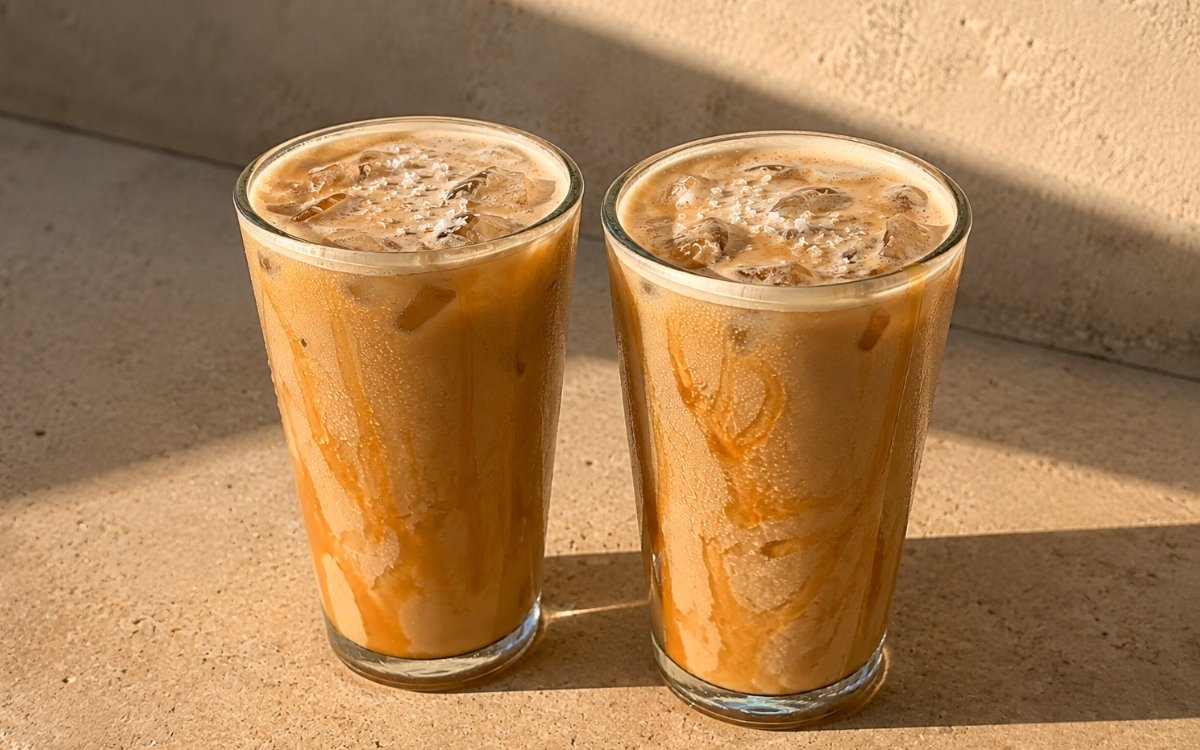
- Fill each glass generously with ice. Pour 150ml cold whole milk into each glass over the ice. The glasses should now show three clear visual layers: caramel at the bottom, caramel swirls on the walls, and pale milk over the ice. Leave enough room for the espresso. Building this ice-and-milk layer on top of the caramel base and drizzled walls is what sets up the full three-layer visual before a single drop of espresso has even been added.
Pour in the Salted Caramel Espresso
- Divide the salted caramel espresso mixture evenly between the 2 glasses, pouring it slowly over the milk and ice. Let it swirl naturally through the milk before stirring. The drink should take on a rich golden-caramel tone, deeper and warmer than a regular iced latte. You should still see some darker coffee movement before it fully blends. Pouring slowly rather than quickly is what gives the espresso time to fall through the cold milk in visible movement before the two liquids fully combine — a fast pour would collapse that visual moment almost immediately.
Optional Thin Foam Finish If
- you want the more polished café-style finish, froth the extra cold milk very lightly until it forms only a thin soft foam. Spoon a small amount over the top of each drink. This should be only a thin surface layer, not a thick cappuccino cap. The foam is there to carry the flaky salt and give the drink a clean finished top. Keeping this foam genuinely light rather than substantial serves a specific functional purpose beyond presentation — a thin layer gives the flaky salt somewhere visible and stable to sit, without adding the heavier, more filling texture a thick cappuccino-style cap would bring to what's meant to stay a latte.
Finish and Serve
- Sprinkle a small pinch of flaky sea salt over the top of each drink. If you want the full visual, let one small line of caramel drip slightly over the outside of the glass. Serve immediately. The finished drink should taste creamy, caramel-forward, lightly salty, and still clearly espresso-based. The salt should sharpen the caramel, not make the drink taste overtly salty. A restrained pinch of flaky salt works specifically by contrast — a small amount heightens the caramel's sweetness and depth through that classic sweet-salty interplay, while too much simply reads as a salty drink rather than a sharpened caramel one.
Notes
Cooking the caramel to a genuine deep amber, rather than pulling it early out of caution, is worth understanding as the step most responsible for this sauce's actual flavour character. A caramel stopped too pale hasn't developed the deeper, more complex notes that separate real caramel from simple burnt sugar syrup — it tastes flat and one-dimensionally sweet instead. Pushed too far in the other direction, past deep amber into genuinely dark territory, the sugar's own compounds turn bitter in a way cream and butter added afterward can't fully correct. The window for proper amber caramel is real but manageable with attention.
Integrating part of the caramel directly into the hot espresso, rather than relying entirely on the glass-base layer for sweetness, follows the same logic used throughout this collection's layered iced drinks. A drink sweetened only at its visual base layer tends to taste unevenly sweet through the drinking experience — weaker at the top, overly concentrated at the bottom. Mixing a portion into the espresso itself distributes that sweetness more evenly while still preserving the separate caramel layers for visual effect.
The three-layer build — caramel at the base, caramel drizzled on the walls, pale milk over ice — deserves recognition as a deliberate visual sequence rather than simply "adding caramel in a few places." Each layer is placed at a specific stage for a specific reason: the base layer for a concentrated visual anchor, the wall drizzle for a decorative accent visible from outside the glass, and the milk-over-ice layer as the neutral canvas the espresso will swirl through last.
The instruction to keep the final salt finish restrained, rather than generous, reflects a real principle about how salt interacts with sweetness. A small, carefully placed pinch of flaky salt heightens and sharpens the caramel's own sweetness through contrast — this is the entire point of a "salted caramel" flavour profile. Oversalting instead simply introduces a competing, salty flavour that fights the caramel rather than complementing it, undermining the balance the whole drink is built around.