Ingredients
Method
Wash and Dry the Herbs Thoroughly
- Rinse parsley, mint, and basil in cold water, then dry completely. Proper drying prevents dilution and helps the olive oil coat the herbs evenly once the sauce is assembled.
Hand-Chop for Authentic Texture
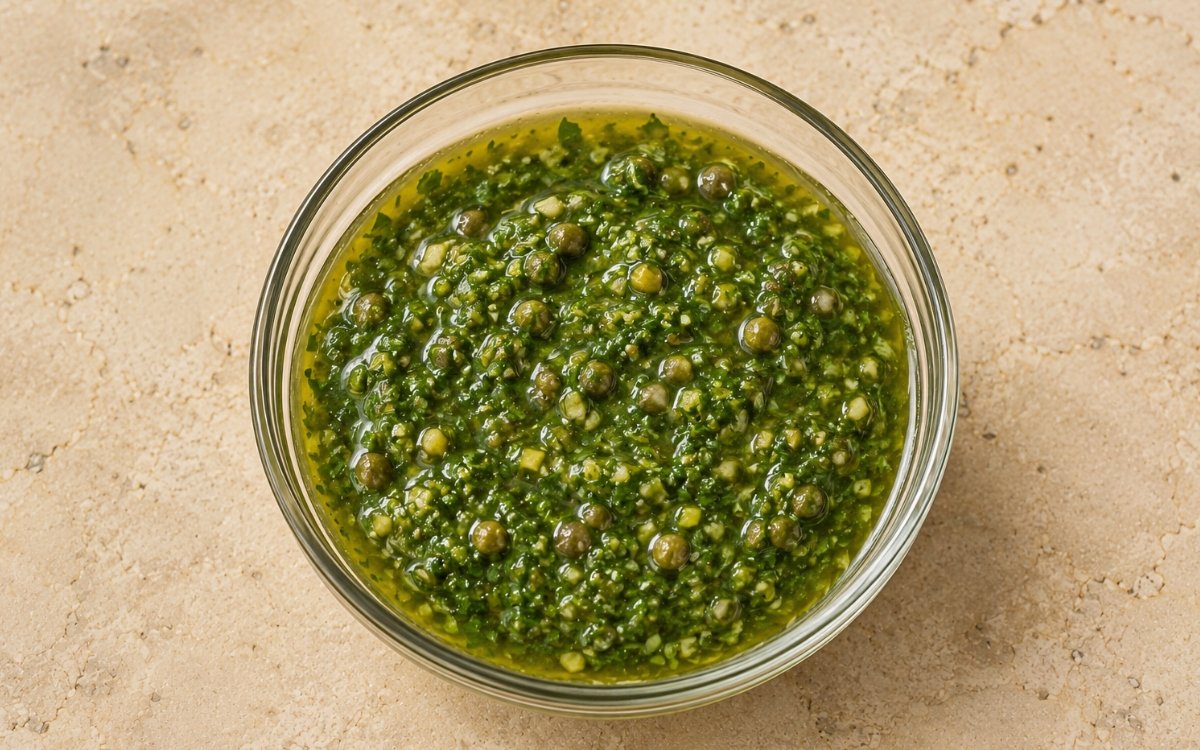
- Remove leaves from thicker stems and gather them on a large cutting board. Using a sharp chef’s knife, finely chop with a steady rocking motion until uniformly minced but still slightly coarse. This hand-cut texture gives salsa verde character that blending cannot replicate.
Add Capers, Anchovies, and Cornichons
- Place drained capers, anchovy fillets, and chopped cornichons on the board with the herbs. Chop everything together until the anchovies nearly dissolve and the capers are broken into small pieces, creating a deeply savory, integrated mixture.
Transfer and Add Aromatics
- Move the chopped mixture to a bowl. Stir in minced garlic and Dijon mustard, which adds sharpness and helps lightly emulsify the sauce.
Incorporate Vinegar and Olive Oil
- Add red wine vinegar and mix to moisten the herbs. Then drizzle in olive oil gradually while stirring until the sauce becomes cohesive yet clearly textured.
Season and Adjust
- Taste before adding salt, as the briny elements already contribute salinity. Finish with generous black pepper and adjust acidity or oil as needed for balance.
Notes
The anchovy question arises frequently with those unfamiliar with their culinary role. When cooked or blended into sauces, anchovies do not taste fishy — they dissolve and contribute deep, meaty, savory umami that intensifies and amplifies other flavors. A sauce made without anchovies tastes noticeably flatter and less complex than one made with them. The function of anchovies in Italian cuisine is that of a flavor amplifier, not a fish flavoring.
Mint is an unusual but traditional element in certain regional Italian salsa verde preparations, particularly in Lombardy and Piedmont. Its clean, cooling note provides contrast to the richness of the olive oil and the punchy brine of the capers. Do not skip it — its contribution is subtle but noticeable.
Red wine vinegar is the traditional acid in this sauce and should not be substituted with lemon juice or white wine vinegar without significantly changing the character. Red wine vinegar's robust, tannic acidity specifically complements the richness of grilled meats, which is salsa verde's primary pairing.