Ingredients
Method
Brew the Black Tea Correctly
- Heat the 1.65 litres of water to approximately 90–95°C. Add the 5 black tea bags and steep for exactly 2½–3 minutes only — longer steeping introduces a harsh bitterness that specifically overwhelms the herbal profile this tea is built around, rather than simply tasting stronger. Remove the bags gently without squeezing, and allow the tea to cool to lukewarm.
Dissolve the Honey While Warm
- While the tea is still slightly warm, stir in 2 tablespoons of mild honey until fully dissolved. Taste and add up to one additional tablespoon only if necessary. The sweetness should remain subtle and supportive rather than dominant — this tea is not built to taste sweet. Allow the tea to cool fully to room temperature before moving on.
Prepare the Sage
- Rinse the sage leaves and lightly clap them between the palms to release their aromatic oils. This activates the herbal aroma without bruising the leaves outright. Avoid chopping or crushing the sage at any point — damaged leaves release bitter compounds quickly, and sage's margin for error here is narrower than basil's or mint's.
Short Sage Infusion
- Add the sage leaves to the cooled tea and refrigerate for 6–10 minutes. Taste periodically rather than waiting for a fixed endpoint, and remove the leaves as soon as the herbal aroma becomes clearly noticeable. A properly timed infusion produces a clean botanical note; left even slightly too long, sage shifts toward a heavier, more medicinal character that specifically dominates rather than complements the rest of the drink.
Add Citrus Aroma
- Add the strip of lemon peel to the tea and allow it to infuse for about 5 minutes, then remove it promptly. The peel's job here is purely aromatic — it contributes citrus oils without introducing any acidity or bitterness, provided it is pulled before the white pith beneath it has any chance to leach into the liquid.
Adjust Acidity
- Stir in 1 tablespoon of fresh lemon juice and taste. Add up to one additional tablespoon if the drink needs more brightness. The goal here is a gentle citrus lift, not lemonade-level acidity — the juice is a finishing adjustment, not a structural ingredient.
Chill the Tea
- Refrigerate for 1–2 hours until fully cold and balanced. Proper chilling sharpens the overall structure and allows the herbal and citrus aromas to settle into something integrated rather than two separate impressions sitting side by side.
Serve
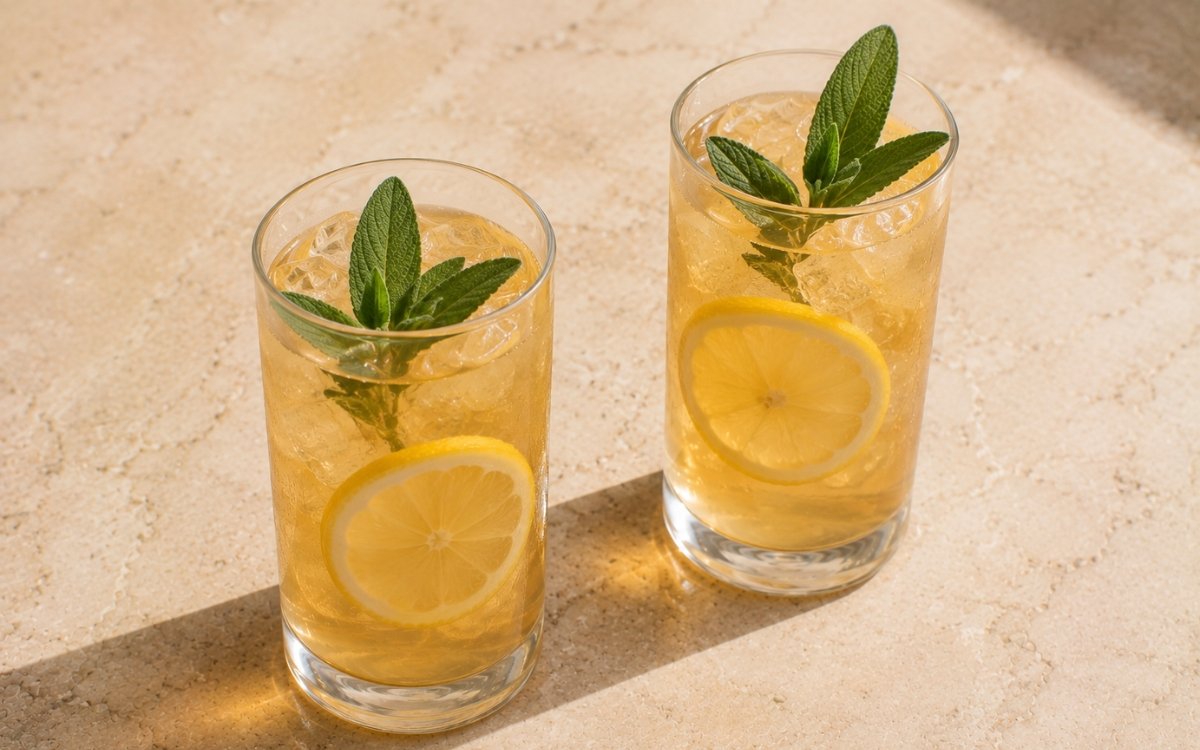
- Fill glasses with ice, pour over the chilled sage citrus iced tea, and garnish with fresh sage leaves and lemon slices. Serve immediately while cold and aromatic.
Notes
Black tea must be brewed briefly and precisely in this preparation specifically because over-steeping creates a bitterness that overwhelms both the honey and the herbal sage — there's nowhere for that bitterness to hide once it's there.
Sage should be infused gently and only for a short time. Excessive contact time produces medicinal or piney flavours that dominate the drink in a way that's difficult to correct after the fact, which is why tasting periodically during the infusion matters more here than a strict fixed timer would.
Honey works best dissolved while the tea is still warm. Adding it to fully chilled tea makes even integration genuinely difficult, and the result is an uneven sweetness rather than one folded smoothly throughout.
Lemon peel provides aroma rather than acidity, and it should be removed quickly — any lingering contact with the white pith beneath the peel introduces a bitterness this tea is specifically built to avoid.
This drink relies on balance rather than sweetness throughout. The final result should feel refreshing and structured, not sugary — if it tastes sweet first and herbal second, something has gone slightly off the intended path.