Ingredients
Method
Prepare and Blanch the Greens
- Bring a large pot of well-salted water to a boil. Add the spinach and optional mustard greens and blanch for 1½ to 2 minutes, just until fully wilted and bright green. Transfer the greens immediately to a bowl of very cold water or ice water to stop the cooking, then drain well and squeeze out the excess moisture gently. This quick shock in cold water is what sets the color and takes the raw harshness off the greens without dulling them.
Blend the Saag Base
- Add the blanched greens, green chilies, rough-chopped ginger, and rough-chopped garlic to a blender or food processor and blend to a thick puree. For a more classical texture, stop short of completely silky-smooth — mostly smooth with a little lingering texture is correct here. Add only a spoon or two of water if the blender needs help moving.
Fry the Paneer
- Heat the 2 tablespoons oil or ghee in a skillet over medium heat. Add the paneer cubes in a single layer and fry for 1–2 minutes per side until lightly golden on several faces, then sprinkle lightly with the ¼ teaspoon salt. Keep the frying brief and avoid deep browning, since paneer turns rubbery with too much time in the pan. Transfer to a plate; if you want extra-soft paneer, dip the fried cubes briefly in warm water for 5 minutes, then drain before adding them to the sauce.
Build the Curry Base
- Heat the 2 tablespoons ghee or oil in a wide pan or kadai over medium heat. Add the cumin seeds and cook for 20–30 seconds until fragrant, then add the chopped onion and cook for 7–9 minutes, stirring often, until soft and lightly golden. Add the grated garlic and ginger and cook 30–45 seconds more. Add the tomato and cook for 4–5 minutes until softened and reduced, with the fat just starting to separate at the edges. Stir in the turmeric, ground coriander, chili powder, garam masala, and ½ teaspoon salt, cooking for 20–30 seconds; add a splash of water if the pan looks dry so the spices don't scorch.
Cook the Saag
- Add the spinach puree to the pan and mix it well into the onion-spice base. Cook over low to medium-low heat for 6–8 minutes, stirring often, until the raw blended smell is gone and the mixture has thickened slightly. The saag should look deep green, glossy, and thick enough to hold the paneer without turning pasty; loosen with 2–3 tablespoons hot water if it gets too thick. Taste at this stage, adding more salt if needed, and a tiny pinch of sugar if the greens taste sharp or metallic.
Finish with Paneer and Cream
- Lower the heat to low and stir in the butter or ghee, crushed kasuri methi, and 3–4 tablespoons cream. Add the paneer cubes and fold gently to coat, simmering very gently for just 2–3 minutes, only until the paneer is heated through. Keep this stage at a bare simmer — boiling hard once the cream and paneer are in can dull the color, split the finish, and toughen the paneer.
Serve
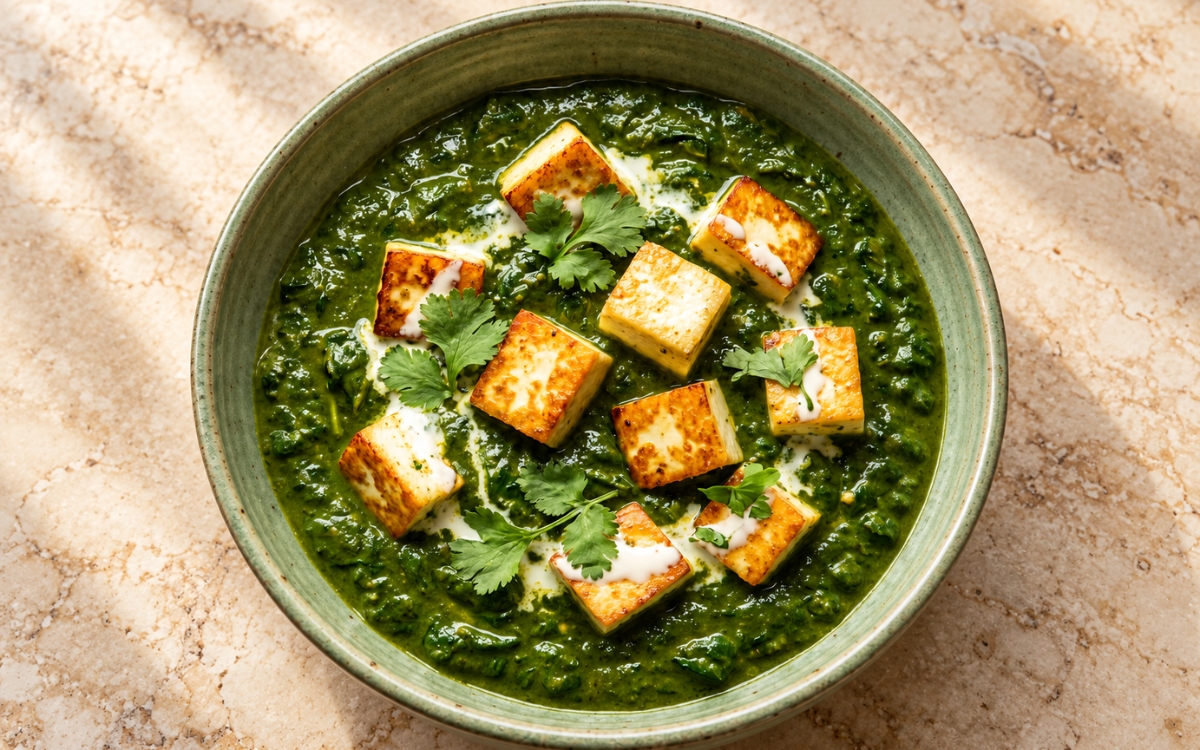
- Transfer to a serving bowl and finish with a small drizzle of cream and a few cilantro leaves. Serve hot.
Notes
Classical saag paneer leads with spinach rather than tomato, so the sauce should read as earthy, creamy, and gently spiced instead of tasting like a tomato-forward curry. The small amount of tomato here is there to add body and a light tang, not to dominate the flavor.
Blanching and immediately shocking the greens in cold water is the single step most responsible for keeping the finished sauce a vivid green rather than a duller, more olive tone; skipping the ice-water shock lets residual heat continue cooking the greens and dulling their color.
The blended puree should stay thick rather than watery, since any excess water carries through to the finished dish and leaves it thin instead of rich. Adding only as much water as needed to keep the blender moving is worth paying attention to for exactly this reason.
Mustard greens add a more traditional depth to the saag's flavor, but they're genuinely optional — using all spinach in their place still gives a good result, just with a slightly milder, less assertive greens flavor.