Ingredients
Method
Braise the Beef
- Pat the beef dry and season with the salt and black pepper. Heat the neutral oil in a heavy pot or Dutch oven over medium-high heat. Sear the beef for 3–4 minutes per side until well browned. The browning should be deep and even, because that caramelization builds the final flavour. Add the halved onion, smashed garlic, bay leaf, and the water or stock. Bring to a gentle simmer, skimming off any foam in the first few minutes. Cover, reduce to low, and simmer for 2½–3 hours until the beef is completely tender and can be pulled apart easily with a fork. Do not rush this stage. If the beef still feels resistant or tight, keep cooking in 15–20 minute increments. Remove the beef and set aside until cool enough to handle. Strain and reserve at least 250ml of the braising liquid. Discard the spent onion, garlic, and bay leaf. Skimming diligently during those first few minutes of simmering keeps the braising liquid clean — that same liquid is reserved and later worked directly into the finished sauce, so its clarity matters well beyond just this early stage.
Shred the Beef
- Using two forks or your hands, shred the beef into long thin strands. For proper ropa vieja texture, the beef should be finely shredded rather than left in chunky pieces. Remove any large pieces of fat or tough connective tissue. The shredded beef should still feel moist from the braise. If it seems dry while waiting, toss it with 1–2 tablespoons of the reserved braising liquid. Tossing the shredding beef with a little of its own reserved liquid, rather than leaving it to sit dry while the sauce comes together, keeps the strands from drying out or toughening before they're even added to the finished sauce.
Build the Sofrito-Style Sauce
- Heat the olive oil in a wide sauté pan or pot over medium heat. Add the sliced onion and both bell peppers. Cook for 8–10 minutes, stirring often, until softened and lightly sweet. Add the chopped garlic and cook for 30 seconds. Add the chopped tomatoes and tomato paste and cook for 3–4 minutes until the tomatoes begin to break down and the paste darkens slightly. Add the cumin, oregano, paprika, and bay leaf, and stir for 20–30 seconds until fragrant. Pour in the white wine and let it reduce for about 1 minute. Add the crushed tomatoes, Worcestershire sauce, and 120ml reserved braising liquid. Bring to a gentle simmer and cook uncovered for 10–12 minutes until the sauce thickens slightly and loses its raw tomato edge. The sauce should be rich and spoon-coating, not watery. If it thickens too much before the beef is added, loosen it with another splash of braising liquid. Stopping the peppers at softened and lightly sweet, rather than pushing them further, preserves the visible pepper strips running through the finished dish — cooked past this point, they'd lose that defining structure and disappear into the sauce instead.
Finish the Ropa Vieja
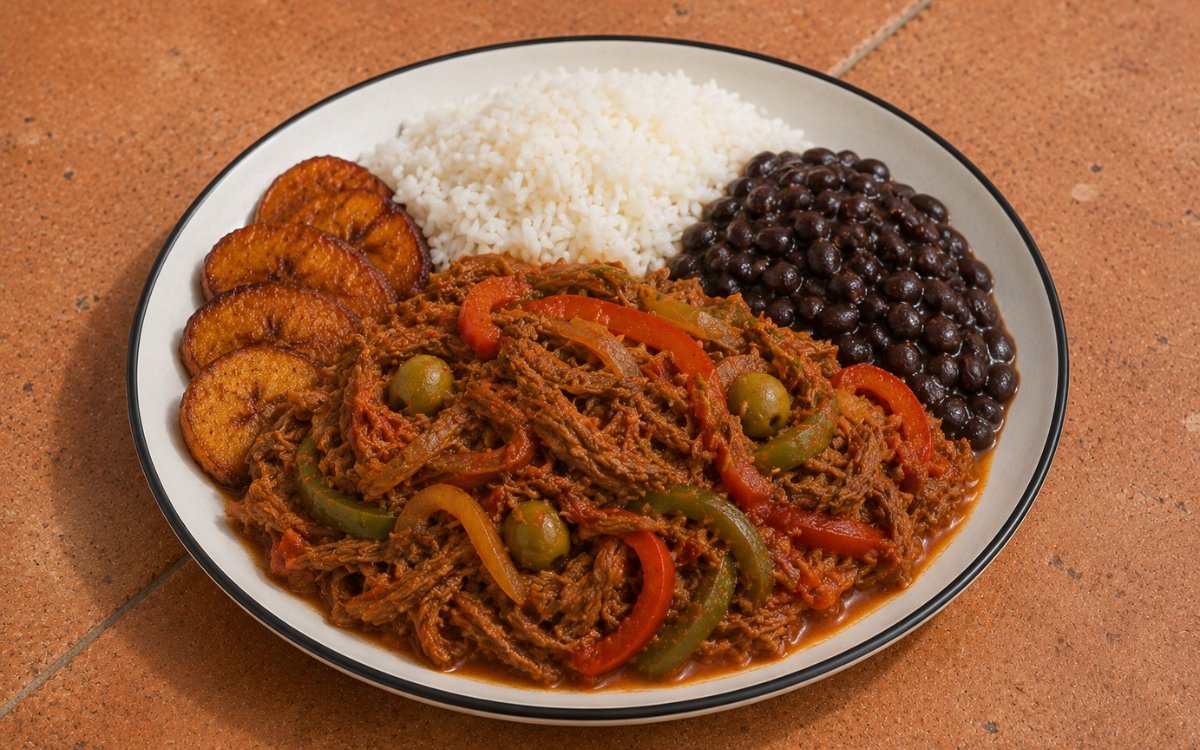
- Add the shredded beef and olives to the sauce. Stir well so the strands are fully coated and cook over low heat for 15–20 minutes, stirring occasionally, until the beef absorbs the sauce and becomes glossy, juicy, and cohesive. Add the vinegar and taste. Adjust with salt, black pepper, and, only if needed, the sugar to round out acidity. The finished ropa vieja should be saucy but not soupy. The beef should hold together in rich strands, with visible peppers and olives throughout. This long, low simmer lets the beef's thin strands absorb the sauce rather than just sitting coated in it, which gives ropa vieja its moist, cohesive texture.
Cook the White Rice
- Rinse the rice under cold water until the water runs mostly clear. Add the rice, water, oil or butter, and salt to a saucepan. Bring to a boil over medium-high heat. Stir once, cover tightly, reduce the heat to low, and cook for 15 minutes. Turn off the heat and let the rice rest, covered, for 10 minutes. Fluff gently with a fork. The grains should be tender, dry on the surface, and separate rather than sticky or wet. Rinsing away surface starch before cooking keeps the finished grains separate rather than clumping together into something stickier.
Cook the Black Beans
- Heat the oil in a saucepan over medium heat. Add the diced onion and cook for 4–5 minutes until softened. Add the garlic, cumin, and oregano and cook for 30 seconds. Add the black beans with their liquid, bay leaf, sugar, vinegar, salt, and black pepper. Simmer gently for 15–20 minutes, stirring occasionally. Mash a small portion of the beans against the side of the pan to thicken the mixture slightly, but keep most of the beans whole. If the beans become too thick, add a splash of water. The final texture should be glossy and spoonable, with enough body to sit neatly beside the rice. Mashing only a small portion, rather than the whole pot, thickens the surrounding liquid naturally while preserving most of the beans' own texture and bite.
Fry the Plantains
- Peel the plantains and slice them diagonally into long pieces about 1.5cm thick. Heat the oil in a skillet over medium heat. Fry the plantains in batches for 2–3 minutes per side until deeply golden brown and caramelized at the edges. Transfer to a plate or rack. The plantains should be soft and sweet in the centre with browned, lightly crisp edges. Sprinkle with a tiny pinch of salt if desired. Very ripe plantains, heavily spotted with black, have the natural sugar this caramelisation needs, so the outside browns deeply while the inside softens and sweetens.
Plate and Serve
- Spoon the white rice onto one side of each plate. Add the black beans beside it. Add a generous portion of ropa vieja next to the rice and beans, and finish with the fried plantains. Serve immediately while the beef is hot and glossy, the rice is fluffy, the beans are soft and creamy, and the plantains are still warm and sweet.
Notes
Sear the beef to a deep, even crust before it goes into the braising liquid. The browning adds richness that pale, unseared beef can't make up for later, however carefully the braise and sauce are handled.
Stop the peppers at softened and lightly sweet rather than cooking them until they collapse. Ropa vieja's classic look depends on visible strips of pepper running throughout the finished sauce and beef — overcooked peppers lose that structure entirely, blending into the sauce rather than remaining a distinct, recognisable component of the dish's texture and appearance.
Don't cut short the final low simmer once the shredded beef and olives join the sauce. That extended time isn't simply for warming through — it lets the beef's thin strands absorb the sauce and turn from separate shreds into the moist, cohesive, glossy texture ropa vieja is known for.
Green olives are more than a garnish here. Their salty, briny character balances the sweetness running through the dish — from the peppers to the tomatoes to the plantains served alongside — and omitting them would leave the whole plate's flavour profile noticeably less balanced than the classic version calls for.