Ingredients
Method
Prepare Cauliflower Rice
- Preheat oven to 220°C (425°F). Cut the 800g cauliflower into florets and remove the core. Pulse in a food processor until it resembles rice grains; work in batches to avoid over-processing into purée, since a food processor overloaded with too much cauliflower at once, or run for too long, easily pushes past a genuine rice-like texture into something wetter and finer than intended. You should have about 700g riced cauliflower — if it looks wet and very fine, it will roast softer, so spread it thinner on the tray to give that extra moisture more surface area to escape from during roasting.
Season and Spread
- Toss the cauliflower rice with the 45ml olive oil, 12g garlic, 4g salt, 2g black pepper, and 5g oregano until evenly coated, working through the mixture thoroughly so the seasoning doesn't settle unevenly. Spread in a single layer on two parchment-lined baking sheets — thin and wide beats thick and crowded, since cauliflower rice piled too deeply on a single sheet traps the moisture it releases during roasting and steams rather than genuinely caramelizing.
Roast Until Golden
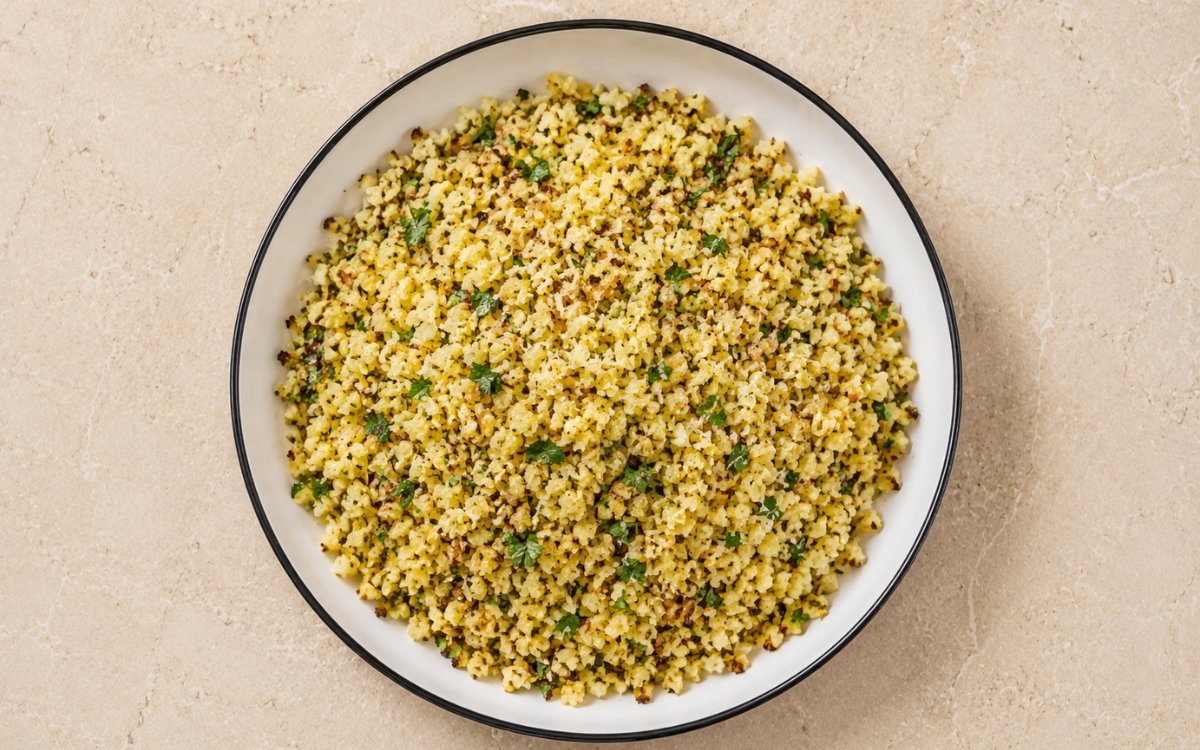
- Roast 20–25 minutes, stirring once halfway through, until tender and golden at the edges. Look for light caramelization on some pieces; that browned flavor is what makes this taste "roasted" instead of raw, and it's genuinely the difference between a side dish that reads as an intentional preparation versus one that just tastes like plain steamed cauliflower. If it's still pale at 25 minutes, roast 3–5 minutes longer and watch the color closely, since cauliflower can move from lightly golden to overly dark faster than its size might suggest.
Finish and Serve
- Transfer to a bowl and stir in the 30g butter until melted, letting the residual heat from the just-roasted cauliflower do the work of melting it evenly throughout. Fold in the 15g parsley and 30ml lemon juice. Top with the 30g Parmesan if using and serve immediately — this is best hot, before cauliflower releases moisture as it cools, since the dish's texture noticeably softens and becomes wetter the longer it sits after coming out of the oven.
Notes
Pulsing the cauliflower in batches rather than processing it all in one go is the technical foundation this recipe depends on for proper texture. A food processor can move from coarse, rice-like pieces to a wet, fine purée within just a few extra seconds of running, and working in smaller batches gives you more control to stop exactly when the texture is right rather than risking overshooting it.
Spreading the riced cauliflower thin across two baking sheets, rather than piling it onto one, addresses cauliflower's naturally high moisture content directly. Crowded, deep piles of riced cauliflower release steam that has nowhere to escape, essentially cooking the vegetable through steaming rather than roasting, and losing the caramelized, golden edges this dish is specifically built around.
Adding the butter, parsley, and lemon juice only after the cauliflower is fully roasted preserves both the fat's richness and the fresh brightness of the herbs and citrus. Introducing any of these earlier, before roasting, would either burn the butter over the full cooking time or dull the parsley and lemon's fresh character under sustained oven heat.