Ingredients
Method
Prep for Roasting
- Heat the oven to 220°C / 425°F. If you have convection, use it. Line 2 large trays with parchment or roast directly on lightly oiled trays for better browning. Drain the chickpeas well, then dry them thoroughly with paper towels or a clean kitchen towel. Remove any loose skins if convenient. Place the cauliflower in a large bowl. Add the chickpeas, olive oil, cumin, coriander, paprika, salt, and black pepper. Toss very well until evenly coated. Divide between the 2 trays in a single layer. Do not overcrowd the trays. Crowding traps steam and prevents the dark roasted edges that make the salad. That deliberate spread across two trays, rather than one crowded pan, gives every floret and chickpea real, direct contact with the hot tray surface — crowding would instead trap moisture and steam the vegetables rather than letting them properly char.
Roast the Cauliflower and Chickpeas
- Roast for 30–35 minutes, rotating the trays and tossing once halfway through. The cauliflower should be deeply golden with browned, crisp edges and fully tender. The chickpeas should be lightly crisp, a little wrinkled, and golden. If needed, give the trays an extra 3–5 minutes for more color. Roast until you see real caramelization. Pale cauliflower will taste flat and watery. That real, deep caramelization reflects genuine Maillard browning having taken place — a paler result pulled too early would still taste noticeably flatter despite being technically cooked through.
Make the Tahini Dressing
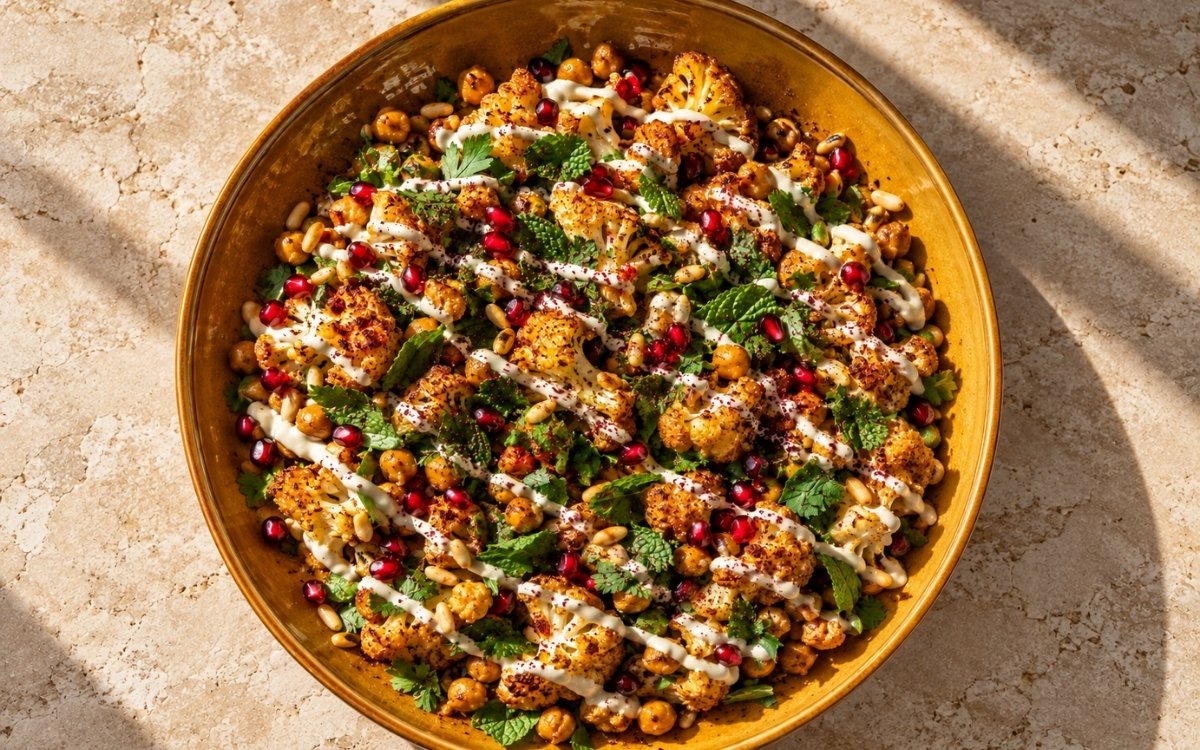
- While the vegetables roast, whisk together the tahini, lemon juice, garlic, olive oil, and salt. The mixture will tighten at first. Add the cold water gradually, whisking constantly, until you get a smooth, thick but drizzleable sauce. Taste and adjust with more lemon, salt, or water as needed. The dressing should be thick enough to sit in clear zigzags over the salad, not so thin that it disappears into the bowl. That gradual water addition, whisked in constantly rather than dumped, is what lets the tahini's own emulsion actually smooth back out after initially seizing — a sudden large addition would risk it staying broken and grainy instead.
Toast the Pine Nuts
- Toast the pine nuts in a dry skillet over medium-low heat for 2–4 minutes, stirring often, until lightly golden. Transfer immediately to a plate to stop the cooking. Pine nuts burn very quickly; do not leave them unattended. That immediate transfer off the hot pan protects the pine nuts from their own genuinely narrow margin between properly toasted and burnt, given how quickly residual heat alone can push them past that point.
Assemble the Salad
- Let the cauliflower and chickpeas cool for 5–10 minutes so they stay warm but not piping hot. Transfer to a wide bowl or platter. Add most of the parsley and mint and toss lightly. Reserve some herbs for the top. Drizzle the tahini generously over the salad in wide zigzags. Scatter over the pomegranate seeds, toasted pine nuts, remaining herbs, and sumac. Taste and finish with extra salt, black pepper, and a small drizzle of olive oil if needed. That brief cooling period protects the fresh herbs from wilting the moment they meet the vegetables — genuinely piping hot cauliflower would begin cooking and dulling the parsley and mint almost instantly.
Notes
Drying the drained chickpeas thoroughly before they ever go into the oven deserves genuine recognition as the technique most directly responsible for whether this salad achieves real, crisp texture. The recipe's own explicit warning that "wet chickpeas steam instead of crisp" reflects a real, common failure point — that thorough drying is what protects their ability to actually roast crisp rather than merely heating through while staying soft.
Never overcrowding the roasting trays deserves the same attention this technique receives throughout this collection's other high-heat roasted vegetable dishes. The recipe's own explicit note that crowding "traps steam and prevents the dark roasted edges that make the salad" reflects real understanding of how directly tray space affects the finished cauliflower's own colour and flavour.
Adding the cold water to the tahini gradually, whisking constantly, deserves genuine attention as the technique responsible for the dressing's whole defining consistency. The recipe's own explicit note that the mixture "will tighten at first" reflects a real, expected stage in this process — patient, gradual water addition is specifically what lets that initial seizing smooth back out into a genuinely pourable sauce.
Letting the roasted vegetables cool briefly before the fresh herbs are added deserves respect as a real, functional timing choice rather than simple patience. Genuinely piping hot cauliflower and chickpeas would begin wilting and dulling the parsley and mint almost immediately on contact, undermining the fresh, vivid finish this salad depends on.