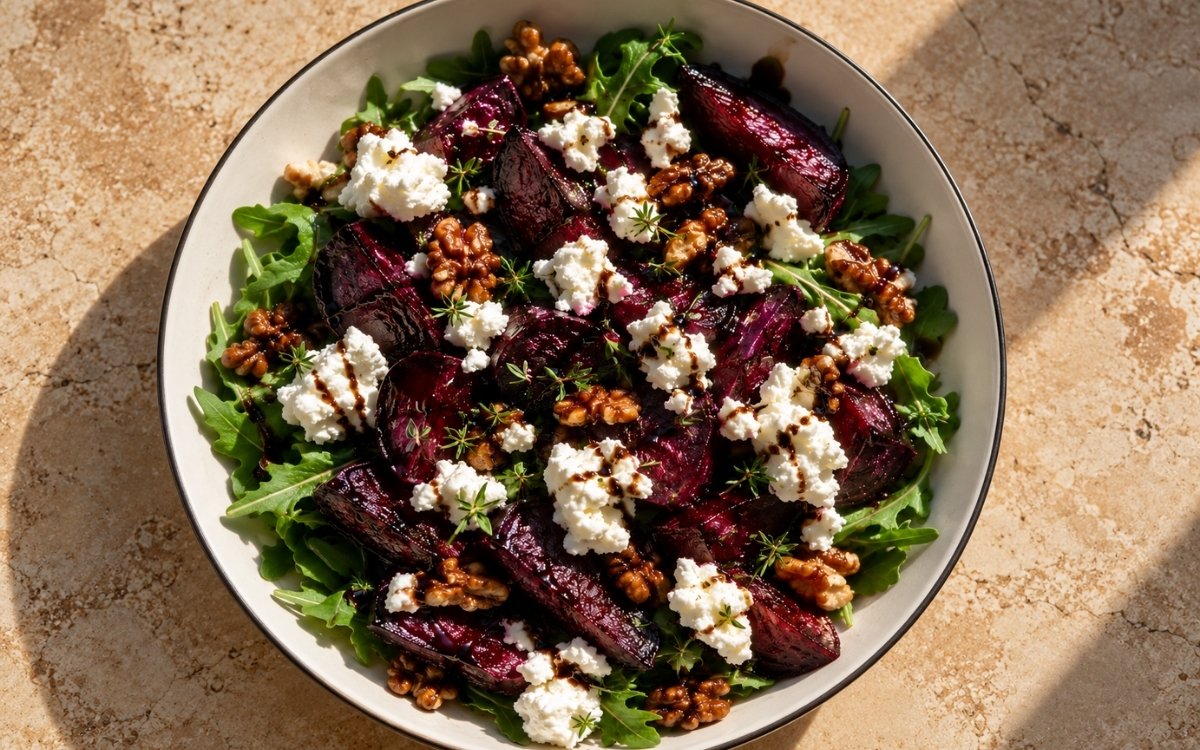
Ingredients
Method
Roast the Beetroot
- Heat the oven to 200°C / 400°F. Scrub the beetroot well. If the skins are clean and thin, leave them on for roasting. Place the beets on foil or parchment, drizzle with olive oil, season with salt and pepper, and add the thyme sprigs. Wrap tightly in foil or cover with parchment and foil. Roast for 50–70 minutes, depending on size, until a knife slides into the center with little resistance. The beetroot must be fully tender in the center. Undercooked beetroot tastes earthy in a harsh way and feels hard instead of silky. That real, genuine tenderness reflects starches having fully broken down throughout the beet — a knife meeting real resistance means the centre hasn't yet reached the same soft, silky point as the exterior.
Peel and Cut
- Let the roasted beetroot cool for 15–20 minutes, just until safe to handle. Rub off the skins using paper towels or your fingers. Cut into thick wedges. If the beetroot releases a lot of juice, let the wedges sit briefly on a plate before adding to the salad. Peel while still slightly warm. The skins slip off much more easily than when fully cold. That deliberate timing, peeling before the beets have fully cooled, takes advantage of the skin's own looser adhesion while still warm — waiting until fully cold would let that skin cling considerably more stubbornly.
Make the Balsamic Reduction
- Add the balsamic vinegar to a small saucepan. Add honey or sugar if you want a slightly sweeter glaze. Simmer over medium-low heat for 8–12 minutes, until reduced by about half and lightly syrupy. Remove from heat. It will thicken more as it cools. Stop when the reduction coats the back of a spoon but still drips. If you reduce it too far, it becomes sticky and bitter. That specific, checkable stopping point protects the reduction from crossing into genuine bitterness — vinegar reduced past this stage concentrates its own harsher, more acidic notes rather than staying balanced and glossy.
Candy the Walnuts
- Add walnuts to a dry pan and toast for 2–3 minutes until fragrant. Add butter, honey, and a pinch of salt. Stir for 1–2 minutes, until the walnuts are glossy and lightly coated. Transfer to parchment and let cool. Break apart if they stick together. Keep the heat moderate. Walnuts burn fast, and burnt walnuts will dominate the whole salad. That genuinely moderate heat protects the walnuts from the real, narrow margin between properly toasted and burnt — a scorched walnut's own bitterness would carry disproportionately through the entire finished dish.
Make the Dressing
- Whisk together olive oil, balsamic vinegar, lemon juice, Dijon mustard, honey, salt, and black pepper. Taste and adjust. It should be tangy, lightly sweet, and sharp enough to balance the goat cheese and beetroot. That deliberate sharpness is calibrated specifically against the salad's own richer components — a milder dressing would be overwhelmed by the creamy goat cheese and the beets' own natural sweetness rather than actually balancing them.
Assemble the Salad
- Place the rocket in a wide bowl or shallow platter. Spoon over a small amount of dressing and toss lightly. Arrange the beetroot wedges over the rocket. Scatter over the crumbled goat cheese, candied walnuts, and fresh thyme leaves. Drizzle with a little more dressing, then finish with thin threads of balsamic reduction. Do not overdress the rocket. It wilts quickly. The beetroot and balsamic reduction already bring moisture. That deliberate restraint with the dressing on the rocket specifically accounts for how much additional moisture the warm beets and glossy reduction will still contribute once everything is actually plated together.
Notes
Roasting the beetroot whole, wrapped tightly rather than pre-cut, deserves genuine recognition as the technique most directly responsible for this salad's own silky texture and real sweetness. The recipe's own explicit note that "pre-cut beetroot dries out and loses sweetness" reflects real understanding of how much surface exposure during a long roast would compromise both the beet's own moisture and its concentrated flavour.
Peeling the roasted beets while they're still genuinely warm, rather than waiting for them to cool fully, deserves the same attention this technique receives throughout this collection's other roasted-then-peeled vegetables. That specific timing takes real advantage of the skin's own looser adhesion at that stage — waiting until the beets are fully cold would let that same skin cling considerably more stubbornly, making cleanup noticeably more difficult.
Stopping the balsamic reduction the moment it coats the back of a spoon but still drips deserves genuine respect as the detail responsible for whether the finished glaze stays balanced or turns bitter. The recipe's own explicit warning that reducing it too far "becomes sticky and bitter" reflects a real, narrow window this particular reduction stage depends on watching closely.
Using the balsamic reduction only as a light finishing thread, rather than the salad's main dressing, deserves attention as a deliberate, functional restraint central to this dish's overall balance. The recipe's own explicit warning that "too much makes the salad heavy and overly sweet" reflects real understanding of how concentrated that reduced glaze actually is compared to the lighter, vinaigrette-style dressing tossed with the rocket.