Ingredients
Method
Bloom the Saffron
- Place the saffron threads in a small cup and pour over the 30g hot stock or hot water. Leave to steep for at least 10 minutes. Do not add dry saffron directly into the risotto. Blooming it first gives better color, aroma, and more even distribution. That hot liquid steeping period is what actually draws saffron's own concentrated colour compounds and aromatics out of the dry threads — added directly and dry, the spice simply wouldn't have the same chance to release that full character evenly throughout the finished rice.
Heat the Stock
- Place the stock in a saucepan and keep it hot at a very gentle simmer while you cook the risotto. Hot stock is essential. Cold stock shocks the rice, slows cooking, and interferes with even starch release. That consistently hot stock protects the rice from a real, sudden temperature drop every time new liquid is added — a drop that would interrupt the gradual, controlled starch release this whole dish depends on.
Make the Soffritto
- In a wide heavy pan or sauté pan, melt the marrow gently over medium-low heat. If not using marrow, melt 20g butter instead. Add the onion and cook slowly for 5–7 minutes until very soft and translucent. The onion should not brown. This is not a caramelized onion base. The onion should disappear into the risotto and give sweetness without color. That deliberate restraint from browning protects the finished risotto's own colour palette — any real caramelisation here would introduce a competing hue that works directly against the saffron's own intended golden focus.
Toast the Rice
- Add the rice and stir for 1–2 minutes so every grain is coated in fat and lightly toasted. The grains should look slightly translucent around the edges while remaining opaque in the center. Do not skip this step. Proper toasting helps the rice hold its shape while still releasing enough starch for a creamy result. That specific, checkable visual cue — translucent edges, opaque centers — confirms the toasting has coated every grain in fat without pushing it far enough to compromise the rice's own eventual bite.
Deglaze with Wine
- Add the white wine and stir until it is almost fully absorbed and the raw alcohol smell is gone. That specific aromatic shift, from sharp alcohol to fully absorbed and mellow, is a real, reliable cue that the wine's harsher notes have cooked off, leaving only its intended depth behind.
Cook the Risotto
- Begin adding the hot stock one ladle at a time, stirring frequently. Wait until most of each addition is absorbed before adding the next. After about 8–10 minutes of cooking, add the bloomed saffron and all its liquid. Continue adding stock gradually and stirring until the rice is cooked. Total cooking time is usually 16–20 minutes, depending on the rice. The rice is done when the grains are tender on the outside, still have a slight bite in the center, and the risotto looks fluid, creamy, and glossy. The rice should never go dry in the pan. Do not flood it with too much stock at once. Stir frequently enough to encourage starch release, but not so aggressively that you break the grains. Add the saffron after the rice has begun cooking, not right at the start, so its perfume stays clearer. That deliberate timing, adding the saffron partway through rather than at the very beginning, protects its own delicate aroma from being diminished by the full length of the remaining simmer still ahead.
Finish the Risotto (Mantecatura)
- When the rice is just done, remove the pan from the heat. Add the remaining 20g butter and the grated Parmigiano-Reggiano. Stir vigorously for 30–60 seconds until the risotto turns creamy and emulsified. Adjust the texture with a small splash of hot stock if needed. The final consistency should be all'onda — loose and flowing, not thick or mound-like. Risotto tightens quickly as it sits. Finish it slightly looser in the pan than you think you need. Finishing entirely off the heat, with genuinely cold butter, protects the emulsion from breaking under direct heat — that vigorous stirring is what actually binds the fat, starch, and liquid into the risotto's own signature silky consistency.
Serve
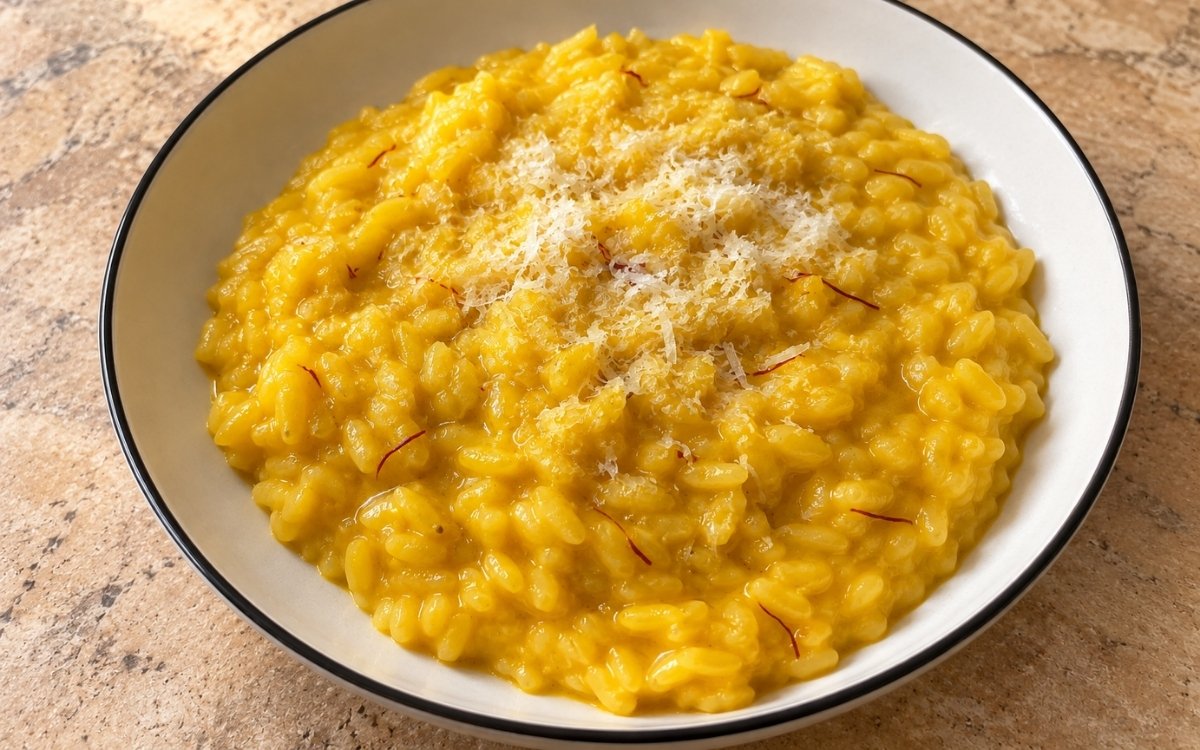
- Spoon immediately into warm shallow bowls. Serve at once. Traditionally it is served plain and elegant, with the saffron color and glossy texture as the focus. This dish's whole appeal depends on that loose, wave-like consistency and vivid golden colour staying intact — risotto continues thickening the longer it sits, losing exactly the texture this final finishing stage worked to build.
Notes
Blooming the saffron in hot liquid before it ever touches the rice deserves genuine recognition as the technique most directly responsible for this risotto's real depth of colour and aroma. The recipe's own explicit instruction never to add dry saffron directly reflects a real, meaningful difference — that steeping period draws out concentrated colour and floral aromatics far more evenly than the dry threads could ever release on their own once simply stirred into the pot.
Cooking the onion until soft and translucent, deliberately without ever letting it brown, deserves the same attention this collection gives to any soffritto whose job is to disappear rather than announce itself. The recipe's own explicit statement that "this is not a caramelized onion base" reflects real, careful restraint — any actual browning here would introduce a competing colour that works directly against the saffron's own intended golden focus.
Adding the saffron only after the rice has already begun cooking, rather than right at the start, deserves genuine attention as a deliberate timing choice specific to preserving the spice's own delicate character. That timing protects the saffron's perfume from being diminished across the remaining 8 to 10 minutes of simmering still ahead, keeping its floral aroma noticeably clearer in the finished dish.
Finishing entirely off the heat with cold butter and Parmigiano-Reggiano, stirred vigorously into a real mantecatura, deserves respect as the technique responsible for risotto's whole defining silky texture. That off-heat emulsification is specifically what binds the fat, starch, and remaining liquid into one cohesive, glossy mass — attempting the same step over direct heat would risk breaking that emulsion rather than building it.