Ingredients
Method
Rinse the Lentils
- Rinse the red lentils in several changes of cold water until the water runs mostly clear. Red lentils release a lot of starch, so this step matters — proper rinsing keeps the finished dal creamy rather than gluey.
Build the Base
- Heat 1 tablespoon ghee or oil in a medium pot over medium heat. Add the 1 teaspoon cumin seeds and let them sizzle for a few seconds until fragrant, then add the onion and cook for 5–7 minutes until softened and lightly golden. Add the ginger, minced garlic, and green chili, cooking for 30–60 seconds, just until fragrant and the raw smell fades. Add the tomatoes, turmeric, coriander, and Kashmiri chili powder, cooking for 4–6 minutes, stirring often, until the tomatoes soften and the mixture thickens slightly. The masala should look glossy and no longer taste raw before moving on.
Cook the Dal
- Add the rinsed lentils and 1.1–1.2 L water, stir well, and bring to a boil. Once boiling, reduce to a gentle simmer, skimming off any foam if needed. Partially cover and cook for 18–25 minutes, stirring occasionally, until the lentils are fully soft and mostly broken down. Add the salt once the lentils are nearly tender, then continue cooking a few minutes more. The dal should be thick but spoonable at this point — loosen with hot water if it's too thick, or simmer uncovered a few extra minutes if it's too thin. Lightly whisking or mashing part of the dal with the back of a spoon gives a creamier texture, but stop short of pureeing it completely; it should still feel natural and homemade.
Adjust the Texture
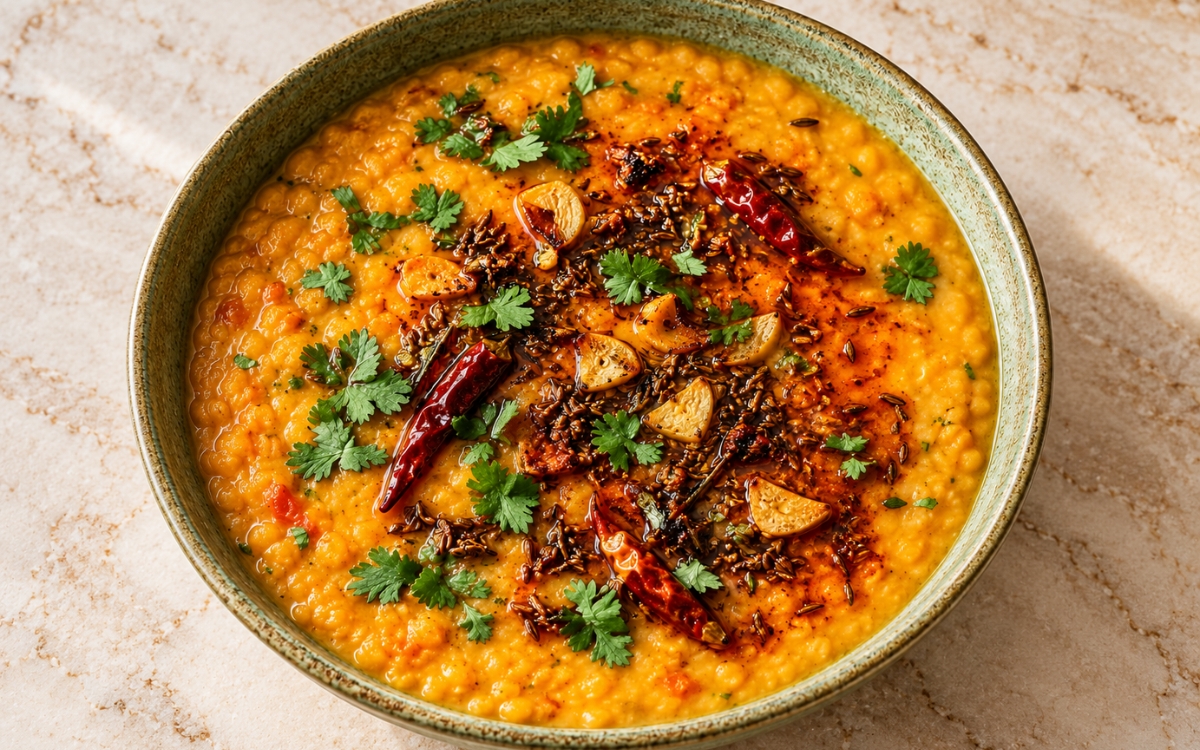
- Once the lentils are soft, taste and adjust the salt. Stir in the garam masala now if using, and add the lemon juice, if you want extra brightness, only at the very end, once the pot is off the heat or nearly done. The dal should end up creamy, orange-yellow, and thick enough to hold the tadka on top without it disappearing immediately.
Make the Tadka
- Heat the 3 tablespoons ghee in a small pan or tadka ladle over medium heat. Add the cumin seeds and let them crackle, then add the sliced garlic and fry gently until lightly golden, not dark brown. Add the dried red chilies, optional chili flakes, optional curry leaves, and optional hing, then turn the heat low and add the Kashmiri chili powder right at the end for just 2–3 seconds. Keep a close eye on the garlic and chili powder here — either one burning turns the whole tempering bitter instead of nutty and fragrant.
Finish the Dal
- Pour the hot tadka over the dal immediately; it should sizzle on contact. Cover the pot for 1 minute to trap the aroma, then uncover and either leave the tadka partly visible on top for serving or swirl it in gently. Top with the chopped cilantro.
Serve
- Serve hot. For the classical look, spoon the dal into a bowl and leave the darker ghee tadka clearly visible over the creamy lentils, with a light scatter of cilantro on top.
Notes
Classical red lentil dal stays creamy and soft rather than completely blended smooth like a soup, so stopping short of a full puree — even while mashing part of it for body — keeps the texture in the right range.
Red lentils thicken considerably as they break down, so starting with the full 1.1–1.2 liters of water and adding more as needed during cooking keeps the dal from turning unworkably thick before the lentils are even fully tender.
Salt added early toughens the lentils slightly and slows their breakdown, which is why it goes in only once they're nearly tender rather than at the very start of cooking.
The tadka is timed to be made only once the dal itself is fully ready, so it can be poured over while still sizzling hot — a tadka made ahead of time and reheated loses much of the aroma that makes it worthwhile in the first place.