Ingredients
Method
Make the Papo-Seco Dough
- In a mixing bowl, combine the bread flour, salt, sugar, and yeast. Add the warm water and olive oil, then mix until a rough dough forms. Knead for 8–10 minutes by hand or about 7 minutes in a stand mixer until the dough is smooth, elastic, and only lightly tacky. Transfer to a lightly greased bowl, cover, and let rise for 1 hour, or until doubled. The dough should feel supple and elastic, not dry or stiff. A dry dough gives dense rolls instead of the light, crusty structure a bifana needs. Kneading to a genuinely smooth, elastic consistency develops the gluten structure needed for a roll with an open, light crumb — a dough that's been rushed or left too dry produces a denser, tighter bake regardless of how long it's proofed afterward.
Shape and Bake the Rolls
- Turn the dough out onto the work surface and divide into 4 equal pieces. Shape each into a short oval roll. Place the rolls seam-side down on a parchment-lined tray. Let them rest for 10 minutes, then gently press a deep line lengthwise across the top of each roll using the side of your hand or a floured dowel to create the classic papo-seco split. Cover and proof for 30–45 minutes, until visibly puffy. Preheat the oven to 220°C. Bake for 15–18 minutes until the rolls are lightly golden, crisp on the outside, and sound hollow when tapped. Cool on a rack. The rolls should have a thin crust and light interior. They must be sturdy enough to hold juicy pork, but not so hard that they fight the filling. The classic bifana texture depends on bread that can absorb juices without collapsing immediately. Pressing that signature lengthwise groove while the dough is still soft, rather than after proofing, is what lets it survive both the final rise and the oven's own spring — a line pressed too late or too shallow tends to fill back in before baking is complete.
Prepare and Marinate the Pork
- If needed, chill the pork slightly first so it is easier to slice thinly. Slice into very thin sheets, roughly 3–5mm thick. If some pieces are large, cut them into manageable sandwich-sized pieces. In a bowl, combine the pork with the garlic, bay leaves, white wine, vinegar, paprika, pepper, salt, and Dijon if using. Mix thoroughly, cover, and marinate for at least 2 hours, ideally overnight. The pork should be thoroughly coated and sitting in a loose, winey marinade. Thin slicing matters here — thick pork will not cook with the quick, juicy bifana texture. Chilling the pork briefly before slicing firms it up just enough to hold its shape under the knife, making the thin, even slices this dish depends on considerably easier to achieve than cutting from fully soft, room-temperature meat.
Cook the Bifana Pork
- Heat a wide sauté pan or deep skillet over medium heat and add the lard or olive oil. Add the pork together with all of the marinade. Bring to a gentle simmer and cook for 10–15 minutes, stirring occasionally, until the pork is fully cooked and tender. If the liquid reduces too fast before the pork is ready, add a small splash of water. Once the pork is cooked through, raise the heat slightly and cook a few minutes more until the liquid reduces to a glossy savoury sauce that lightly coats the meat. Do not reduce it until dry. The pork should stay moist and glossy, with enough juices left to spoon into the bread. The pork should be fully cooked, tender, and glistening, not browned to dryness. The juices should taste concentrated, garlicky, lightly tangy, and deeply savoury. The classic bifana character comes from pork cooked in the marinade and served with those reduced juices, not from dry-seared pork slices. Cooking the pork directly in its full marinade, rather than searing it separately, is what allows the wine, garlic, and bay to fully infuse the meat while simultaneously becoming the sauce — there's no discarded liquid here, since the marinade itself is the final dish's defining sauce.
Prepare the Rolls for Filling
- Split the papo-seco rolls. If desired, warm the cut sides briefly in the oven or in a dry pan just enough to refresh them. Spread mustard on one side and piri-piri on the other. Spoon a little of the cooking juices into the bread first so it lightly soaks in. The bread should take on some moisture and flavour, but it should not be drenched to the point of tearing apart before serving. Soaking the bread with a small amount of juice before the pork ever goes in, rather than only spooning sauce on top afterward, means every layer of the finished sandwich carries some of that savoury liquid rather than concentrating it entirely on one side.
Assemble the Sandwiches
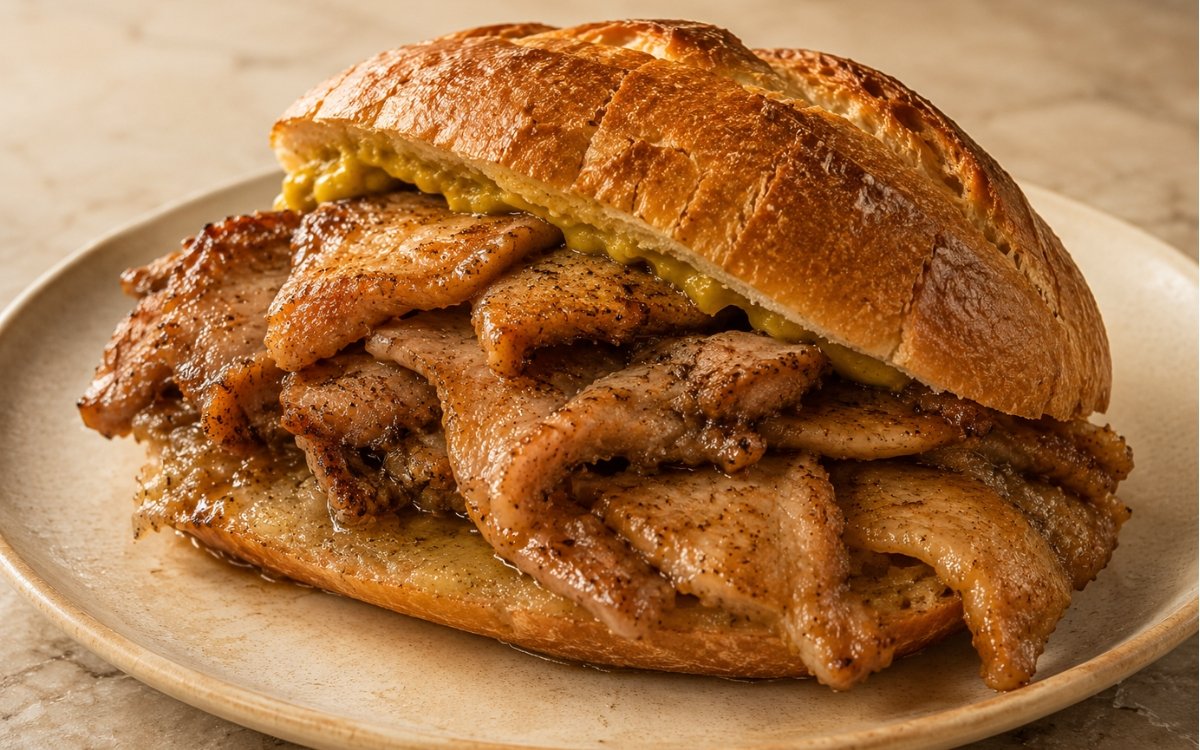
- Divide the pork evenly among the 4 rolls, about 200g per sandwich. Spoon over a little more of the reduced cooking liquid so the pork glistens and the bread becomes slightly soaked in the classic style. Close the sandwiches and serve immediately while hot. The pork should spill slightly from the sides, and the interior of the roll should be moist from the juices without becoming soggy sludge. This deliberately generous, slightly overflowing pile of pork with a moistened roll is part of what makes a bifana read as authentic rather than restrained — a tidily portioned, dry sandwich misses the whole point of this dish's juicy, hands-messy character.
Notes
Slicing the pork genuinely thin before marinating is worth understanding as the foundational decision this entire sandwich depends on, since it governs both how the meat cooks and how it eats. Thin slices cook through in a matter of minutes directly in their marinade, staying tender and juicy the whole time. Thicker pieces would need considerably longer in the pan, and by the time they cooked through, the surrounding liquid would either have reduced too far or the meat itself would have tightened past the classic bifana texture.
Cooking the pork directly in its full marinade — wine, garlic, bay, vinegar, and all — rather than searing the meat separately and discarding that liquid, is the single technique that actually defines this dish as a bifana rather than simply seasoned pan-fried pork. Every bit of flavour built into that marinade during its 2-hour-to-overnight rest carries directly into the finished sauce, since nothing about this method throws any of it away.
The instruction to reduce the cooking liquid to glossy rather than dry deserves real attention, since it's easy to keep cooking past the ideal point out of habit. This sauce is meant to remain loose enough to spoon generously into the bread and coat the pork, not concentrated into a thick glaze — pushing the reduction too far loses the very juiciness that makes a bifana recognisable, turning it into something closer to dry-braised pork on bread instead.
Deliberately soaking the bread with a little of that cooking liquid before the pork even goes in, and spooning more over the assembled sandwich afterward, reflects a real characteristic of how bifana is traditionally served rather than an oversight in tidiness. The bread is meant to take on moisture and flavour from the pork's own juices — a completely dry roll holding neatly portioned pork is missing a defining part of the dish's identity.