Ingredients
Method
Rinse the Rice Thoroughly
- Rinse the 300g basmati in a fine-mesh strainer under cold running water for 2–3 minutes, agitating gently with your fingers as the water passes through, continuing well past the point where you might think it's done, until the water runs genuinely, completely clear rather than just noticeably less cloudy. Drain well, giving the strainer a firm shake to remove excess water — standing water changes the cooking ratio, and even a modest amount of retained water carried into the pot throws off the carefully calibrated liquid-to-rice proportion this recipe depends on. Rinsing is what gives basmati long, separate grains; this variety carries meaningfully more surface starch than standard long-grain white rice, and a rinse that might be sufficient for a different rice type genuinely isn't enough here to achieve basmati's signature elongated, distinct texture.
Combine and Bring to Boil
- In a medium saucepan (2L) with a tight-fitting lid, combine the rice, 525ml water, 5g salt, and 10ml vegetable oil. Bring to a full rolling boil over high heat, uncovered, so you start steam production quickly — watching for a genuine, vigorous boil rather than covering the pot the moment you see the first small bubbles. Bringing the liquid to a full boil before adding the lid gives you a clear, visible, and repeatable starting point for the timed simmer that follows, rather than leaving that transition to happen gradually and somewhat unpredictably under a closed lid, where it's harder to judge exactly when the covered cooking time should actually begin.
Simmer Covered
- As soon as it boils, reduce heat to the lowest setting, cover tightly, and simmer 15 minutes without lifting the lid or stirring at any point during this window. Absorption cooking depends entirely on trapped, circulating steam building up and moving evenly throughout the pot to cook every grain at the same consistent rate, and any interruption to that process — even a brief peek — releases steam and disrupts the even cooking you're relying on. If you see a lot of steam escaping around the lid, reduce the heat slightly and ensure the lid sits flat and fully seated on the pot, since a poorly fitted lid lets too much steam escape and can leave the rice undercooked by the time the timer goes off.
Steam and Fluff
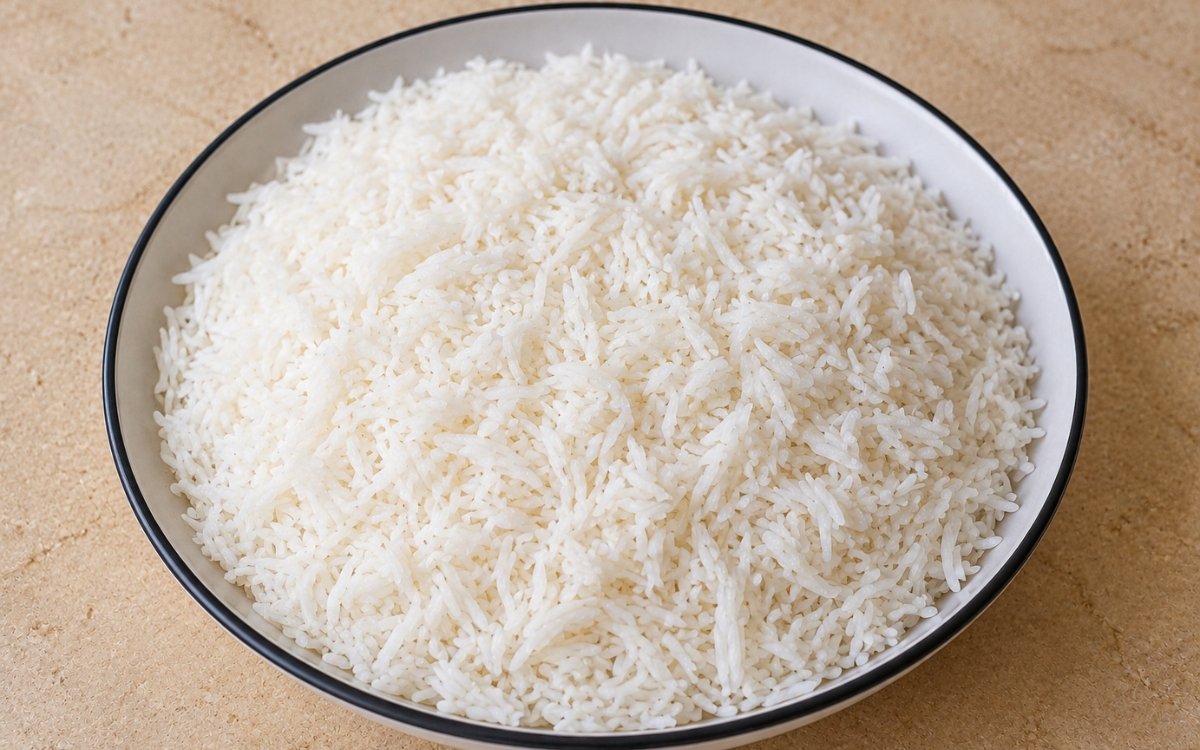
- Remove from heat and let stand covered for 5 minutes. This resting period allows any remaining trapped steam to finish cooking the grains gently before you disturb them, and it's a genuinely important step rather than one to rush past. Remove the lid and fluff gently with a fork, using a light lifting motion to separate the grains without smashing them, since basmati's long, delicate grains are more easily broken than a shorter, sturdier rice variety would be under the same handling. Serve immediately, or keep covered to hold warmth without drying.
Notes
Basmati specifically requires a more thorough rinse than standard long-grain white rice, given how much more surface starch it naturally carries. The full 2–3 minutes of gentle agitation, continuing until the water runs genuinely clear rather than just less cloudy, is what allows this variety to achieve its characteristic long, distinct, fully separate grains rather than a stickier result.
Bringing the pot to a full boil uncovered before adding the lid is a deliberate sequencing choice. Starting steam production quickly and visibly, rather than covering the pot from the very beginning, gives a clearer, more predictable starting point for the 15-minute covered simmer that follows — a variable, gradual transition to a boil under a closed lid makes it harder to judge exactly when the timed simmer should actually begin.
The complete, undisturbed 15-minute simmer is non-negotiable for the same reason it matters across every absorption-method rice preparation in this collection: trapped steam needs to circulate evenly throughout the pot without interruption, and any lid-lifting releases that steam and disrupts the process partway through.